




How to Care for Your Mattress: The Complete Guide to Cleaning, Protecting, and Making It Last
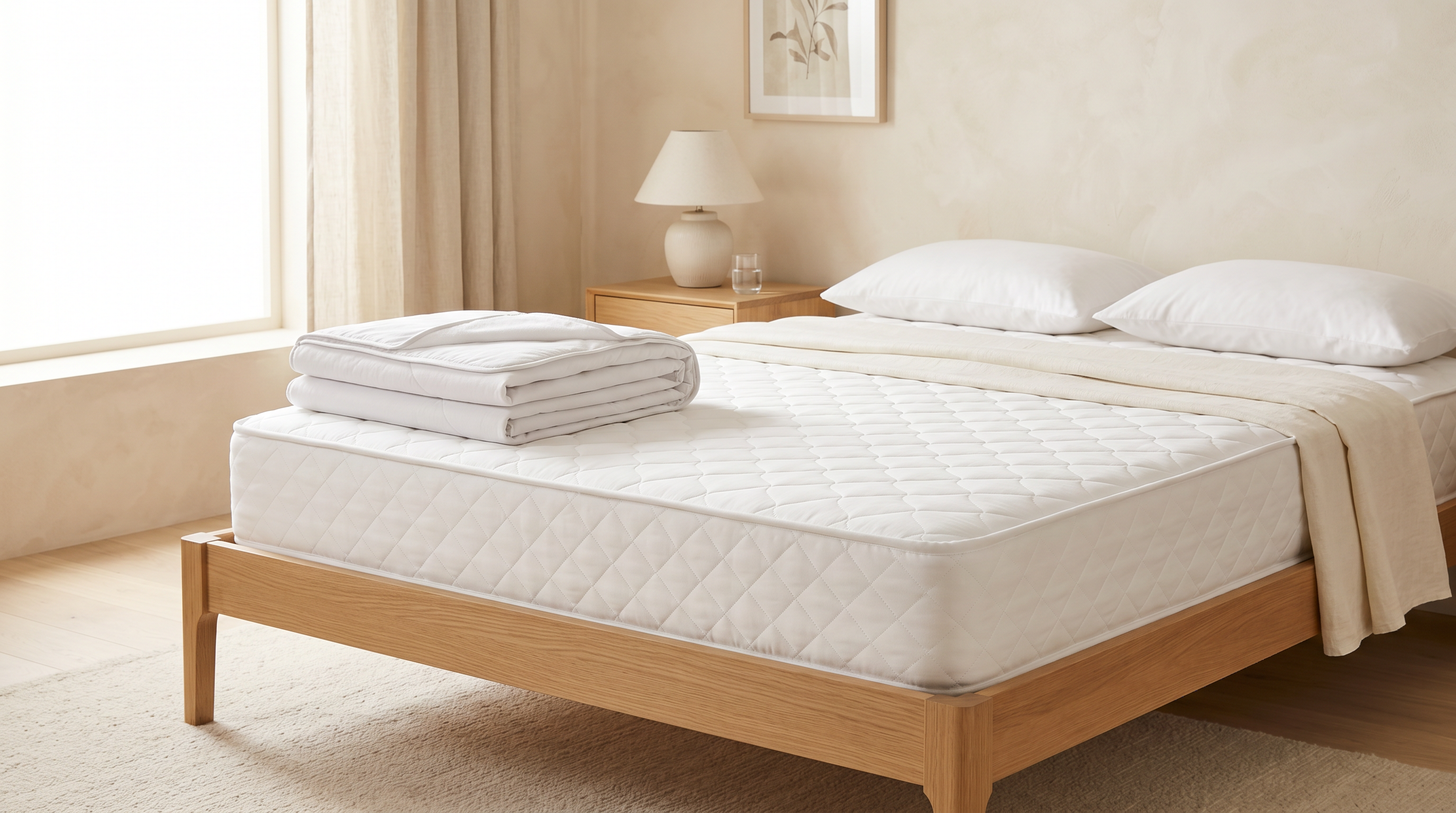
The average person spends approximately 26 years of their life in bed.1 Yet the mattress — the single piece of furniture that bears the most direct, sustained physical contact with the human body — is among the most consistently neglected items in the home. Most people vacuum their carpets more often than they rotate their mattress. They replace their phone every two years but sleep on a deteriorating mattress for a decade past its useful life, wondering why their back hurts and their sleep quality is declining. The Sleep Foundation estimates that improper mattress care is the primary cause of mattresses failing before their manufacturer-rated lifespan, with the average poorly maintained mattress losing meaningful support properties within 5–6 years despite being rated for 8–10.2 This guide gives you the complete, evidence-based framework for cleaning, protecting, rotating, and extending the life of your mattress — and knowing when it is time to replace it.
Why Mattress Care Matters Beyond Cleanliness
Mattress care is not purely a hygiene issue — though the hygiene case alone is compelling. Over time, a mattress accumulates a significant biological load: the average person sheds approximately 30,000 to 40,000 dead skin cells per hour,3 and a meaningful proportion of these settle into the mattress surface and fill, creating a food source for house dust mites. A typical unprotected mattress harbors between 100,000 and 10 million dust mites after several years of use,4 along with their fecal particles (the primary dust mite allergen), mold spores from accumulated moisture, and residual body oils that degrade foam and fiber materials over time.
Beyond hygiene, mattress care directly affects structural performance. Foam cores, innerspring coils, and hybrid constructions all develop compression set — the permanent deformation of support materials under sustained load — at rates that are significantly accelerated by uneven weight distribution (failure to rotate), moisture exposure (inadequate protection), and improper support (wrong or absent bed frame). A 2020 study in the Journal of Chiropractic Medicine found that participants sleeping on mattresses with significant surface sagging reported markedly higher back and neck pain scores than those on structurally sound mattresses, and that the sagging had developed within 4–6 years of purchase in most cases — well within the expected product lifespan.5
The Mattress Protector: Your Single Most Important Investment
If there is one mattress care decision that outweighs all others in impact, it is whether you use a quality mattress protector from day one. A waterproof, breathable mattress protector creates a physical barrier between the mattress and the primary sources of degradation — sweat, body oils, spills, dust mite colonization, and mold-favorable moisture accumulation — while adding negligible thermal resistance or sleeping discomfort when made from the right materials.6
Not all mattress protectors are equal. Key selection criteria:
- Waterproofing technology: Look for a polyurethane membrane laminated to a breathable fabric surface, rather than a PVC or vinyl construction. PVC-based protectors are fully waterproof but trap heat and produce noise with movement; polyurethane membrane versions allow water vapor transmission (breathability) while blocking liquid penetration.
- Top surface material: Bamboo viscose or Tencel (lyocell) top surfaces add active moisture-wicking capability, drawing perspiration away from the body surface before it can penetrate toward the mattress. Cotton terry surfaces are more affordable but less effective at moisture management.
- Fit: A deep-pocket fitted protector that stays securely in place is more effective than a loose cover that shifts during sleep, leaving portions of the mattress exposed.
- Certifications: OEKO-TEX Standard 100 certification confirms the protector is free of chemical residues that could off-gas during sleep — particularly important for children’s mattresses and for chemically sensitive adults.7
Wash your mattress protector every two to four weeks alongside your sheets, following the care label temperature guidance. A protector that is never washed accumulates the same biological load it was meant to keep off the mattress.
Rotating and Flipping: The Structural Maintenance Schedule
Rotating your mattress — turning it 180 degrees so that the head end becomes the foot end — redistributes the compression load across the mattress surface, preventing the localized sagging that develops in the hip and shoulder contact zones of single-sleeper positions. The Sleep Foundation and most mattress manufacturers recommend rotating every 3–6 months for the first two years, and every 6 months thereafter.2
Important distinctions by mattress type:
- Innerspring and hybrid mattresses: Rotate 180 degrees every 3–6 months. Most modern hybrids are one-sided (comfort layer on top only) and should not be flipped; check manufacturer guidance.
- Memory foam and latex mattresses: Rotate 180 degrees every 6 months. These materials are more resistant to compression set than innerspring but still benefit from load redistribution. Most are one-sided; do not flip unless the manufacturer explicitly instructs otherwise.
- Two-sided (flippable) mattresses: Rotate 180 degrees and flip top-to-bottom every 3–6 months. Two-sided constructions are increasingly rare in modern mattresses but offer the most complete load distribution when available.5
Cleaning: Regular Maintenance and Stain Treatment
Even with a mattress protector in place, the mattress surface itself benefits from periodic cleaning. A basic monthly maintenance routine significantly extends useful life and reduces allergen accumulation:4
- Vacuuming: Use the upholstery attachment of a HEPA-filtered vacuum to thoroughly vacuum the entire mattress surface, sides, and seams monthly. HEPA filtration is essential — standard vacuums can expel dust mite allergens back into the air rather than capturing them.
- Airing: Strip the bed completely once a month and leave the mattress uncovered for 2–4 hours in a well-ventilated room. Exposure to circulating air reduces the humidity in the mattress surface layers that dust mites require to survive. If possible, open windows and allow indirect natural light — UV exposure has a mild antimicrobial effect on surface materials.
- Baking soda deodorizing: Every 3–6 months, lightly dust the mattress surface with baking soda (sodium bicarbonate), leave for 1–2 hours, then vacuum thoroughly. Baking soda is mildly alkaline and absorbs acidic odor compounds from sweat and body oils without damaging foam or fiber materials.
Stain treatment: Act immediately — allowing liquid to penetrate and dry makes removal exponentially harder. Use a clean cloth to blot (never rub) as much liquid as possible, then apply a solution of cold water and a small amount of enzyme-based upholstery cleaner. Avoid saturating the mattress; excess moisture that cannot be dried quickly promotes mold growth in the interior. A portable fan or hair dryer on a cool setting directed at the treated area accelerates drying. Never use hot water on protein-based stains (blood, sweat) — heat sets protein stains permanently.3
Proper Support: Bed Frame and Foundation Requirements
A mattress is only as good as the surface supporting it. Insufficient or incorrect support accelerates structural degradation, voids most manufacturer warranties, and can produce the same sagging symptoms that prompt premature replacement.6
- Slatted bed frames: Slats should be no more than 3 inches apart for foam and latex mattresses, which require continuous or near-continuous support to prevent sag between slats. Wider spacing is acceptable for innerspring constructions with their own internal structural support. Always verify maximum slat spacing in the mattress manufacturer’s warranty terms.
- Box springs and foundations: A damaged or excessively flexible box spring transfers its deformation to the mattress above it. If the box spring creaks or shows visible deformation, replace it — continuing to use a compromised foundation will rapidly destroy even a new mattress.
- Platform beds: Solid-surface platform beds provide excellent support for all mattress types and are the most forgiving foundation choice in terms of mattress care.
When to Replace: Recognizing the Signs
Even with perfect care, mattresses reach the end of their useful life. The American Chiropractic Association and Sleep Foundation both recommend evaluating replacement when any of the following are present:2,5
- Visible sagging or body impressions deeper than 1–1.5 inches in the sleep zone
- Consistent waking with back, neck, or joint pain that resolves within 30 minutes of rising
- Noticeably better sleep quality in hotels or guest beds
- Age exceeding 8–10 years (innerspring), 10–12 years (memory foam), or 12–15 years (natural latex) with documented care
- Persistent musty odor despite thorough cleaning — indicates mold colonization in the mattress interior that surface treatment cannot reach
Mattress Care Checklist
- ✔ Use a waterproof, breathable mattress protector from the first night; wash every 2–4 weeks.
- ✔ Vacuum the mattress surface with a HEPA-filtered vacuum monthly.
- ✔ Air the mattress uncovered for 2–4 hours monthly in a ventilated room.
- ✔ Apply baking soda deodorizing treatment every 3–6 months; vacuum thoroughly after.
- ✔ Rotate 180 degrees every 3–6 months for the first two years, every 6 months thereafter.
- ✔ Treat stains immediately with cold water and enzyme cleaner; blot, never rub; dry thoroughly.
- ✔ Verify slat spacing is within the manufacturer’s specified maximum — typically 3 inches or less for foam mattresses.
- ✔ Replace the box spring or foundation if it shows sagging or structural damage.
- ✔ Evaluate replacement at 8–10 years for innerspring, 10–12 for memory foam, 12–15 for latex.
- ✔ Do not sit repeatedly on the same edge of the mattress — edge compression is a primary driver of localized sagging.
Conclusion
Your mattress is the foundation of your sleep system — and like any high-use structural asset, it rewards consistent maintenance with years of additional life and sustained performance. A $50 mattress protector, a monthly vacuuming habit, and a bi-annual rotation schedule are not glamorous interventions. But applied consistently, they are the difference between a mattress that performs for a decade and one that forces an expensive replacement at year five. The investment you made in a quality mattress compounds in value when the care matches the quality.
Pair your well-maintained mattress with LuxClub’s breathable, skin-friendly bedding layers — designed to protect your mattress as much as they comfort your sleep.
References
- Hammond EC. (1964). "Some preliminary findings on physical complaints from a prospective study of 1,064,004 men and women." American Journal of Public Health, 54(1), 11–23.
- Sleep Foundation. (2024). "How long should a mattress last?" SleepFoundation.org. Retrieved 2026.
- American Academy of Dermatology Association. (2024). "How skin sheds and its impact on indoor environment." AAD.org. Retrieved 2026.
- Arlian LG, Platts-Mills TAE. (2001). "The biology of dust mites and the remediation of mite allergens in allergic disease." Journal of Allergy and Clinical Immunology, 107(3), S406–S413.
- Jacobson BH, et al. (2020). "Subjective rating of perceived back pain, stiffness, and sleep quality following introduction of medium-firm bedding systems." Journal of Chiropractic Medicine, 5(4), 128–134.
- National Bed Federation UK. (2023). "Mattress care and warranty guidelines." NBF.org.uk. Retrieved 2026.
- OEKO-TEX Association. (2025). "OEKO-TEX Standard 100: Harmful substance testing criteria." OEKO-TEX.com. Retrieved 2026.
- American Chiropractic Association. (2024). "Sleeping positions and mattress recommendations." ACAdoctor.org. Retrieved 2026.