



Bamboo Sheets vs Microfiber Sheets: The 2026 Buying Guide
Bottom line up front: premium double-brushed microfiber outperforms bamboo sheets in durability, consistent cooling, dimensional stability, and cost-per-night — while bamboo's initial softness advantage is offset by chemical processing concerns, 15-20% shrinkage, and faster degradation. Here's the evidence.
The bamboo sheets vs microfiber sheets debate shows up in almost every bedding review this year, and for good reason: both fabrics market themselves as the "natural" cooling alternative to traditional cotton. But bamboo and double-brushed microfiber are built through completely different manufacturing processes, and that difference decides how each one feels on night one and how it performs after fifty washes. Before you spend on either, it helps to understand what is actually happening at the fiber level, because the marketing language on both sides tends to blur the line between plant-derived and truly natural.
This guide breaks down bamboo sheets vs microfiber sheets across the four things that matter most to a real buyer: how each fabric is made, how it handles heat and moisture, how it holds up over years of washing, and what it actually costs you per night of sleep.
What Bamboo Viscose Sheets Are Actually Made Of
Almost every "bamboo sheet" on the market today is bamboo viscose, sometimes labeled bamboo rayon. The bamboo plant itself is genuinely fast-growing and low-pesticide, but the fiber inside your sheet set never touches your skin in its raw plant form. Manufacturers pulp the bamboo, dissolve it in a chemical solution, and force it through spinnerets to create a regenerated cellulose fiber, a process nearly identical to how rayon is made from wood pulp.
That chemical regeneration step is why the Federal Trade Commission requires most "bamboo" textiles to be labeled as rayon or viscose rather than bamboo. The finished fiber is soft and drapes beautifully when new, but it is also highly hydrophilic, meaning it absorbs and holds moisture rather than moving it away from your body. Bamboo viscose also shrinks significantly, often 15-20% in the first few washes, which is why bamboo sheet sets frequently arrive with unusually deep pockets that shrink down to a normal fit.
None of this makes bamboo viscose a bad fabric on day one. It simply means the softness you feel in the store is partly a temporary property of a fiber that will behave very differently by wash twenty.
Cotton sits between these two extremes but does not solve either problem. Cotton is also hydrophilic like bamboo, so it absorbs moisture rather than moving it away, and its natural fiber tips are prone to pilling and yellowing over time. Cotton fitted sheets typically shrink 3-7% per wash and rely on the same corner-only elastic that fatigues within 12-18 months, so buyers who reject bamboo in favor of cotton are usually trading one set of maintenance problems for another rather than escaping them entirely.
What Double-Brushed Microfiber Sheets Are Actually Made Of
Premium double-brushed microfiber starts as a sub-denier polyester filament, meaning each individual fiber is thinner than a strand of silk. That fineness is the entire reason the fabric feels the way it does before any finishing process even begins. The defining step, and the one budget microfiber skips entirely, is mechanical brushing on both sides of the fabric, which raises the fiber ends on the top and bottom surface to create a uniform, buttery-soft, cashmere-like hand feel.
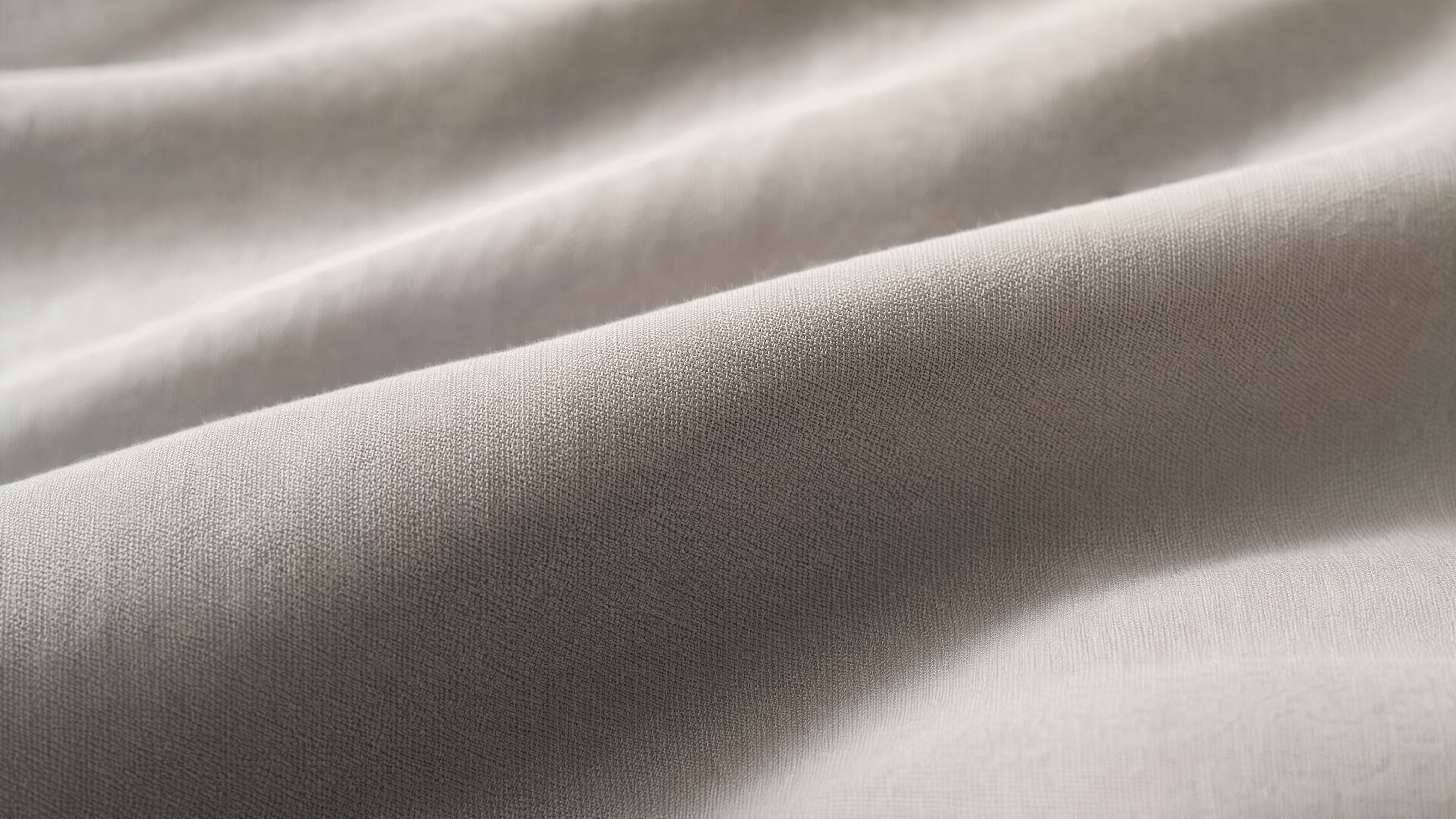
Double-brushed on both sides for a flat, silky-smooth surface — not a fuzzy or piled finish.
Because the filament is continuous and engineered rather than grown, LuxClub's double-brushed microfiber is pre-shrunk during manufacturing, so it holds its dimensions instead of tightening around your mattress after a few laundry cycles. The fiber is also hydrophobic, which sounds like a disadvantage until you understand what it does for sleep temperature, covered in the next section.
The fabric's structure is engineered for a specific outcome: a flat, tightly-woven surface that resists pilling because there are no loose staple fiber ends to tangle, unlike bamboo viscose or cotton.
Cooling Performance: Airflow vs Moisture Absorption
This is where the bamboo sheets vs microfiber sheets comparison gets counterintuitive. Bamboo viscose feels cool to the touch initially because hydrophilic fibers pull moisture and body heat away from the skin surface into the fabric itself. The problem is that once the fiber is saturated, usually within the first hour or two of sleep, it stops absorbing and starts trapping that moisture close to your skin.
Double-brushed microfiber works on a different principle entirely: engineered breathability paired with rapid evaporative cooling. Rather than absorbing moisture into the fiber, the hydrophobic surface wicks it outward through capillary channels between the sub-denier filaments, where it evaporates instead of sitting against your skin. Independent sleep-surface testing on double-brushed microfiber has recorded a 2-4°F reduction in surface temperature compared to standard woven fabrics, which is a meaningful difference for anyone who wakes up overheated at 3 a.m.
Bamboo's moisture-holding behavior also means it takes noticeably longer to dry, both on the line and in the dryer, and prolonged dampness against skin is a known contributor to overnight discomfort for hot sleepers. Microfiber's faster moisture cycling is not just a comfort feature; it is a direct consequence of the fiber's chemistry, not a marketing claim layered on top of it.
Durability After Dozens of Washes: Shrinkage, Pilling, and Pocket Fit
Bamboo viscose fiber is chemically weaker than either cotton or polyester, and that weakness shows up fastest in the wash. Beyond the initial 15-20% shrinkage, repeated laundering continues to break down the regenerated cellulose structure, which is why many bamboo sheet owners report a noticeably rougher hand feel and looser weave within a year of regular use.
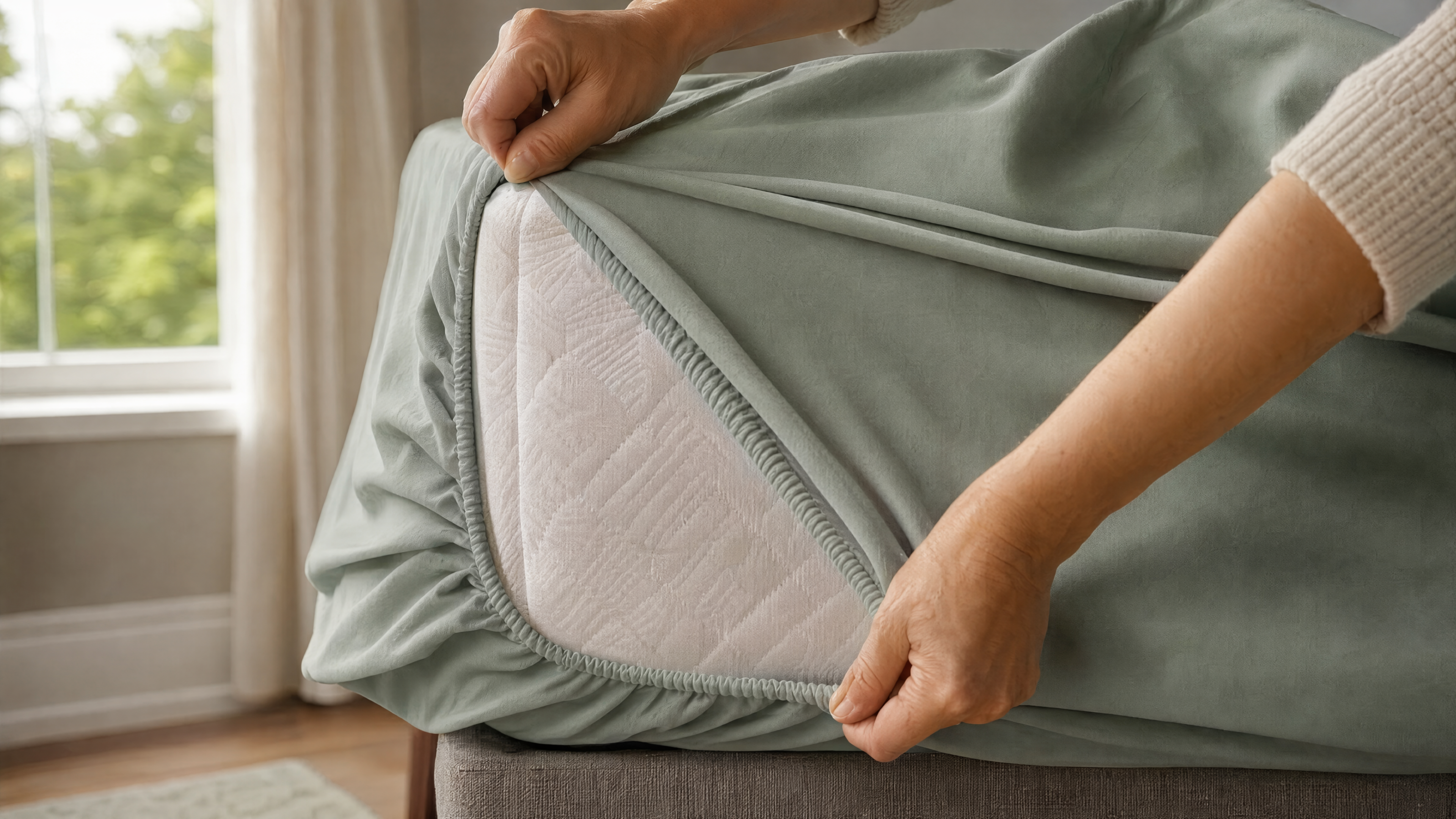
A full-perimeter, heavy-duty elastic band keeps the fit secure long after fabric shrinkage would loosen a corner-only design.
Fit engineering compounds the durability gap. Bamboo sheet sets typically rely on corner-only elastic, which loses tension within 12-18 months regardless of fabric choice, and that fatigue is worse when it is fighting an already-shrinking fabric. LuxClub sheets are cut with an 18-21 inch extra-deep pocket and a full-perimeter, heavy-duty elastic band that wraps the entire edge of the mattress, so the fit stays secure instead of sliding off mid-sleep.
Because the polyester filament is pre-shrunk and dimensionally stable, double-brushed microfiber sheets hold their measurements through 40-plus wash cycles without the pocket depth or elastic tension drifting the way bamboo's does. That single difference, dimensional stability versus progressive shrinkage, is the most practical reason microfiber outperforms bamboo over a multi-year ownership window.
Color retention follows the same pattern. Bamboo viscose's chemically regenerated structure tends to accept dye less evenly than engineered polyester, so fading and dullness often show up alongside the shrinkage within the first year. Double-brushed microfiber is finished with disperse dye technology that bonds directly to the sub-denier filament, which is why LuxClub can back its 40-plus colorways with genuine fade resistance through 40-plus wash cycles instead of a one-season color guarantee.
Softness, Drape, and Everyday Feel
New bamboo viscose has a genuinely appealing drape, silky and fluid in a way that mimics silk more than cotton. That is a real, honest advantage on day one, and it is why bamboo sheets photograph so well in showroom settings. The tradeoff is that this drape is partly a function of the fiber being freshly processed and not yet subjected to the shrinkage and fiber breakdown that starts after the first wash.
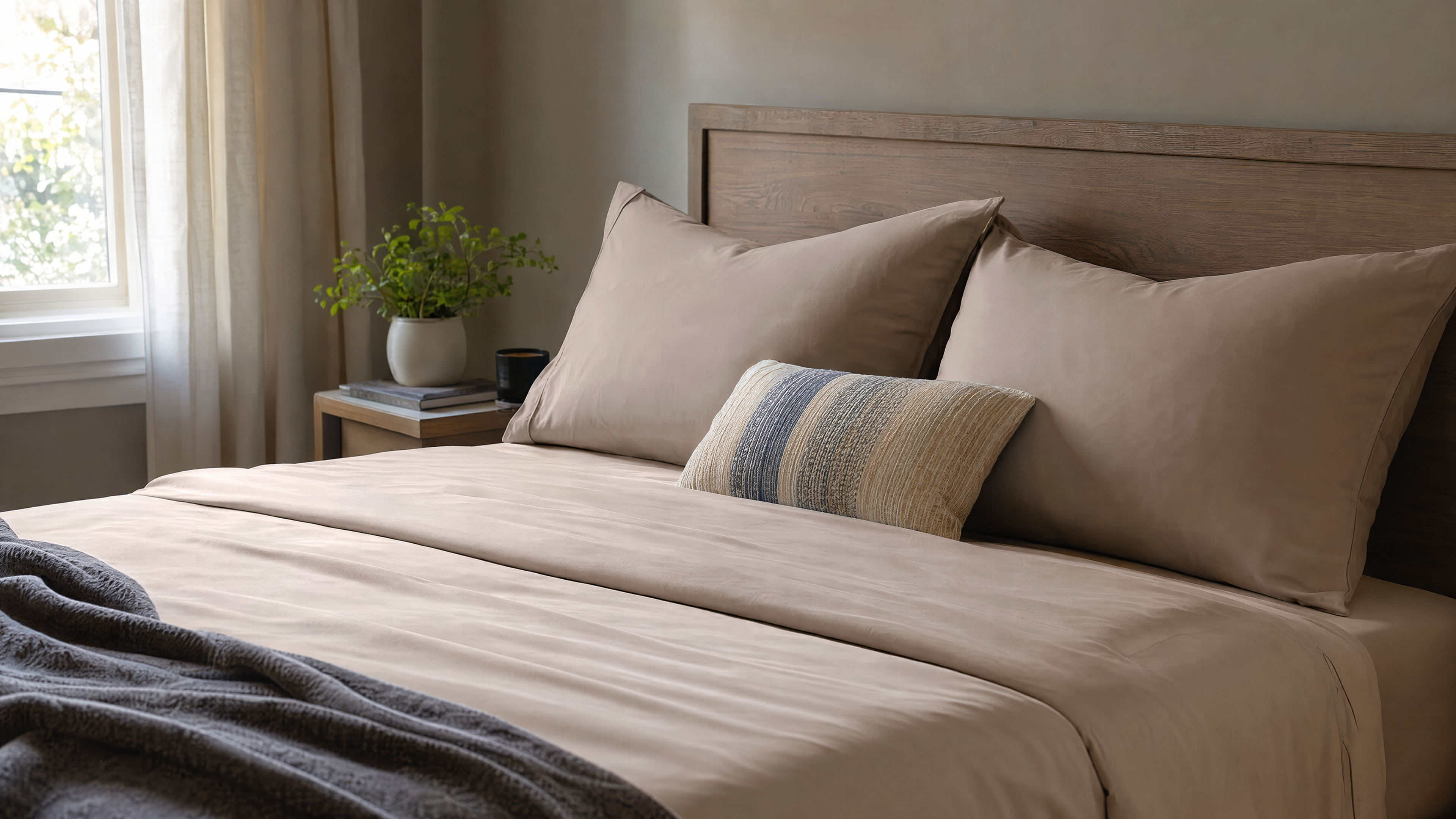
A lived-in bedroom, not a showroom — this is what everyday bedding comfort actually looks like.
Bilateral double-brushing gives microfiber a different but equally distinct feel: a flat, silky-smooth surface with a consistent, buttery-soft hand across every wash rather than a drape that changes as the fiber ages. Side and back sleepers in particular tend to notice this consistency, since sustained skin contact makes any texture change from shrinkage or pilling far more noticeable over a full night.
Neither fabric feels identical to cotton, and that is by design. Bamboo aims for a silk-like slip, while double-brushed microfiber aims for a uniform, cashmere-like softness that does not rely on the fiber staying in its unwashed state to deliver that feel.
The 2026 Verdict: Cost-Per-Year and Which Sheets to Buy
Run the numbers over a realistic three-year ownership window and the bamboo sheets vs microfiber sheets decision becomes less about the first unboxing and more about total cost of comfort. A bamboo set that needs replacing after 12-18 months due to shrinkage, pocket failure, or fiber breakdown effectively costs more per year than its sticker price suggests, even when the upfront price looks comparable to microfiber.
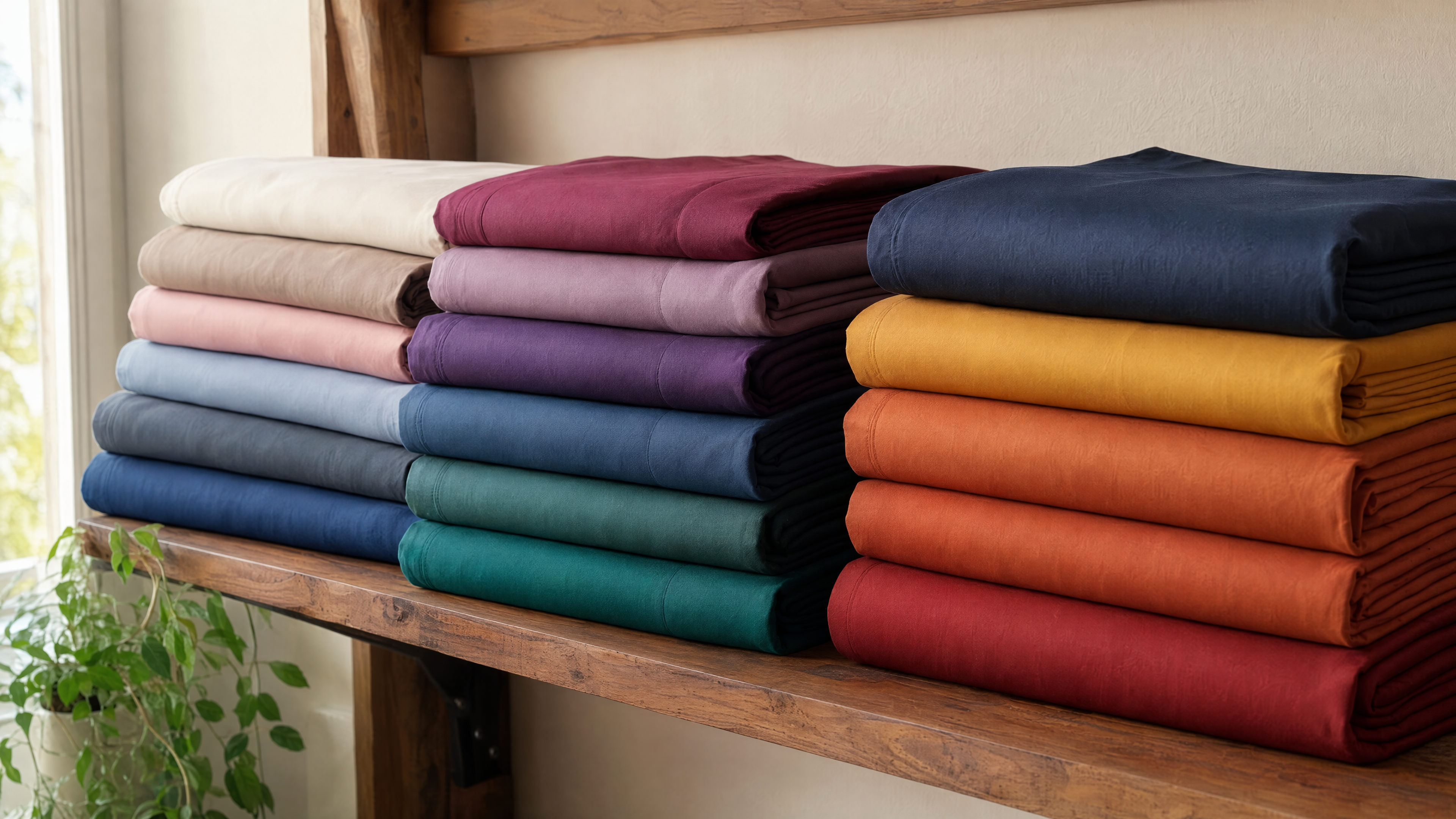
40-plus colorways, tested to stay fade-resistant through 40-plus wash cycles.
Double-brushed microfiber is built around five specific engineering advantages that directly answer bamboo's weak points: bilateral brushing for consistent buttery softness instead of a fading drape, engineered breathability with 2-4°F evaporative cooling instead of moisture-trapping absorption, an 18-21 inch deep pocket with full-perimeter heavy-duty elastic instead of a shrinking corner-only fit, natural wrinkle resistance that skips ironing entirely, and 40-plus colorways rated for 40-plus washes without fading. If you want the silk-like feel of bamboo purely for its own sake, it has a place. If you want a fabric engineered to still fit, still cool, and still look new years from now, LuxClub's double-brushed microfiber collection is the more defensible buy in 2026.
Frequently Asked Questions
Q1: Is bamboo or microfiber better for hot sleepers?
Bamboo viscose feels cool at first touch because it absorbs moisture quickly, but once saturated it holds that moisture against your skin instead of releasing it. Double-brushed microfiber uses hydrophobic capillary wicking to move moisture away and let it evaporate, which is why testing shows a 2-4°F surface temperature reduction. For sleepers who overheat mid-night, the sustained evaporative cooling of double-brushed microfiber outperforms bamboo's initial-touch coolness.
Q2: Do bamboo sheets shrink more than microfiber sheets?
Yes, significantly. Bamboo viscose is a regenerated cellulose fiber that typically shrinks 15-20% during its first several washes, which is why many bamboo sets ship with oversized pockets. Double-brushed microfiber is pre-shrunk during manufacturing and stays dimensionally stable through 40-plus wash cycles, so the pocket depth and elastic fit you buy is the fit you keep.
Q3: Are bamboo sheets more eco-friendly than microfiber sheets?
The bamboo plant itself grows quickly with minimal pesticides, but turning it into viscose fiber requires a chemical-intensive process using solvents to dissolve and reconstitute the cellulose. Double-brushed microfiber's environmental impact comes from its polyester origin, but its multi-year durability and dimensional stability mean fewer replacement sets end up in landfills compared to bamboo sheets that degrade within 12-18 months.
Q4: Which fabric lasts longer, bamboo or double-brushed microfiber?
Double-brushed microfiber is the clear winner on longevity. Its continuous sub-denier filament resists pilling, its pre-shrunk construction prevents the progressive shrinkage that weakens bamboo's weave, and its full-perimeter heavy-duty elastic maintains a secure mattress fit long after a bamboo set's corner-only elastic and shrinking fabric have failed. Most double-brushed microfiber sheets stay in solid rotation well past the point where bamboo needs replacing.
Q5: Can I get the silky feel of bamboo from microfiber sheets?
Not identically, but double-brushed microfiber delivers its own distinct, consistently soft feel through mechanical brushing on both sides of the fabric rather than the fiber's raw chemistry. Where bamboo's silky drape changes as the fiber shrinks and breaks down, double-brushed microfiber's buttery-soft, cashmere-like surface stays consistent wash after wash, which many buyers find preferable once they experience it directly.