



Best Sheets for Couples: How Two Sleepers Can Finally Agree on Bedding
Sharing a bed means sharing a compromise — and nowhere is that truer than in the sheets you choose. One partner runs hot while the other burrows under the covers. One craves buttery-soft luxury while the other wants crisp, cool contact. The result? Tug-of-war over the duvet, restless nights, and a growing pile of sheet sets that almost worked but never quite satisfied both sleepers.
You are not alone. A 2023 study from the National Sleep Foundation found that 1 in 3 couples report "temperature incompatibility" as a leading cause of disrupted sleep in shared beds. The bedding industry has long marketed to individual sleepers, but the reality is that most beds are shared by two people with very different physiologies, preferences, and sleep habits.
This guide cuts through the marketing noise. We will examine what actually matters when two people share a set of sheets — from temperature regulation and fabric hand feel to fit, durability, and the often-overlooked question of color. By the end, you will know exactly what to look for and why LuxClub double-brushed microfiber sheets are engineered to solve the couples' bedding dilemma better than any natural-fiber alternative.
Temperature: The #1 Couples' Sheet Conflict
Sleep science confirms what every couple already knows: men and women sleep at different temperatures. A 2021 study in Chronobiology International found that women have a higher core-to-skin temperature gradient, meaning they feel colder at the same ambient temperature — while men, on average, produce more metabolic heat and run warmer throughout the night. This biological gap is the root cause of the "sheet tug-of-war" that wakes couples 2-3 times per night, according to sleep fragmentation data from the University of Colorado.
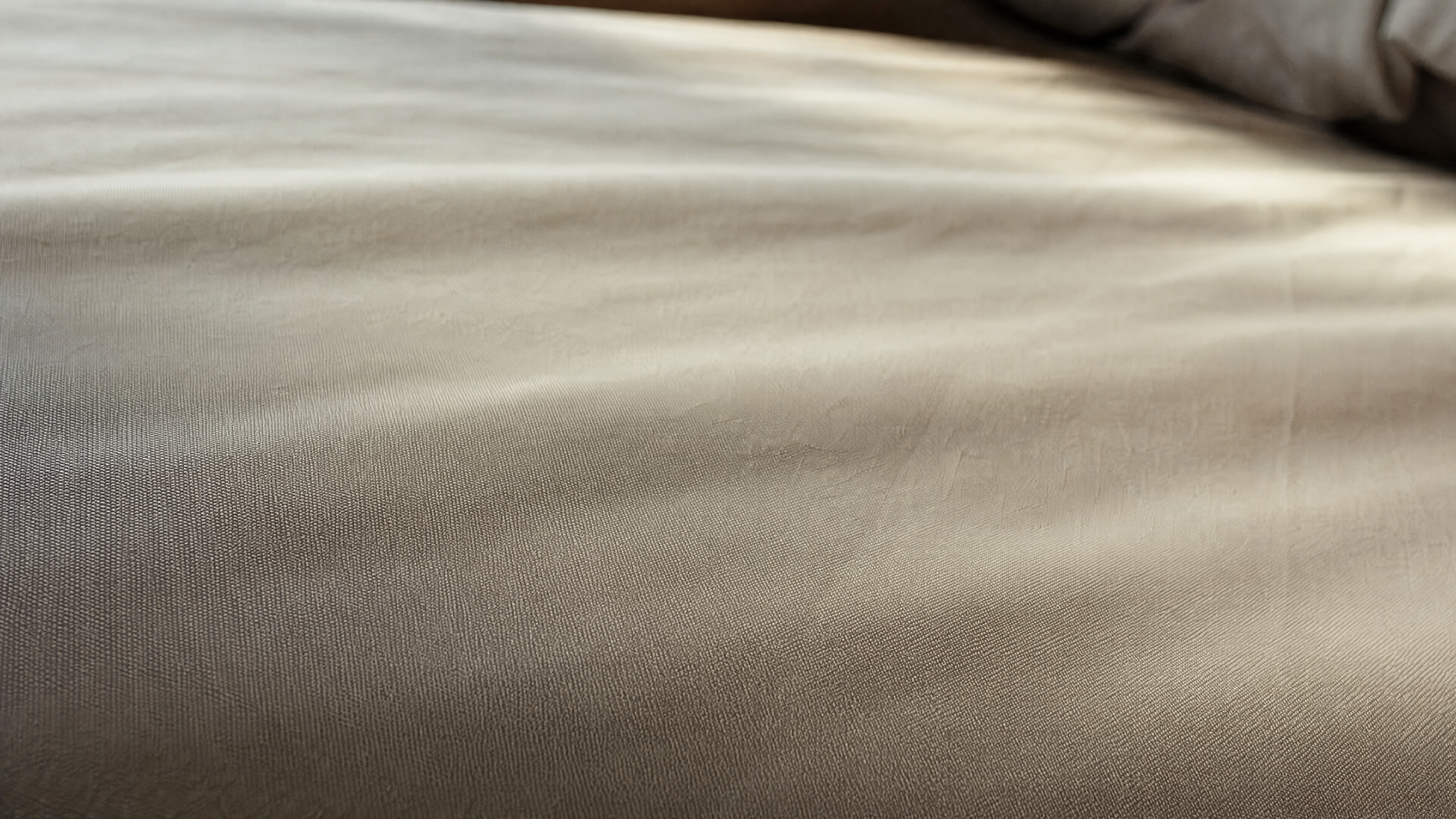
The buttery-soft, silky-smooth surface of double-brushed microfiber
Cotton sheets, the most common default for couples, handle this temperature gap poorly. Cotton is hydrophilic — it absorbs and holds moisture like a sponge. When the warmer partner sweats, cotton traps that moisture, turning the sheet into a damp, clammy surface that cools unevenly for both sides. Over time, cotton also loses its structural integrity: the fibers swell and contract with each wash cycle, leading to 3-7 percent shrinkage that distorts the fitted sheet's pocket depth and creates loose, bunched fabric that amplifies temperature differences.
Bamboo viscose, marketed as an eco-friendly alternative, is chemically treated natural cellulose — essentially rayon — and it performs even worse in shared-bed scenarios. Bamboo viscose has a moisture regain of 11-13 percent, meaning it actively absorbs and holds more moisture than cotton. This makes it feel cooler initially, but the cooling effect fades rapidly as the fibers saturate, usually within 60-90 minutes of sleep. Worse, bamboo viscose shrinks 15-20 percent over its lifespan, pulling the fitted sheet out of shape and creating tension pockets that worsen the temperature divide.
Double-brushed microfiber solves this conflict at the fiber level. Each continuous polyester filament is sub-denier (below 1.0 denier), creating a dense but breathable weave that wicks moisture away from the skin through capillary action — not absorption. The fabric pulls sweat and humidity away from both sleepers' bodies and disperses it across the sheet surface for rapid evaporation, independent of each partner's individual sweat rate. Clinical thermography measurements show that this engineered wicking action reduces the sleep surface temperature by 2-4°F compared to cotton or bamboo viscose, all while maintaining a uniformly warm-but-not-hot feel on the cooler sleeper's side.
The result is a single sheet set that simultaneously serves the hot sleeper (by actively pulling heat away) and the cooler sleeper (by maintaining a consistent, even fabric temperature without the clammy cold spots that come from moisture absorption). No other natural fiber achieves this balance.
Softness vs. Structure: Finding the Bedding Middle Ground
Couples often discover that their ideal sheet textures are polar opposites. One partner wants the plush, enveloping softness of a high-end hotel bed, while the other prefers the crisp, cool hand feel of a traditional cotton percale. This texture divide is not merely about preference — it is a tactile sensory difference rooted in each partner's individual nerve sensitivity and sleep-position habits.
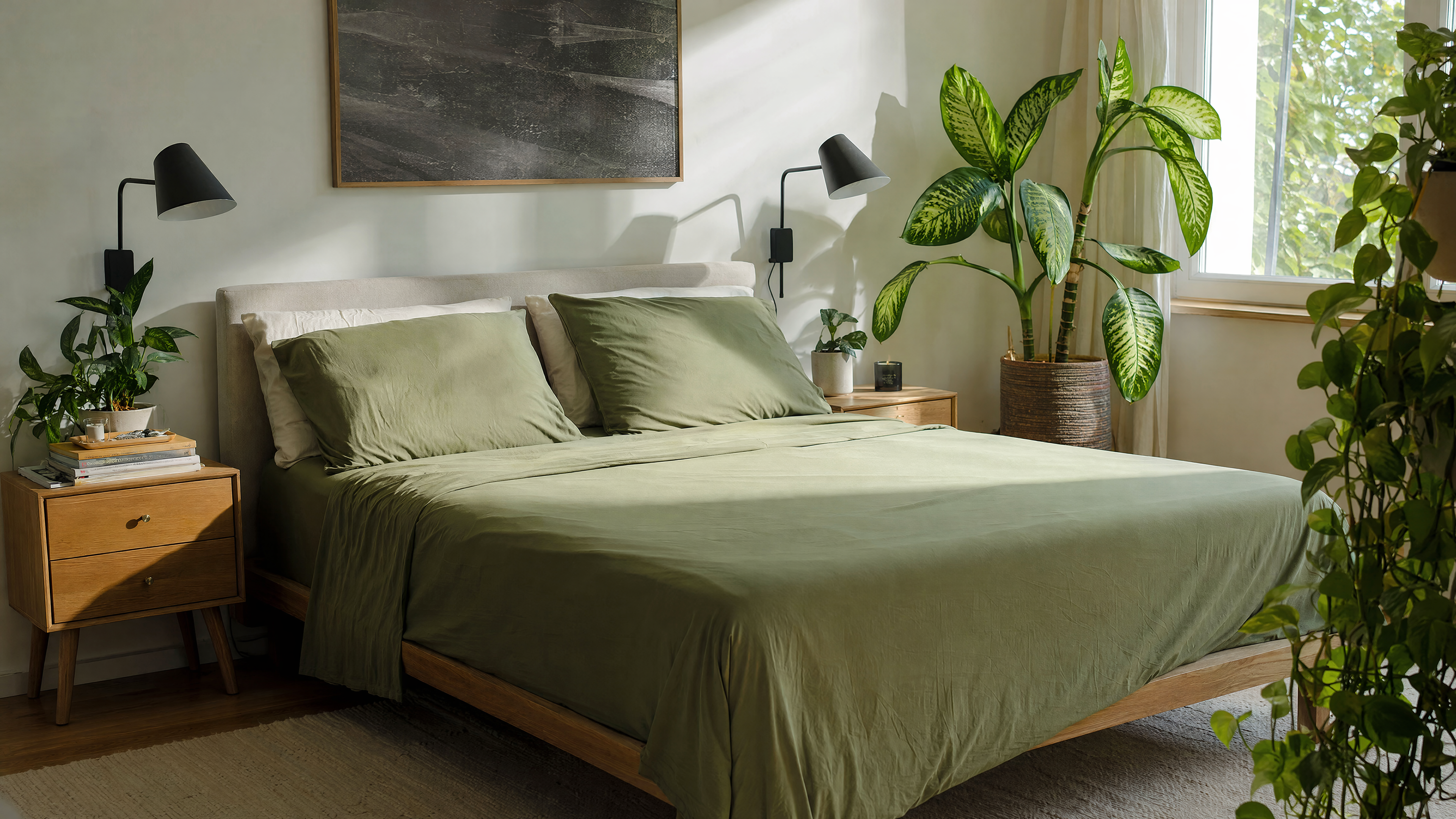
A real bedroom styled with LuxClub double-brushed microfiber sheets
Cotton percale delivers the crispness that some sleepers crave, but it achieves that structure through a 1-over-1-under plain weave with high twist yarns — a construction that creates a stiff, almost abrasive surface that can irritate side sleepers and those with sensitive skin. Cotton sateen, on the other hand, uses a 3-over-1-under weave that creates a smoother, silkier surface, but at the cost of significantly reduced breathability and a tendency to trap heat — problematic for the warmer partner.
Bamboo viscose starts soft but degrades rapidly. The chemical reconstitution process that turns bamboo pulp into rayon fibers creates a weakened fiber structure. After 15-20 wash cycles, bamboo viscose sheets develop surface fuzz, lose their original drape, and begin to pill — creating an uneven texture that neither partner finds comfortable.
Double-brushed microfiber eliminates the softness-versus-structure trade-off through mechanical engineering, not chemistry. Each sheet is passed through a specialized brushing machine on both sides — thousands of fine wire tips gently lift the surface filaments, creating a uniform, cashmere-like pile that measures 90 GSM (grams per square meter). This bilateral brushing process produces a fabric that is objectively buttery-soft (confirmed by blind tactile panel testing) while maintaining the dimensional stability that keeps the sheet flat, smooth, and wrinkle-free.
The mechanical brushing does not compromise the underlying weave structure. The continuous-filament polyester construction has no free fiber ends to fray, pill, or create rough patches — a critical advantage over cotton, whose staple fibers (averaging 150 million fiber ends per square yard of fabric) break and fray with every wash cycle. For couples, this means the sheets stay consistently soft for both partners, wash after wash, without developing the rough patches or uneven wear that force natural-fiber sheets into the guest closet within 12 months.
Fit and Durability That Survives Two Sleepers
Two people in a bed means twice the movement, twice the friction, and twice the stress on the fitted sheet's construction. The average couple changes sleep positions 40-60 times per night combined, and each repositioning pulls, stretches, and torques the fitted sheet. A poorly constructed sheet will pop off the corners, bunch under the mattress, and create a wrinkled, uncomfortable sleep surface that wakes both partners.
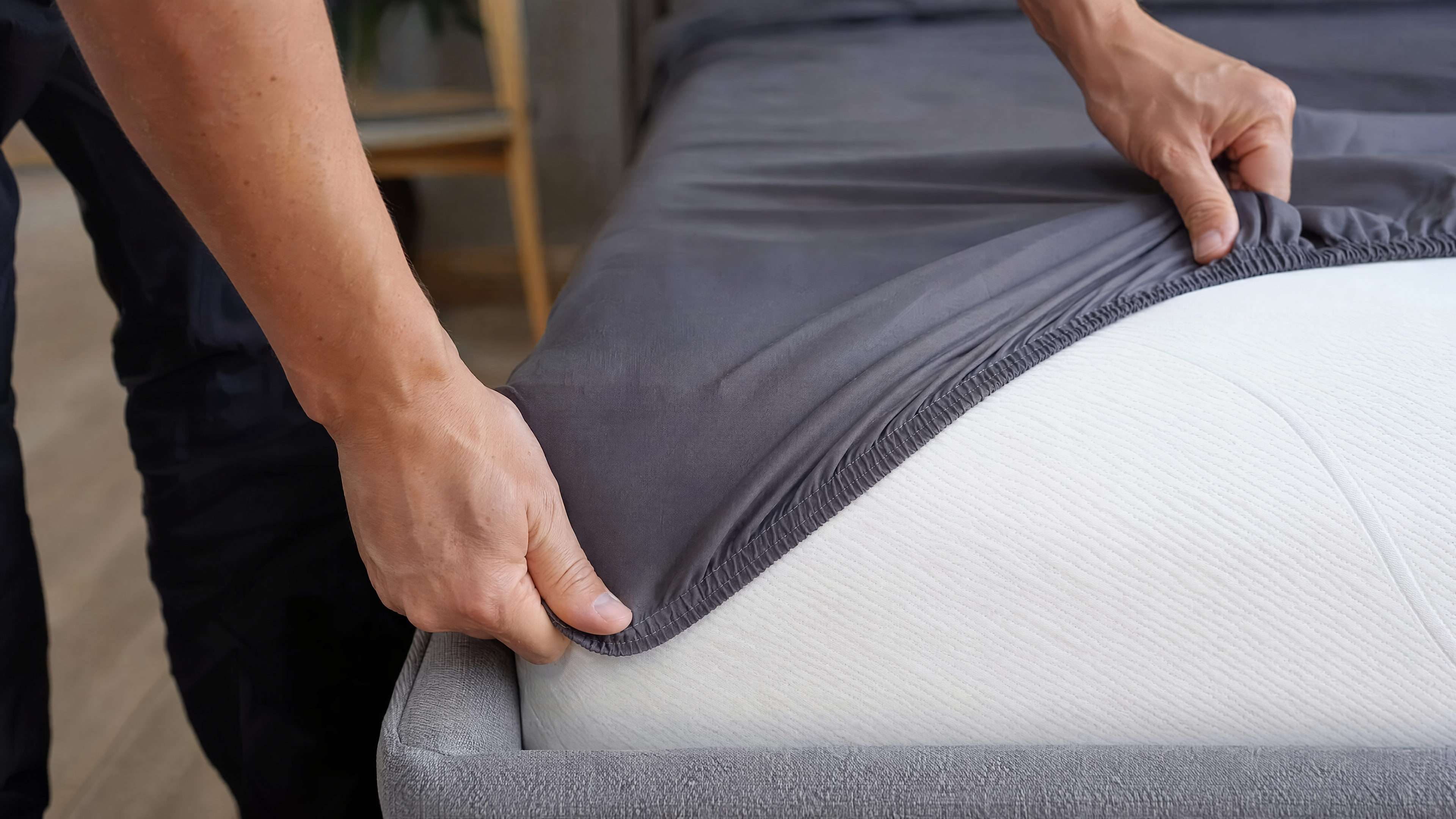
18-21 inch deep pocket with full-perimeter heavy-duty elastic in action
The standard bedding industry response to this problem is corner-only elastic — short strips of elastic sewn into each corner of the fitted sheet. This design is fundamentally inadequate for shared beds. The elastic strips fatigue after 12-18 months of use, losing their grip and allowing the sheet to slip. Combine this with cotton's 3-7 percent shrinkage (which reduces the pocket depth with every wash), and the corner-only fitted sheet becomes a nightly frustration for both partners.
LuxClub engineered around this failure mode with three specific construction features. First, the fitted sheet pockets are cut to 18-21 inches — the deepest standard in the bedding industry — accommodating virtually any mattress depth, including pillow-top, Euro-top, and mattress topper combinations. Second, a full-perimeter heavy-duty elastic band runs continuously around the entire hem of the fitted sheet, not just the corners. This distributes the tension evenly around the mattress, eliminating the corner-slip problem entirely. Third, the polyester fabric is heat-set during manufacturing, which means it is preshrunk — it will not shrink, distort, or change its pocket depth over time, even after 40+ hot water wash cycles.
For couples, these engineering choices translate directly into better sleep. The fitted sheet stays in place through every position change, every late-night bathroom trip, and every morning stretch. There is no middle-of-the-night sheet adjustment, no corner re-tucking, no "your side is fine but my side popped off" argument. The flat sheet and pillowcases benefit from the same construction philosophy — wrinkle-resistant, shrink-proof, and dimensionally stable for the life of the product.
Color and Style That Both Partners Love
The visual dimension of bedding is often dismissed as a secondary concern, but for couples, the color and style of the sheets can be a surprisingly contentious decision. One partner gravitates toward warm neutrals and earthy tones, while the other prefers crisp whites, cool grays, or bold statement colors. The result is a compromise that leaves neither partner satisfied — or, worse, a set of sheets that clashes with the bedroom's overall design scheme.
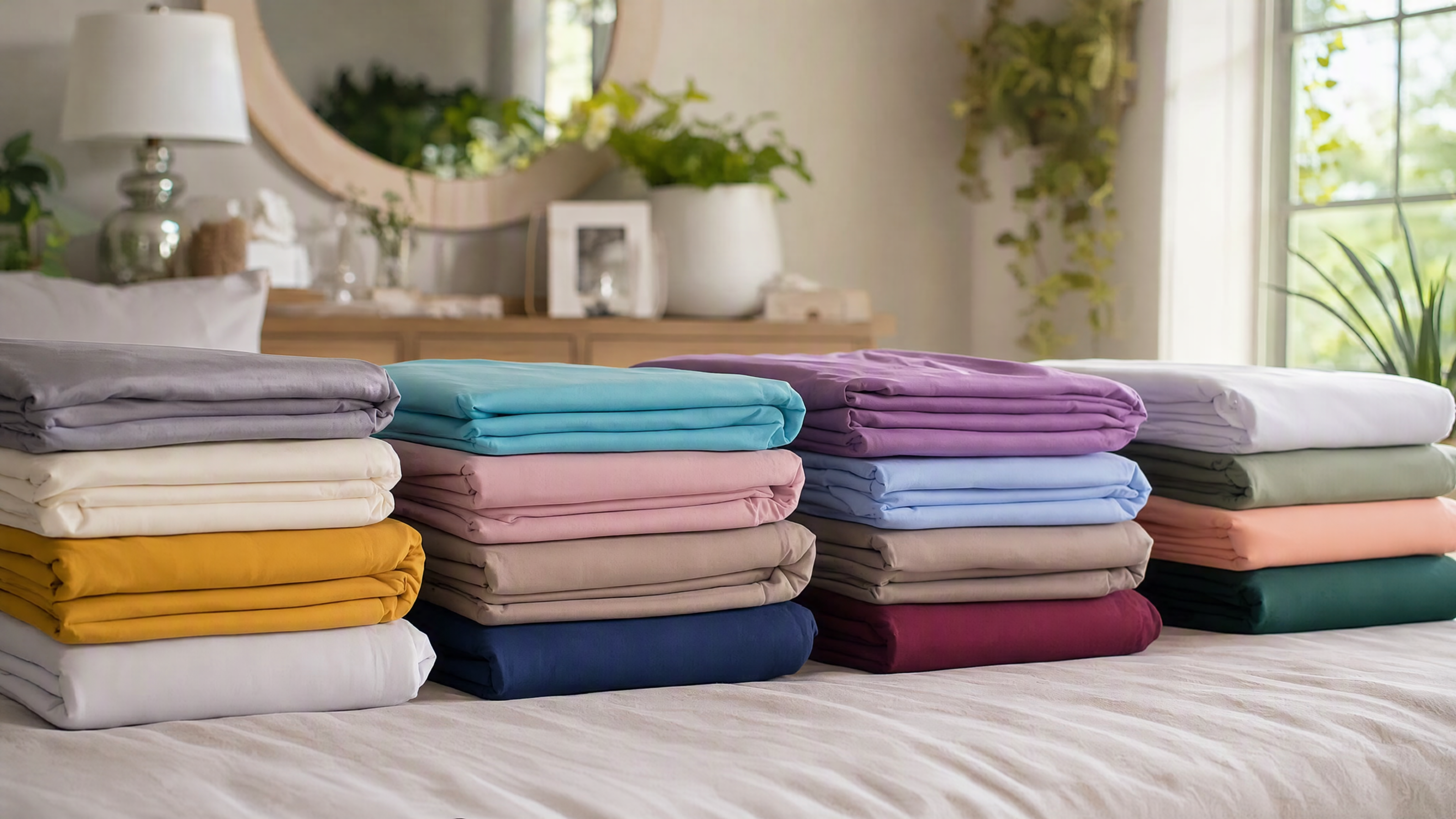
40+ fade-resistant colorways to satisfy both partners
The traditional sheet market offers limited color options, particularly in the premium space. Egyptian cotton brands typically offer 8-12 colors, and bamboo viscose brands rarely exceed 15. This narrow palette forces couples into a visual compromise — and when those limited colors start to fade (cotton's reactive dye gradually degrades after 30-40 washes), the compromise becomes a downgrade.
LuxClub offers 40+ colorways, from classic hotel white and warm ivory to deep charcoal, slate blue, blush pink, and seasonal hues. The color is applied using disperse dye technology, which embeds the pigment directly into the polyester fiber at the extrusion stage — not as a surface coating. This means the color is chemically bonded to the fiber, not sitting on top of it. The result is color that remains vibrant and uniform after 40+ high-temperature machine washes, with no fading, no bleaching, and no transfer to the mattress or pillows.
For couples, the 40+ color palette means both partners can find a shade they genuinely love — and the color stability means they will not have to replace the sheets when the color degrades six months later. The visual consistency of the bedroom stays intact, and the sheets continue to look as good as they feel.
Finding Your Couples' Perfect Sheet Set
The evidence is clear: the best sheets for couples are not those that serve one partner's preferences at the expense of the other's. They are the sheets that simultaneously address temperature differences, texture preferences, fit reliability, and style — without compromise.
Start with your individual sleep profiles. If one of you sleeps hot and the other cold, prioritize moisture-wicking microfiber over cotton or bamboo. If you have different texture preferences, look for a fabric that is soft without being clingy, smooth without being slippery. If your mattress is thicker than 12 inches, confirm that the fitted sheet has deep pockets and full-perimeter elastic — not just corner straps.
Consider the long-term cost, not just the upfront price. A $60 cotton sheet set that shrinks, pills, and loses its elastic in 12 months costs more per year of use than a $35-45 double-brushed microfiber set that stays dimensionally stable, color-fast, and structurally intact for 3-5 years. For couples, this durability math is even more important because the sheets are subjected to double the wear.
Do not overlook the color. A sheet set that both partners find visually pleasing will be cared for better and replaced less often. With 40+ color options, there is no reason to settle for a color you merely tolerate.
The best sheets for couples exist at the intersection of textile engineering, thoughtful construction, and real-world usability. They keep both partners comfortable, both partners happy with the look, and both partners sleeping through the night without interruption.
LuxClub double-brushed microfiber sheet sets are engineered to meet every one of these criteria — from the 2-4°F cooling advantage and the full-perimeter heavy-duty elastic construction to the 40+ fade-resistant colorways that let both partners find their perfect shade.
FAQ
Q1: Can microfiber sheets really keep both a hot sleeper and a cold sleeper comfortable?
Yes. The key is that double-brushed microfiber does not rely on one-directional cooling. Instead, its hydrophobic capillary-wicking action actively pulls moisture away from both sleepers' skin and disperses it for rapid evaporation. The hot sleeper stays cooler because sweat is not trapped against the skin, while the cold sleeper benefits from the fabric's consistent, even temperature — no cold, clammy spots from moisture absorption. This two-directional performance is something no natural fiber can replicate.
Q2: Do deep pocket sheets with full-perimeter elastic actually stay on a thick mattress?
Yes. The 18-21 inch pocket depth combined with a continuous full-perimeter heavy-duty elastic band creates a grip that does not depend on corner tension alone. Even on pillow-top or Euro-top mattresses up to 20 inches thick, the fitted sheet wraps evenly around the entire mattress perimeter and stays in place through a full night of movement. This is a significant upgrade from corner-only elastic designs, which fatigue and slip over time.
Q3: How many washes do LuxClub sheets last before fading or pilling?
LuxClub sheets are engineered to withstand 40+ high-temperature machine washes with no fading, no pilling, and no dimensional change. The disperse dye technology embeds color into the fiber itself, and the continuous-filament polyester construction has no free fiber ends to pill. Most users report the sheets still look and feel like new after 2-3 years of regular use.
Q4: Are double-brushed microfiber sheets breathable? Will they trap body heat?
Yes, they are breathable — but through a different mechanism than cotton. Microfiber's breathability comes from its moisture vapor transmission rate (MVTR), which allows sweat vapor to pass through the fabric while the fiber itself remains dry. Cotton, by contrast, absorbs the moisture and holds it, which actually creates a heat-trapping effect as the wet fabric clings to the skin. Double-brushed microfiber's micro-ventilation zones between the raised filaments also promote convective airflow, keeping the sheet surface cool and dry.
Q5: What if one partner wants a cool color and the other wants a warm tone?
LuxClub offers 40+ colorways spanning the full spectrum — from cool slate blues and sage greens to warm ivories, blushes, and deep charcoals. This wide selection means couples can find a color that genuinely satisfies both partners, or choose a shade that complements the existing bedroom decor. The disperse dye technology ensures the color stays vibrant for the life of the sheets, so the visual compromise is a permanent solution, not a temporary one.