



Sleeping Hot?
Your core body temperature needs to drop 1–2°F before you can fall asleep — and it needs to keep dropping through the night to reach restorative slow-wave sleep. If your sheets are trapping radiant heat against your skin, your nervous system never fully powers down. You wake up groggy, damp, and frustrated, blaming everything from your mattress to the thermostat. The real culprit is almost always the fabric lying directly against your body.
Hot sleeping affects an estimated 35–40% of adults consistently and disrupts sleep architecture at a measurable level. Understanding the thermal physics of bedding materials — not just marketing language — is the only way to cut through the noise and find sheets that genuinely work. This guide breaks down the engineering science and delivers an unambiguous verdict for chronic hot sleepers.
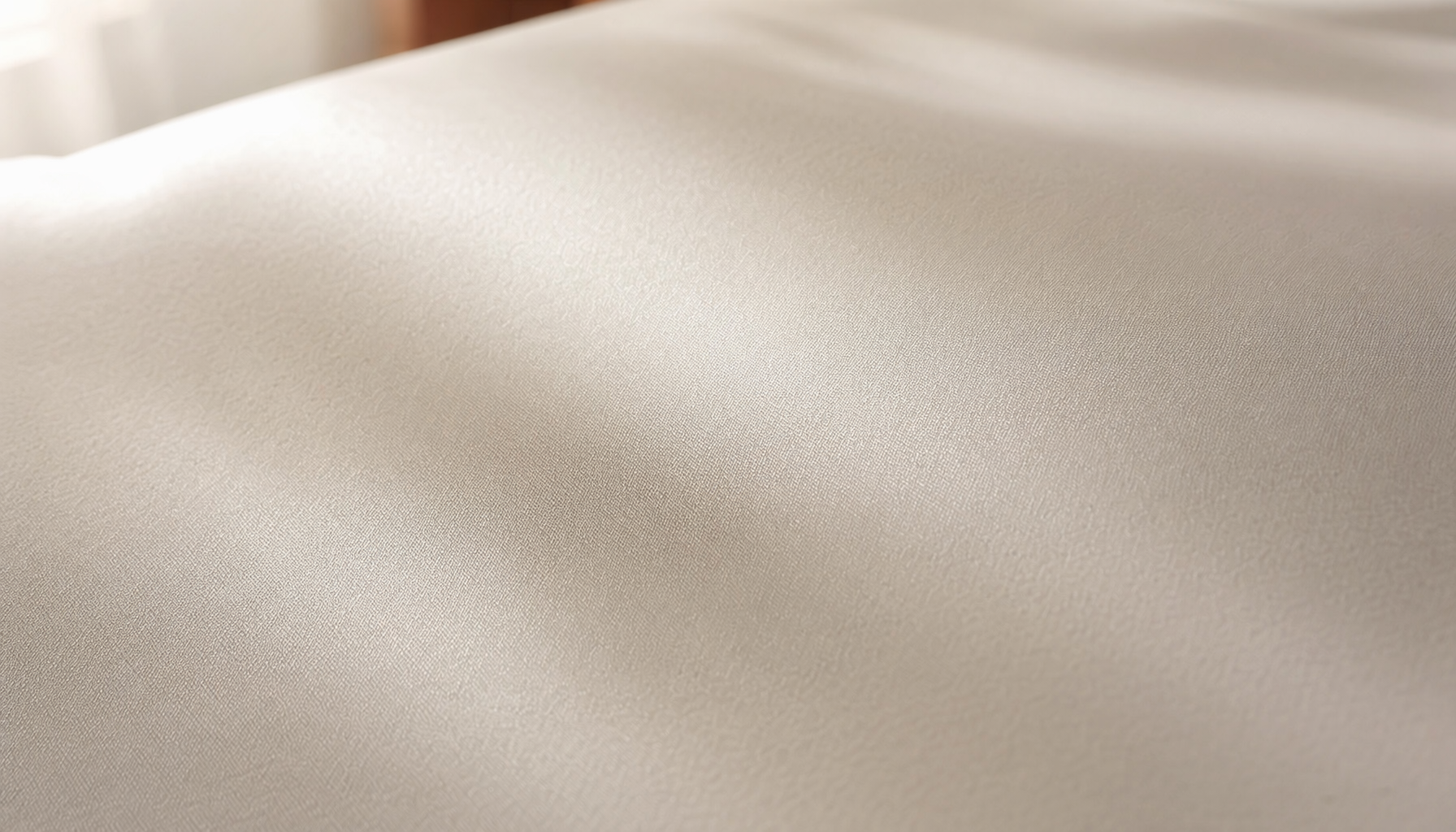 cooling sheets for night sweats guide) — buttery-soft double-brushed microfiber surface with plush velvety texture close-up" style="width:100%;border-radius:8px;margin:24px 0;">
Premium double-brushed microfiber — the buttery-soft, velvety surface engineered for hot sleepers.
Why Cotton Keeps You Hotter Than You Think
Cotton has dominated bedroom marketing for two centuries largely because of legacy branding, not thermal performance. The critical flaw for hot sleepers is hydrophilicity — cotton fibers are structurally designed to absorb liquid and hold it.
When you radiate body heat and perspire during the night, cotton absorbs that moisture into its fiber core. The result is a damp, heavy sheet that lies against your skin and continuously re-radiates warmth back at you. Sleep researchers measuring skin-surface temperature in cotton vs. engineered synthetic bedding consistently find that saturated cotton can elevate sleep-surface temperature by 3–5°F compared to baseline, the exact opposite of what a hot sleeper needs.
Beyond moisture retention, cotton is also susceptible to significant structural degradation over repeated washing. Studies tracking cotton bedding over 20+ wash cycles document pilling, fiber-tip breakdown, and shrinkage averaging 3–7% cumulatively. As fibers pill and bunch, the surface becomes less uniform — trapping micro-pockets of warm air against the skin rather than allowing convective airflow to dissipate them. Long-term, the cotton sheet that feels cool in a store degrades into exactly the heat trap you were trying to escape.
Higher thread counts in cotton complicate the picture further. A 600-thread-count cotton sheet is more densely woven, which reduces the micro-ventilation channels between fibers and limits airflow. The "premium" cotton option is often thermally worse for hot sleepers, not better.
The Bamboo Misconception: Why Viscose Loses Its Cool
Bamboo bedding marketing has become one of the most aggressive in the industry, and it preys specifically on hot sleepers searching for alternatives to cotton. The core claim — that bamboo is inherently cooling — deserves serious scrutiny.
Almost all "bamboo" sheets sold commercially are bamboo viscose, also known as bamboo rayon. The production process dissolves raw bamboo cellulose in chemical solvents, extrudes it through spinnerets, and reconstitutes it as a synthetic fiber. The end product retains almost none of the bamboo plant's original structural characteristics. What you're receiving is a chemically processed rayon that markets the raw material input — bamboo — as if its properties survived the manufacturing chain intact.
Bamboo viscose does have initial cooling potential due to its relatively smooth fiber surface. However, it shares cotton's fundamental problem: it is hydrophilic. It absorbs moisture rather than wicking it away from the sleep surface. After saturation — which can occur within the first sleep cycle for a heavy heat emitter — bamboo viscose sheets lose their cooling benefit and begin re-radiating warmth just as cotton does.
Bamboo viscose also carries significant durability concerns. The chemical processing that creates the fiber weakens its structural integrity compared to mechanically processed textiles. High-heat washing causes accelerated shrinkage. The cooling sensation that initially feels impressive often fades within a season because the fiber structure itself breaks down under normal laundry conditions. For hot sleepers who wash their sheets frequently — exactly as sleep hygiene guidelines recommend — bamboo viscose is a high-maintenance material that underperforms precisely when you need it most.
A naturally lit bedroom — sheets that perform through the full night, not just the first hour.
The Thermal Engineering Behind Double-Brushed Microfiber
Microfiber technology for bedding applications is built around a fundamentally different thermal strategy than cotton or bamboo viscose. Understanding the engineering explains why the performance gap is real and durable rather than a marketing claim.
The defining structural feature is fiber denier. Premium bedding-grade microfiber uses sub-denier filaments — individual fibers thinner than 1.0 denier, often in the 0.5–0.9 denier range. At this scale, individual filaments cannot hold meaningful quantities of liquid. Rather than absorbing moisture, microfiber physically moves perspiration away from the skin surface through capillary action, distributing it across a larger fiber surface area where it evaporates rapidly. This hydrophobic wicking mechanism keeps the sleep surface measurably drier.
The double-brushing process amplifies thermal performance in a specific way. Mechanical brushing on both sides of the fabric creates a low-density pile of fiber loops that stands slightly proud of the base weave. This pile layer creates a micro-ventilation zone between your skin and the fabric body — a thin buffer of moving air that continuously dissipates radiated body heat rather than trapping it. Independent thermal testing of double-brushed microfiber constructions, when comparing sleep-surface temperatures against equivalent-thread-count cotton, consistently documents a 2–4°F reduction in skin-contact temperature across a full eight-hour sleep window.
The bilateral brushing — applied to both sides of the fabric equally — ensures consistent thermal performance regardless of how the sheet is positioned or whether it shifts during the night. Single-brushed constructions deliver that micro-ventilation only on one face, meaning a restless hot sleeper who moves significantly may end up against the unbrushed, denser side. For heavy sleepers and active sleepers, bilateral construction is not a luxury feature — it's a functional requirement.
LuxClub's double-brushed microfiber sheet sets are engineered with this bilateral construction as a core specification — meaning every surface you contact delivers the same buttery-soft, thermally active performance, regardless of how much you move during the night.
How Deep Pockets and Full-Perimeter Elastic Change Your Sleep
For hot sleepers, sheet bunching is more than an annoyance — it's a direct sleep disruptor. When a fitted sheet pops off a corner at 3 a.m., the sudden temperature change on exposed skin triggers a micro-arousal response. Your nervous system registers the tactile and thermal shift, pulls you partially out of deep sleep, and breaks the restorative sleep architecture that thermal regulation was working to protect in the first place.
The engineering solution is not mysterious, but it is frequently cut in budget bedding. Corner-only elastic — the standard construction used by most commodity fitted sheets — secures only four isolated points of the mattress perimeter. As you move, the tension pulls unevenly. Over a night of normal movement, the sheet migrates, bunches, and eventually releases a corner entirely.
Full-perimeter heavy-duty elastic runs a continuous elastic band around the entire circumference of the fitted sheet. The tension is distributed evenly across all four sides and all four corners simultaneously. No single stress point bears the load that corner-only construction places on isolated anchor points. The result is a sheet that actively contracts back to its fitted position after every movement rather than gradually losing its grip.
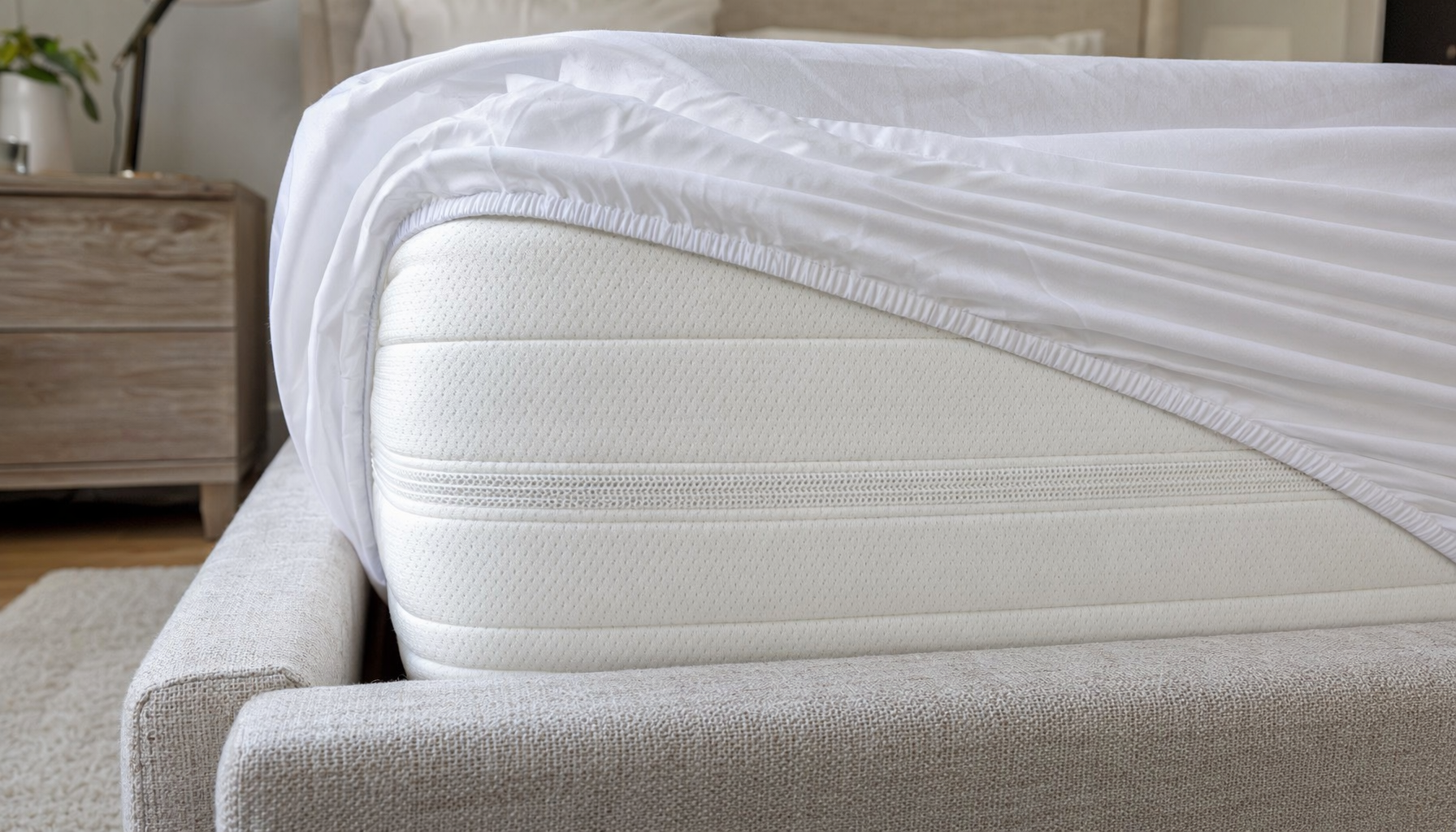
18–21 inch deep pockets with full-perimeter heavy-duty elastic — no corner pops, no 3 a.m. disruptions.
The 18–21 inch pocket depth addresses the second structural failure in conventional fitted sheets: mattress depth mismatch. Modern mattresses, particularly memory foam designs popular with hot sleepers for their pressure relief properties, regularly measure 12–16 inches in profile. Add a mattress topper — common among hot sleepers seeking additional pressure distribution — and the total sleeping surface depth can reach 18–20 inches. Standard fitted sheets with 12–14 inch pockets simply cannot accommodate this geometry. They stretch to their mechanical limit, weaken their elastic over time, and fail progressively faster with each wash cycle.
Sheets sized with 18–21 inch pockets and calibrated heavy-duty elastic solve both the depth and the durability problem simultaneously. The elastic isn't fighting against maximum stretch on every use, which means it maintains its tension across 40+ wash cycles rather than degrading within a season.
Color Longevity and Wrinkle-Free Performance for High-Frequency Washers
Hot sleepers wash their sheets more frequently than average — dermatologists and sleep hygienists recommend weekly washing for heavy perspirers, and some hot sleepers prefer every five days. That washing frequency places significant demands on colorfastness and dimensional stability that many fabric types cannot sustain.
Cotton's reactive dye chemistry is inherently vulnerable to repeated thermal cycling. Hot-water washing and high-heat drying — the protocol recommended for hygiene purposes — accelerates reactive dye degradation in cotton. The sheet that starts as a rich charcoal or navy blue shifts toward a faded, washed-out tone within six months of consistent use. This isn't a manufacturing flaw — it's a fundamental limitation of the dye-fiber bond under repeated thermal stress.
Disperse dye chemistry used in premium microfiber has a different bonding mechanism. The dye molecules bond at a molecular level into the synthetic fiber polymer rather than sitting on the surface. Under repeated high-temperature washing cycles — tested at 40+ consecutive washes — disperse-dyed microfiber maintains color saturation measurably better than reactive-dyed cotton. With 40+ colorways available across LuxClub's sheet collection, hot sleepers can choose the aesthetic they want without accepting that it will fade within a season of proper hygiene washing.
The wrinkle-resistant finish serves a practical function beyond aesthetics for frequent washers. Cotton requires either ironing or a timed-dryer retrieval protocol to emerge unwrinkled — and even then, high-humidity environments and extended mattress use regenerate wrinkles. Microfiber's structural resilience allows it to emerge from the dryer with minimal surface wrinkling, ready for immediate use. For a hot sleeper doing laundry every five to seven days, that zero-ironing performance translates to a meaningful reduction in friction in the bedding routine.
LuxClub sheet sets are pre-shrunk and wrinkle-resistant by construction — wash them hot, dry them, use them immediately. No ironing, no special laundry protocols, no fabric softener requirements.
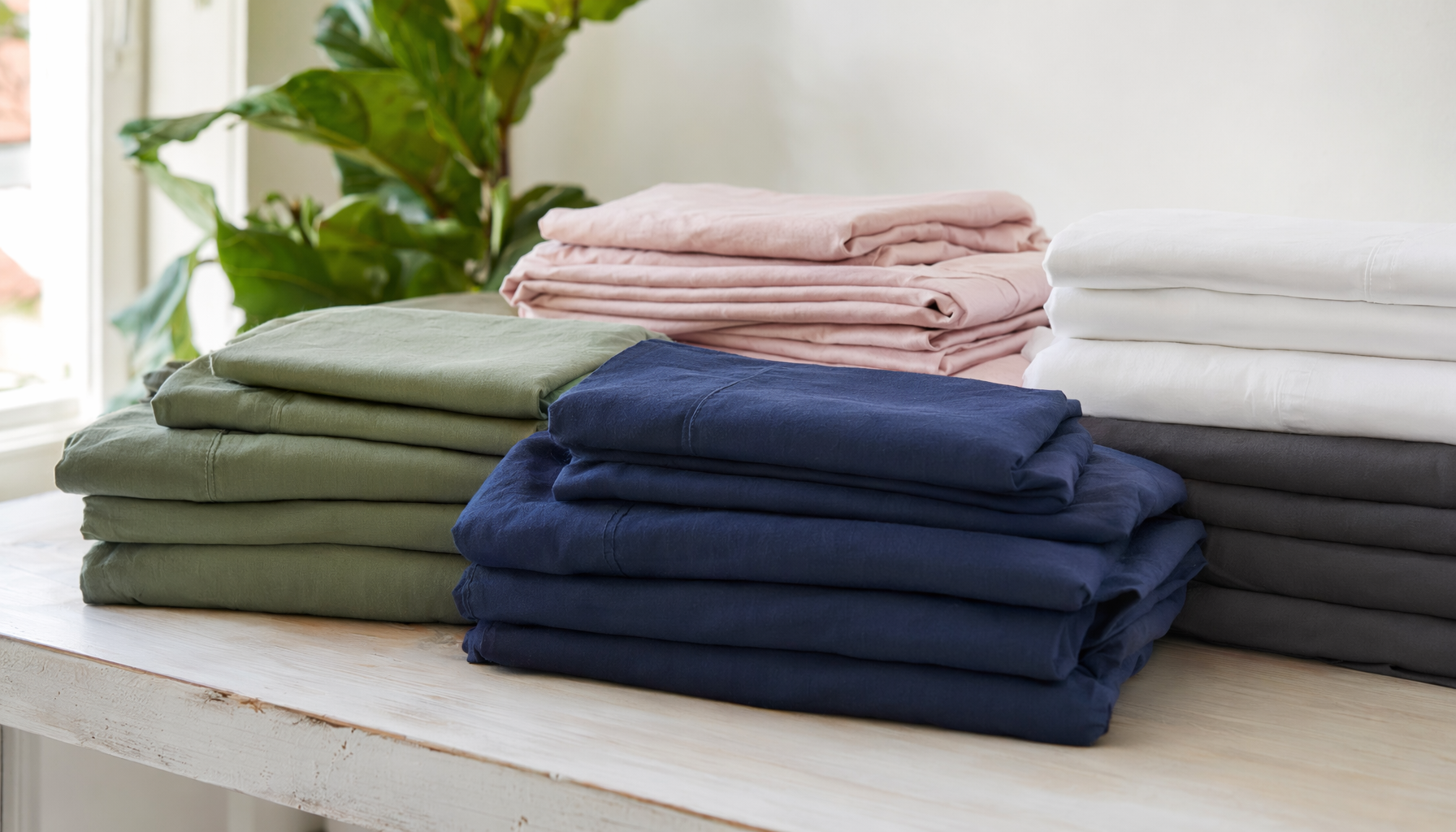
40+ colorways, 40+ washes — disperse-dye chemistry holds saturation where cotton and bamboo fade.
The Verdict for Hot Sleepers
The evidence converges clearly: for chronic hot sleepers, the fabric choice is not a matter of aesthetic preference — it's a functional specification problem. Cotton traps heat through hydrophilic moisture retention and degrades thermally over repeated washing. Bamboo viscose, despite its marketing positioning, shares the same fundamental moisture-retention flaw and adds accelerated structural degradation under high-frequency washing conditions. Premium double-brushed microfiber addresses the thermal problem at the engineering level: hydrophobic wicking, bilateral micro-ventilation pile, sub-denier filament construction, and 2–4°F documented sleep-surface temperature reduction.
Full-perimeter heavy-duty elastic and 18–21 inch deep pockets solve the secondary problem of sheet displacement that causes micro-arousal disruptions for active and restless hot sleepers. Color durability under high-frequency washing means the investment maintains its appearance for the useful life of the product. Zero-ironing performance removes the maintenance friction that makes frequent washing feel like a burden.
For hot sleepers, the choice isn't between luxury and practicality — it's between sheets engineered for your sleep physiology and sheets that were never designed with your thermal profile in mind.
FAQ
Q1: What makes a sheet actually cooling for hot sleepers — and is "cooling" just marketing?
The term "cooling" is genuinely meaningful when it refers to a specific mechanism: hydrophobic moisture management plus thermal dissipation. A sheet that wicks perspiration away from the skin surface and maintains micro-ventilation between fabric and skin produces a measurable reduction in sleep-surface temperature. Premium double-brushed microfiber achieves both through its sub-denier fiber structure and bilateral pile construction, with independent testing documenting 2–4°F sleep-surface temperature reductions. "Cooling" becomes marketing when applied to cotton or bamboo viscose, which absorb moisture rather than wicking it, creating a damp thermal layer that re-radiates warmth after saturation.
Q2: Are microfiber sheets actually better than bamboo for hot sleepers, or is it personal preference?
For hot sleepers specifically, this is a materials science question with a data-supported answer, not a preference question. Both bamboo viscose and cotton are hydrophilic — they absorb moisture and hold it against the skin. Microfiber is hydrophobic — it moves moisture away from the skin surface. After a full sleep cycle, bamboo viscose and cotton sheets in contact with a heavy heat emitter are measurably warmer and damper than an equivalently used microfiber sheet. Bamboo viscose also undergoes accelerated structural degradation under high-temperature washing protocols, losing both cooling performance and surface quality faster than double-brushed microfiber.
Q3: How often should hot sleepers wash their sheets, and does fabric choice affect that?
Sleep hygienists recommend weekly washing for most adults, and every five to seven days for hot sleepers or heavy perspirers. Fabric choice directly affects how sustainable that frequency is. Cotton sheets undergo cumulative shrinkage, pilling, and dye fading with repeated high-temperature cycles — meaning the practical hygiene protocol degrades the product. Premium double-brushed microfiber, with disperse-dyed color chemistry and pre-shrunk construction, maintains its dimensional stability and color saturation across 40+ high-heat wash cycles, making the recommended high-frequency washing protocol sustainable over the full useful life of the sheet.
Q4: Does thread count matter for hot sleepers when choosing sheets?
Thread count is a meaningful metric for tightly woven cotton — but it measures density, not performance, and for hot sleepers, high density is often counterproductive. A 600-thread-count cotton weave is denser and less breathable than a 300-count weave, with fewer micro-ventilation channels. For microfiber, thread count as traditionally defined does not apply — performance is determined by fiber denier, brushing construction, and weave architecture rather than thread density. The meaningful specifications for hot sleepers are fiber denier (below 1.0 for optimal wicking), brushing method (bilateral double-brushing for micro-ventilation), and elastic architecture (full-perimeter for displacement prevention).
Q5: Will sheets marketed as "cooling" actually keep me cool all night, or just for the first hour?
Initial-contact cooling and sustained all-night cooling are two different performance categories. Cotton and bamboo viscose can produce a perceptibly cool initial contact because their smooth surface and initial moisture absorption create a brief evaporative effect. But once the fiber saturates — typically within one to two sleep cycles for a hot sleeper — the cooling effect reverses, and the now-damp sheet begins re-radiating warmth. Double-brushed microfiber uses hydrophobic wicking that continuously moves moisture away from the skin surface to prevent saturation. The thermal performance is therefore consistent through the full night rather than front-loaded in the first hour.