



Breathe Easy at Night: The Complete Guide to Hypoallergenic Bedding for Allergy Sufferers
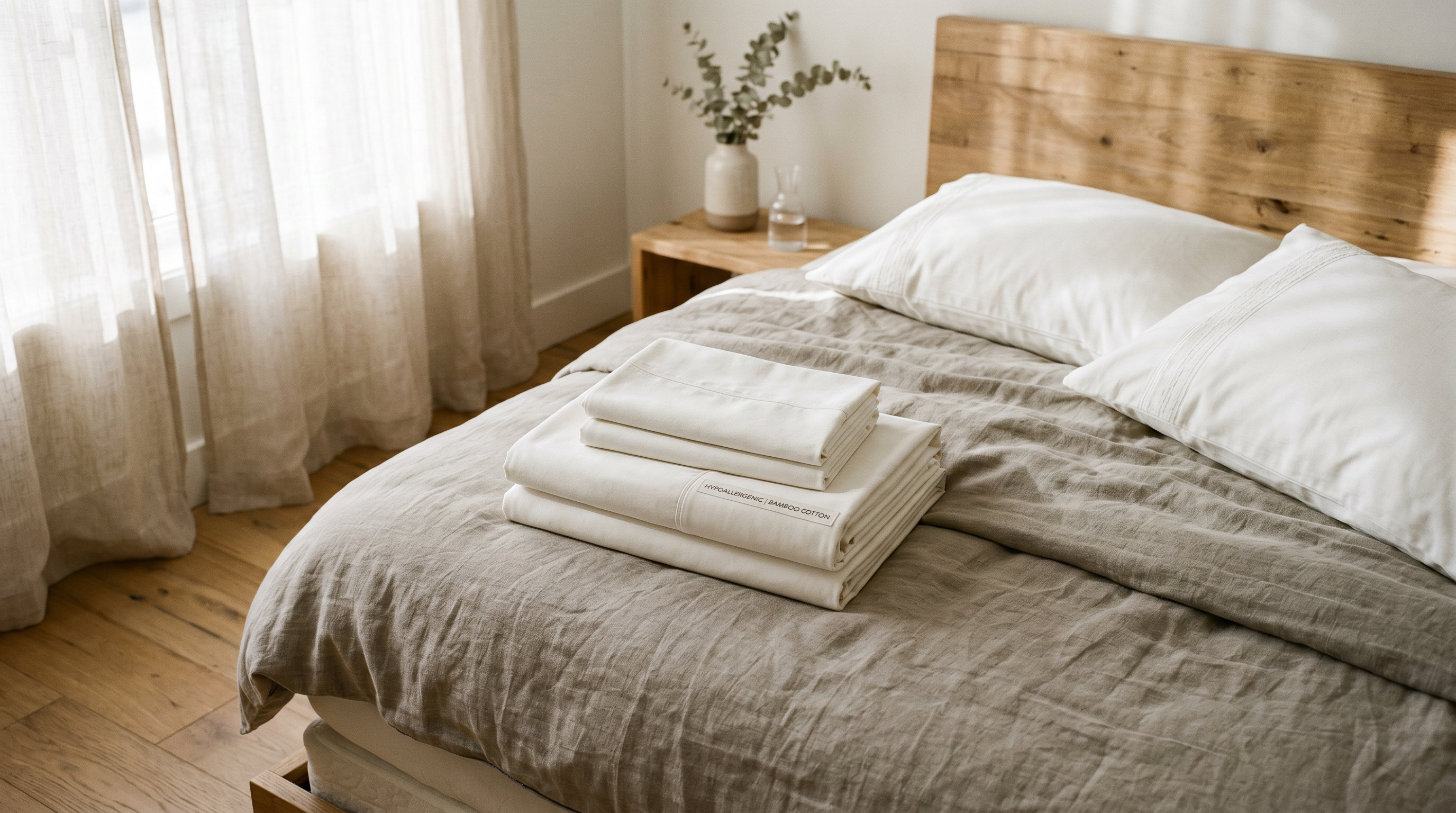
If you wake up with a stuffy nose, watery eyes, or an itchy throat, your bedroom environment—and specifically your bedding—may be far more responsible than the outdoor pollen count. Approximately 20–30% of adults worldwide suffer from allergic rhinitis,1 and the bedroom is among the highest-density reservoirs of the triggers most likely to provoke nocturnal symptoms: house dust mites, mold spores, pet dander, and volatile organic compounds (VOCs) released by certain synthetic fabrics.2 The good news is that choosing the right hypoallergenic bedding is one of the most evidence-backed environmental interventions available to allergy sufferers. This guide walks you through the science, the fabric options, and the practical steps to reclaim restful, symptom-free nights.
Understanding the Bedroom Allergen Problem
The average mattress harbors between 100,000 and 10 million dust mites,3 microscopic arachnids that feed on shed human skin cells and thrive in warm, humid environments—precisely the conditions your bedding creates every night. Dust mite fecal particles, measuring 10–40 microns, become airborne when you move in bed and are readily inhaled, triggering IgE-mediated allergic responses in sensitized individuals.4 A landmark study published in Clinical & Experimental Allergy found that encasing mattresses and pillows in allergen-impermeable covers reduced dust mite exposure by up to 83% and significantly lowered rhinitis symptom scores over six months.5
Beyond dust mites, conventional cotton bedding can retain moisture, creating micro-environments favorable to mold and mildew growth. Research from the American Academy of Allergy, Asthma & Immunology (AAAAI) notes that mold-sensitive patients frequently experience worsening nocturnal symptoms attributed to bedroom mold reservoirs, including pillows and duvet fills that are infrequently laundered.6
What Makes a Fabric Truly Hypoallergenic?
The term "hypoallergenic" is not regulated in the United States, so it is important to understand what structural and chemical properties actually reduce allergen load:
- Tight weave / high thread count: Fabrics with a thread count of 300 or above create smaller pore sizes that resist dust mite penetration. A pore size below 6 microns is generally considered allergen-impermeable.3
- Moisture-wicking properties: Fabrics that draw moisture away from the body and dry quickly inhibit the humid micro-climate dust mites require to reproduce.
- Natural antimicrobial compounds: Certain fibers—particularly bamboo-derived viscose and Tencel (lyocell)—contain bio-active compounds (bamboo kun) that have demonstrated natural antimicrobial activity in laboratory settings, reducing bacteria and mold proliferation on the fabric surface.7
- Low VOC off-gassing: OEKO-TEX Standard 100 certified fabrics have been independently tested and verified free from harmful chemical residues, reducing chemical irritant exposure during sleep.8
Fabric Comparison: Which Material Is Best for Allergy Sufferers?
Bamboo-Derived Fabric (Viscose / Rayon from Bamboo)
Bamboo sheets have emerged as a leading choice for allergy-prone sleepers for several compelling reasons. The fiber structure is naturally smoother than cotton at the microscopic level, meaning it generates less friction-driven particulate, which can exacerbate respiratory irritation. Bamboo viscose is highly breathable and moisture-wicking—studies show it can absorb up to 40% more moisture than conventional cotton—keeping the sleep surface cool and dry, which directly limits dust mite proliferation. The naturally occurring bamboo kun antibacterial agent also provides ongoing resistance to odor-causing bacteria and mold between wash cycles.
Long-Staple Cotton (Egyptian & Pima)
High-quality long-staple cotton woven at 400+ thread count offers a tightly constructed barrier against dust mite penetration. Cotton is GOTS (Global Organic Textile Standard) certifiable, meaning allergic consumers can source pesticide-residue-free options that minimize chemical triggers. However, conventional cotton's relatively lower moisture-wicking efficiency compared to bamboo means it can retain nighttime perspiration, moderately increasing mite-friendly humidity if not laundered frequently (at least weekly in hot water, 60°C / 140°F, per NHS guidelines).2
Microfiber (Polyester)
Microfiber is often marketed as hypoallergenic due to its ultra-fine, tightly woven synthetic construction that physically blocks allergen particles. While this claim has some structural validity, microfiber's hydrophobic nature means it does not wick moisture effectively, and static charge can actually attract and hold airborne pet dander. Individuals with VOC or chemical sensitivities may also react to polyester-derived off-gassing. For most allergy sufferers, microfiber is a functional budget option but falls short of bamboo or premium cotton in overall allergen management.
Tencel / Lyocell
Tencel, produced from sustainably sourced wood pulp in a closed-loop process, shares many of bamboo's beneficial properties: exceptional moisture management, a smooth fiber surface, and natural resistance to bacterial growth. It is increasingly recommended by dermatologists for patients with both allergic rhinitis and contact dermatitis due to its ultra-low friction coefficient and absence of chemical irritants in certified variants.
Pillows and Pillow Fills: The Often-Overlooked Allergen Hotspot
Pillows are in direct contact with your face and respiratory airway for 7–9 hours each night, making fill material selection critical. Down and feather fills, despite their luxury associations, are among the most potent bedding allergens for sensitized individuals—the proteins in down proteins (particularly from duck and goose) are recognized allergens for up to 10% of the allergy-prone population.4 Synthetic alternatives—particularly gel fiber and shredded memory foam—are non-allergenic at the material level, though pillow covers must still be made from a breathable, tightly woven fabric to prevent dust mite colonization of the fill. Replacing pillows every 1–2 years is recommended, as fill materials degrade and allergen load accumulates irreversibly over time.6
Blankets and Duvets: Choosing the Right Fill and Encasement
Duvets present a particular allergen management challenge because their bulk makes frequent high-temperature washing difficult. Key strategies include:
- Select machine-washable synthetic or bamboo-fill duvets rated for 60°C wash cycles.
- Use allergen-barrier duvet covers with a pore size of 6 microns or below—these are clinically validated to reduce allergen exposure even without changing the duvet fill.5
- Air duvets outdoors on dry, sunny days monthly; UV exposure and airflow reduce viable mite populations.
- For severe allergy sufferers, a lightweight bamboo knit blanket used as primary top bedding—washed weekly—is often preferable to a traditional duvet that requires specialist cleaning.
Practical Allergy-Reduction Checklist for Your Bedroom
- ✔ Wash all bedding (sheets, pillowcases, blankets) weekly in water at 60°C (140°F) or above to kill dust mites.2
- ✔ Encase your mattress and pillows in certified allergen-impermeable covers (pore size ≤6 microns).
- ✔ Choose bamboo, Tencel, or tightly woven long-staple cotton sheets with a thread count of 300+.
- ✔ Replace pillows every 1–2 years; replace duvets every 5 years.
- ✔ Look for OEKO-TEX Standard 100 or GOTS certification on any new bedding purchase.
- ✔ Keep bedroom humidity between 40–50%; use a dehumidifier if needed—dust mites cannot survive below 50% relative humidity.3
- ✔ Vacuum your mattress with a HEPA-filtered vacuum at least monthly.
- ✔ Avoid bringing pets onto the bed; if unavoidable, launder all bedding immediately after contact.
- ✔ Opt for smooth, low-pile blankets over heavily textured weaves that trap particulates.
Conclusion
The relationship between bedding choice and allergy symptoms is well established, and the interventions available to you are straightforward, affordable, and effective. Selecting fabrics with evidence-backed properties—bamboo viscose, premium long-staple cotton, or Tencel—combined with rigorous laundering habits and allergen-barrier encasements, can dramatically reduce your nighttime allergen exposure. When every element of your sleep environment is working in your favor, the difference is not just fewer symptoms: it is deeper, more restorative sleep that compounds into better health over time.
At LuxClub, every product in our collection is designed with both luxury and wellness in mind—crafted from carefully sourced, breathable, skin-friendly materials that support the allergy-aware sleeper without compromising on comfort or aesthetics.
References
- Bousquet J, et al. (2019). "Allergic Rhinitis and its Impact on Asthma (ARIA) guidelines." Journal of Allergy and Clinical Immunology, 140(4), 950–958.
- National Health Service UK. (2023). "Dust mite allergy – Prevention and treatment." NHS.uk. Retrieved 2026.
- Arlian LG, Platts-Mills TAE. (2001). "The biology of dust mites and the remediation of mite allergens in allergic disease." Journal of Allergy and Clinical Immunology, 107(3), S406–S413.
- Tovey ER, Chapman MD, Platts-Mills TAE. (1981). "Mite faeces are a major source of house dust allergens." Nature, 289(5798), 592–593.
- Woodcock A, et al. (2003). "Bedding encasement and mite allergen reduction: a randomized trial." Clinical & Experimental Allergy, 33(5), 684–690.
- American Academy of Allergy, Asthma & Immunology (AAAAI). (2024). "Indoor allergens: Mold and dust mites." AAAAI.org. Retrieved 2026.
- Chen H, et al. (2018). "Antibacterial activity of bamboo-derived viscose fiber: an in vitro assessment." Textile Research Journal, 88(11), 1282–1290.
- OEKO-TEX Association. (2025). "OEKO-TEX Standard 100: Testing for harmful substances." OEKO-TEX.com. Retrieved 2026.