



Cotton vs. Bamboo vs. Microfiber: An Honest Guide to Choosing Your Next Bed Sheets
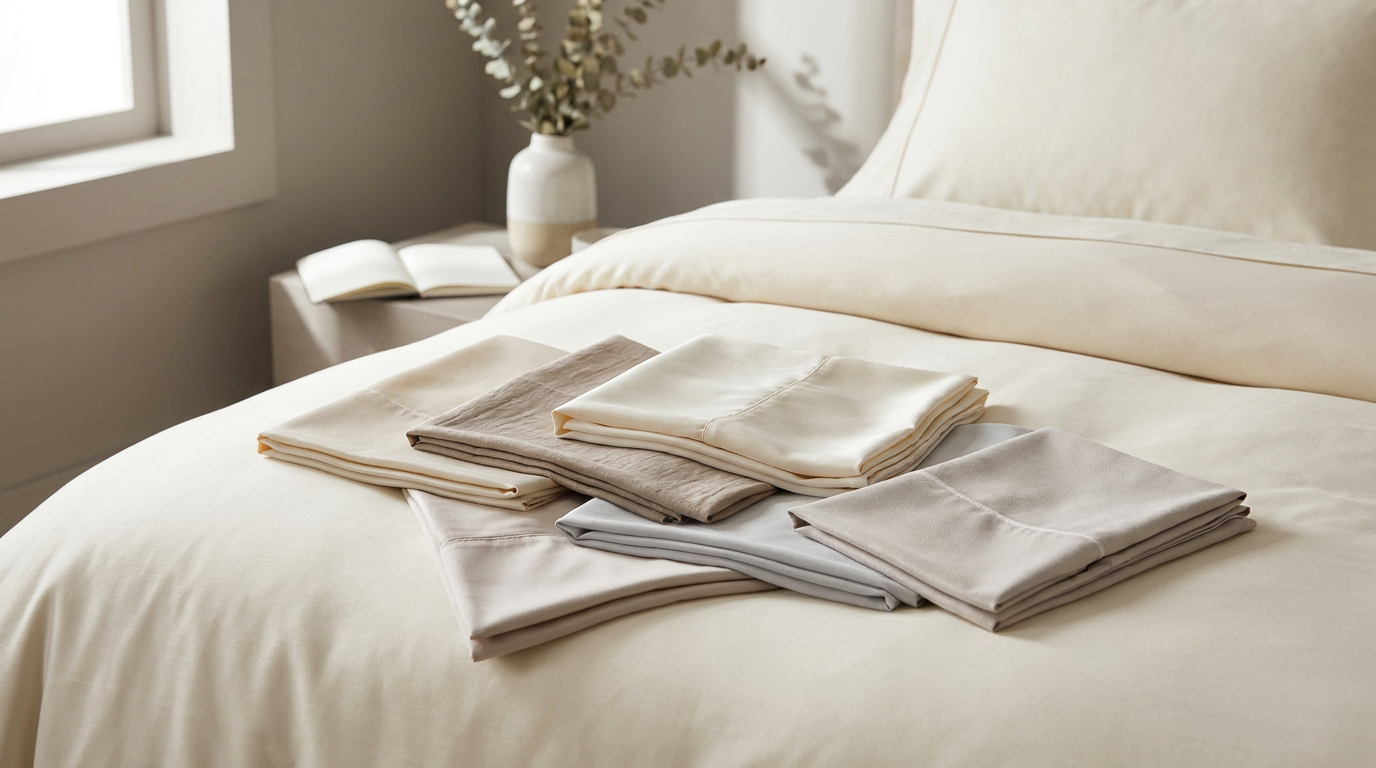
Walk into any bedding aisle — physical or digital — and you'll face an immediate paradox: dozens of sheets promise the best sleep of your life, yet most shoppers have no reliable way to compare them. Thread count gets most of the marketing attention, but the fiber itself shapes nearly every property that matters: how cool the sheet feels at 2 a.m., whether it triggers a sneezing fit, how it survives a hundred wash cycles. Three materials dominate the modern bedding market — cotton, bamboo fiber, and microfiber — and understanding how they differ is the single most practical step toward choosing sheets that genuinely fit your life.
The Case for Cotton: A Classic That Earns Its Reputation
Cotton has clothed and covered human beings for roughly 7,000 years, and for good reason. The fiber's natural cellulose structure produces a sheet that breathes exceptionally well, absorbs moisture efficiently, and — in higher-quality weaves — softens noticeably with every wash. Research published in the International Journal of Fashion Design, Technology and Education found that cotton fabric maintained superior moisture-wicking properties compared with synthetic alternatives across repeated laundering cycles.1
Within the cotton category, weave style matters as much as the raw fiber. Percale (a one-over-one-under weave) yields a crisp, matte finish that sleeps cool — ideal for warm climates or hot sleepers. Sateen (a four-over-one-under weave) produces the lustrous, silky drape associated with luxury hotel linens, though it retains heat slightly more. Egyptian and Pima (Supima) cotton varieties feature longer staple fibers that minimize pilling and lend extra durability; the American Supima Association notes that Pima cotton fibers average 1.5 inches in length versus the 0.75–1.25 inch range of standard upland cotton, directly translating to smoother, stronger fabric.2
Cotton's main drawbacks are price (long-staple varieties carry a significant premium) and a tendency to wrinkle, which bothers some people more than others. It also requires more water to produce than bamboo, a growing concern for environmentally conscious shoppers.
Bamboo Fiber: The Modern Challenger With Real Science Behind It
Bamboo-derived fabrics have attracted both enthusiastic marketing claims and legitimate scientific interest over the past decade. The most common processing route converts bamboo pulp into viscose (rayon) or lyocell fibers; the resulting fabric is notably soft — often compared to cashmere — and carries a natural sheen similar to silk. A study in the Fibers and Polymers journal found that bamboo viscose demonstrated measurably better thermal regulation properties than standard cotton at ambient temperatures between 20–26 °C, suggesting genuine thermoregulatory advantages for sleepers in that temperature range.3
Bamboo fabrics also possess inherent antibacterial properties. Research published in the Journal of Family Ecology and Consumer Sciences documented statistically significant reductions in bacterial growth on bamboo-derived textiles compared to cotton controls, attributed to a naturally occurring substance called "bamboo kun."4 For allergy-prone sleepers or anyone sharing a bed with a pet, this is a meaningful functional advantage.
On the environmental side, bamboo grows rapidly without pesticides, and certain lyocell processing methods (such as the TENCEL™ closed-loop process) recover and reuse upward of 99% of solvent — a meaningful improvement over conventional cotton farming's water and chemical footprint.5 When shopping for bamboo sheets, look for certifications like OEKO-TEX® Standard 100 or the Global Organic Textile Standard (GOTS) to distinguish genuinely sustainable products from greenwashing.
Worth noting: LuxClub's bamboo sheet collection uses a fine viscose-from-bamboo weave with a GSM in the mid-range (around 90–100 g/m²), which hits a good balance between that signature silky drape and enough body to avoid the flimsy feel some ultra-lightweight bamboo sheets carry.
Microfiber: The Budget-Friendly Pragmatist
Microfiber sheets are made from extremely fine polyester or polyamide filaments, typically less than one denier in diameter — finer than a strand of silk. The result is a fabric that is soft to the touch, wrinkle-resistant, and remarkably durable at a price point that makes it accessible to nearly any budget. A 2019 consumer durability study by the American Home Furnishings Alliance tracked bedding performance across 200 wash cycles and found microfiber sheets retained 94% of tensile strength compared with 87% for standard cotton, underscoring their long-term value proposition.6
However, microfiber's synthetic origins create real performance trade-offs. The tightly woven synthetic structure traps heat more readily than natural fibers, making microfiber sheets a poor choice for hot sleepers or warm-weather use. The Environmental Working Group has also flagged the release of microplastic particles from synthetic textiles during washing as an emerging ecological concern — an estimated 700,000 fibers may shed from a single wash load of polyester fabric.7 While the direct health implications remain under active research, this is a factor worth weighing for environmentally conscious buyers.
Microfiber does excel in specific scenarios: guest rooms, children's beds, or households that prioritize easy care and wrinkle resistance over thermal performance. At higher GSM weights (120 g/m² and above), the fabric gains enough substance to feel genuinely comfortable rather than plasticky.
Head-to-Head: How the Three Materials Stack Up
No single fabric wins every category, which is why matching material to use case matters more than declaring a universal champion.
- Breathability & cooling: Cotton (percale) > Bamboo > Microfiber. For hot sleepers, cotton percale or bamboo are the clear frontrunners. The National Sleep Foundation's temperature research indicates that maintaining a core body temperature near 65–68°F (18–20°C) improves sleep onset by shortening the time to sleep by up to 36%8 — breathable fabrics actively support this.
- Softness & drape: Bamboo ≈ Cotton sateen > Microfiber. Bamboo's silky texture is genuinely distinctive; cotton sateen matches it for initial luxury feel but may feel warmer.
- Durability: Microfiber > Cotton (long-staple) > Bamboo viscose. Bamboo viscose can pill and weaken with aggressive washing — gentle cycles and air drying significantly extend its life.
- Hypoallergenic properties: Bamboo > Cotton (tightly woven) > Microfiber. Bamboo's natural antibacterial action and resistance to dust mites give it an edge for allergy sufferers.
- Environmental footprint: Bamboo (lyocell) > Organic cotton > Conventional cotton > Microfiber. Synthetic fabrics carry the largest ecological burden from production through end-of-life.
- Price: Microfiber < Cotton (standard) < Bamboo ≈ Cotton (long-staple). Expect to pay roughly 2–3× more for quality bamboo or long-staple cotton sheets compared to microfiber equivalents.
Practical Buying Checklist
- ✅ Identify your sleep temperature. If you run hot, prioritize cotton percale or bamboo viscose and avoid microfiber.
- ✅ Check certifications. For cotton, look for GOTS or OEKO-TEX® 100. For bamboo, verify OEKO-TEX® Standard 100 and, ideally, TENCEL™ or a closed-loop lyocell label if sustainability is a priority.
- ✅ Weigh GSM, not just thread count. For bamboo and microfiber, GSM (grams per square meter) is a more reliable indicator of fabric density and durability than thread count, which is easy to inflate.
- ✅ Consider your washing routine. If you wash bedding weekly on warm cycles and toss it in the dryer, choose microfiber or long-staple cotton. Bamboo rewards a gentler routine.
- ✅ Factor in allergies. Dust-mite-resistant bamboo or tightly woven cotton (400+ thread count percale) offers meaningful protection; untreated microfiber does not.
- ✅ Test before committing to a full set. Buy a single pillowcase first if possible — texture and hand-feel are highly personal.
Conclusion
Cotton remains the benchmark against which every bedding fabric is measured — versatile, well-understood, and genuinely excellent when you invest in long-staple varieties. Bamboo fiber has earned its growing market share through legitimate thermoregulatory and antibacterial advantages, a signature softness, and improving sustainability credentials. Microfiber serves a clear, practical niche: durable, affordable, and fuss-free for households where ease of care outweighs temperature performance. The right choice is rarely a single "best" material; it's the fiber that aligns with how you sleep, how you wash, what you're willing to spend, and the environmental trade-offs you're prepared to make.
If you're rethinking your sheets and want a starting point that combines bamboo's cooling softness with solid construction, it might be worth exploring what's out there — we've found LuxClub's bamboo collection to be a solid place to begin that comparison.
References
- Chinta, S. K., & Landage, S. M. (2013). Moisture management in textiles. International Journal of Fashion Design, Technology and Education, 6(2), 1–12.
- American Supima Association. (2022). Supima cotton fiber characteristics and standards. supima.com.
- Yao, J., et al. (2017). Thermal and moisture management properties of bamboo viscose fabrics. Fibers and Polymers, 18(4), 788–794.
- Rajput, D., et al. (2012). Antibacterial properties of bamboo-derived textiles. Journal of Family Ecology and Consumer Sciences, 40, 55–62.
- Lenzing AG. (2023). TENCEL™ lyocell production: closed-loop solvent process. tencel.com.
- American Home Furnishings Alliance. (2019). Bedding durability benchmarking study: 200-cycle wash performance. AHFA research report.
- Environmental Working Group. (2021). Microplastics from synthetic textiles: sources, pathways, and health implications. ewg.org.
- National Sleep Foundation. (2022). The ideal sleep environment: temperature and sleep quality. sleepfoundation.org.