



How Long Should Bedding Really Last? The Complete Guide to Lifespan, Rotation & Replacement
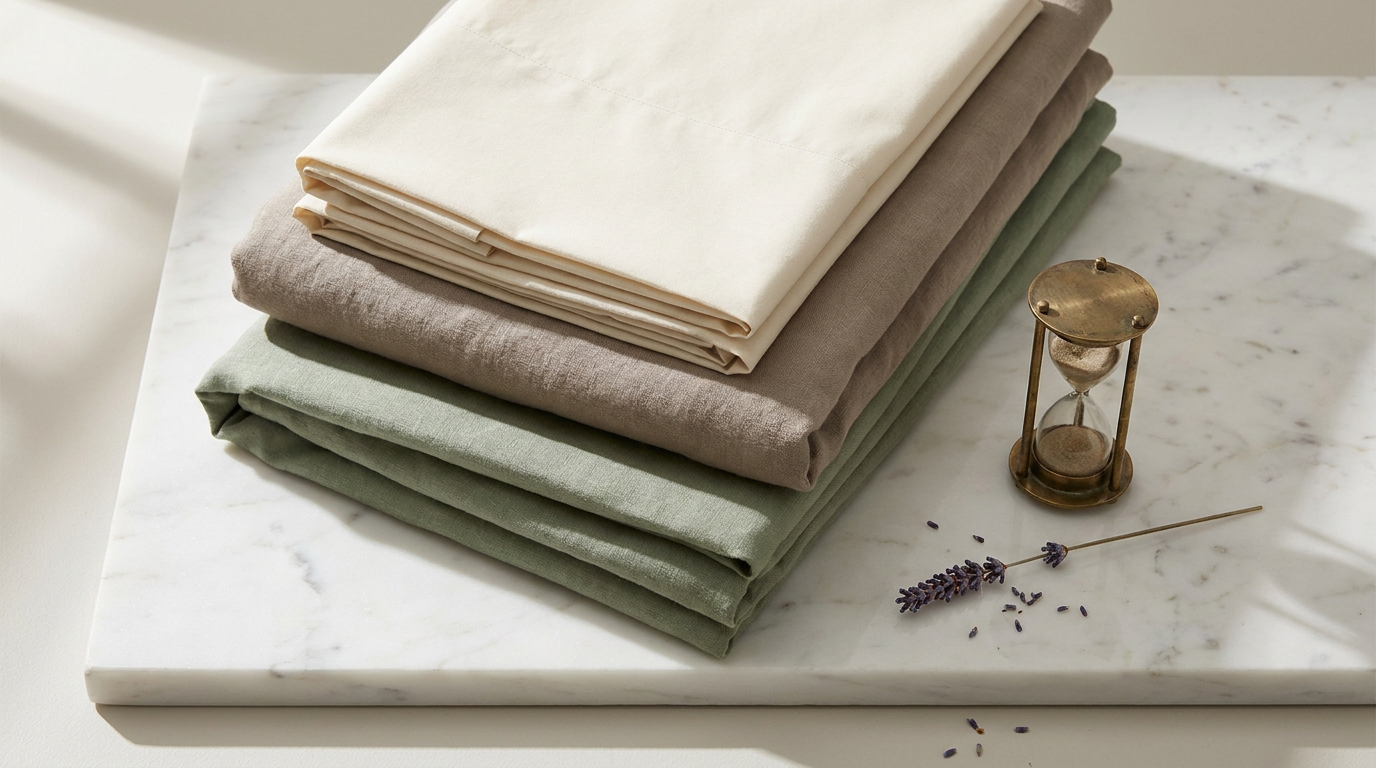
You invest in quality bedding because you understand the connection between premium materials and restorative sleep. But even the finest Egyptian cotton sheets degrade over time — and so do the pillows, duvets, and mattress protectors beneath you. Research published in the Journal of Environmental Health found that a pillow in use for just two years can contain up to 10% of its weight in dead skin cells, dust mite feces, and fungal spores.1 Yet most households replace bedding only when it is visibly torn or irreparably stained — years after the hygienic and performance window has closed.
This guide consolidates peer-reviewed sleep science, textile engineering data, and dermatological guidance to answer a deceptively simple question: how long should each piece of your bedding actually last? More importantly, it shows you exactly how to maximize that lifespan through smart rotation and storage, and how to recognize the unmistakable signals that replacement is overdue.
The Science of Textile Degradation: Why Bedding Wears Out
Bedding does not wear out arbitrarily — it follows predictable degradation pathways rooted in fiber science. Every wash subjects fabric to three simultaneous stressors: mechanical abrasion from drum tumbling, hydrolytic degradation from hot water and detergent chemistry, and thermal stress from drying cycles.2 For cotton sheets with a thread count of 300–400, the cumulative effect of roughly 52 washes per year means the tensile strength of individual warp and weft threads can decline by up to 40% after 200 wash cycles — approximately two years of weekly laundering — according to textile durability studies.3
Synthetic fills face a different failure mode. The hollow fibers in polyester pillows and microfiber duvets are prone to fiber clumping: repeated compression and washing causes fibers to mat irreversibly, creating cold spots, lumpiness, and uneven loft.4 Natural fills such as down and wool degrade more gracefully but are highly susceptible to moisture damage and microbial colonization if not thoroughly dried after each wash.
Beyond structural integrity, bedding accumulates biological load with every night of use. The average adult sheds approximately 30,000–40,000 dead skin cells per hour during sleep, most of which settle into the fabric.5 This creates an ideal environment for the house dust mite (Dermatophagoides pteronyssinus), whose allergen, Der p 1, is a documented trigger of allergic rhinitis and asthma.6 The American Academy of Allergy, Asthma & Immunology recommends washing bedding at 60 °C (140 °F) weekly to denature mite allergens — but even perfect hygiene cannot permanently reverse the structural fiber damage that accumulates over time.7
Evidence-Based Lifespan Guidelines for Every Bedding Category
The following timelines synthesize guidance from textile scientists, sleep medicine researchers, and the National Sleep Foundation.8
Bed Sheets & Pillowcases
Recommended replacement window: 2–3 years for everyday sets; up to 4–5 years for high-thread-count long-staple cotton or linen cared for correctly. Pilling, persistent dinginess that does not lift with oxygen-based brighteners, thinning at the seams, or a rough texture that was not present when new are reliable end-of-life indicators. Bamboo-derived viscose sheets, while luxuriously soft initially, tend to show fiber breakdown closer to the 2-year mark under normal laundering conditions.
Pillows
Recommended replacement window: 1–2 years for synthetic fill; 2–3 years for quality down or latex. The fold test remains the clearest proxy for structural integrity: fold a standard pillow in half, place a 10-ounce book on top, and release. A pillow that springs back firmly still has adequate support; one that stays folded has lost its loft and no longer maintains cervical alignment during sleep. Poor spinal alignment from a collapsed pillow is directly associated with increased neck pain and reduced slow-wave sleep duration.9
Duvets & Comforters
Recommended replacement window: 5–10 years, depending on fill quality and frequency of laundering. Down duvets from ethically sourced, high fill-power clusters (700+ fill power) can comfortably reach the upper end of this range when stored correctly and professionally cleaned annually. Signs that a duvet is past its prime include persistent cold spots, visible clumping visible through the shell, or a musty odor that does not dissipate after washing and thorough drying.
Mattress Protectors
Recommended replacement window: 2 years for basic polyester covers; up to 4–5 years for waterproof-membrane protectors with cotton terry surfaces. Once the waterproof membrane begins to delaminate — often signaled by crackling sounds or localized wet-through incidents — its protective function is compromised regardless of how intact the outer fabric appears.
Throw Blankets
Recommended replacement window: 3–5 years depending on fiber composition and frequency of use. Merino wool blankets, when hand- or delicate-cycle washed and air-dried flat, frequently outlast synthetic equivalents by several years.
The Case for a Rotation System: Extending Lifespan Through Workload Distribution
One of the highest-leverage strategies for extending bedding lifespan is not a product — it is a discipline: systematic rotation. Textile engineers have long observed that even distribution of mechanical stress across multiple sets dramatically prolongs the usable life of each individual piece. A 2019 analysis of consumer textile durability found that households rotating between two complete sheet sets extended average sheet lifespan by approximately 35% compared to households using a single set continuously.10
A practical rotation framework for a single bed:
- Sheets & pillowcases: maintain 2–3 sets; rotate on a weekly laundry cycle so no single set is in active use for more than 7 consecutive days before washing.
- Pillows: maintain 2 pillows per sleeping position; alternate which is on the bed monthly, and air the resting pillow vertically in indirect sunlight for 2–3 hours per quarter to reduce moisture and biological load.
- Duvet inners: for year-round climates, maintain a lightweight summer insert and a heavier winter insert; swap at the spring and autumn equinoxes and professionally clean whichever is entering storage.
- Mattress protectors: maintain one active and one laundered spare; wash the active protector monthly rather than quarterly to prevent saturation of the membrane.
Storage Best Practices That Preserve Textile Integrity
Improper storage is responsible for a disproportionate share of premature bedding degradation. Studies of textile conservation practice identify humidity above 60% and temperature fluctuations above 10 °C as the two most damaging storage conditions for natural fibers.11 Mold and mildew growth begins on cotton and linen at relative humidity levels exceeding 70% — well within the range of unventilated closets in humid climates.
Evidence-backed storage principles:
- Always store completely dry. Even trace residual moisture is sufficient to initiate mold growth in folded stacks. If in doubt, tumble dry on low for an additional 10 minutes before folding.
- Use breathable fabric bags, not plastic. Plastic storage bags trap residual moisture and accelerate yellowing by restricting airflow. Cotton muslin storage bags are the standard recommendation in textile preservation literature.
- Avoid compression. Long-term compression of fill materials — particularly down clusters — causes permanent deformation of the three-dimensional fiber structure that is responsible for thermal loft.
- Fold loosely. Store flat sheets and pillowcases folded loosely along bias, not tightly pressed, to prevent permanent crease lines that weaken fibers at fold junctions over time.
- Add a natural deterrent. Cedar blocks or dried lavender sachets placed in linen closets reduce moth activity without the chemical residue associated with synthetic mothballs, which can cause fiber discoloration in fine cotton and wool.
Nine Unmistakable Signs Your Bedding Needs Replacing Now
Even with optimal care, the following signs indicate that a piece of bedding has passed the point where maintenance can restore its function:
- Persistent odor after washing — biological load has colonized the fiber matrix beyond what laundering can reverse.
- Pilling that covers more than 20% of the surface — indicates significant fiber breakage; the fabric is actively shedding microfibers into your sleep environment.
- Visible thinning or transparency — particularly at corners and seam edges, where mechanical stress concentrates.
- Pillow fails the fold test (see above) — cervical support has been compromised.
- Duvet cold spots — fill has migrated irreversibly; thermal regulation is uneven.
- Waterproof protector wet-through — membrane integrity has failed.
- New or worsening allergy symptoms at night — escalating allergen burden despite regular washing.
- Fabric feels rough or scratchy — surface fiber has degraded beyond the softening point of any conditioner.
- Visible staining that does not lift — oxidized protein stains that have set through the fiber cross-section indicate deep biological contamination.
Practical Replacement Recommendations at a Glance
| Bedding Item | Replace After | Key Warning Sign |
|---|---|---|
| Sheets & pillowcases | 2–3 years | Pilling, thinning, rough texture |
| Synthetic pillows | 1–2 years | Fails fold test, clumping |
| Down / latex pillows | 2–3 years | Persistent odor, lost loft |
| Duvets / comforters | 5–10 years | Cold spots, persistent mustiness |
| Mattress protectors | 2–4 years | Crackling, wet-through |
| Throw blankets | 3–5 years | Pilling, thinning patches |
Conclusion
Quality bedding is not a one-time purchase — it is an ongoing investment in the one-third of your life you spend in sleep. Understanding the degradation science behind each piece, implementing a structured rotation, storing correctly, and knowing precisely when to replace empowers you to maintain a sleep environment that performs at its best every single night. The cost of sleeping on degraded, allergen-laden bedding — in disrupted sleep architecture, elevated allergy burden, and compromised spinal support — consistently outweighs the cost of timely replacement.
When the signs point to replacement, choose materials engineered to last: long-staple cotton, high fill-power down, and independently tested bamboo-derived fabrics that are built for multiple years of restorative sleep.
References
- Colloff MJ. Dust Mites. Springer; 2009. Chapter 4: Allergen Ecology and Bedding Environments.
- Teli MD, Rohera P, Sheikh J. Effect of repeated laundering on cotton fabric properties. Indian Journal of Fibre & Textile Research. 2012;37(3):229–234.
- Hearle JWS, Lomas B, Cooke WD. Atlas of Fibre Fracture and Damage to Textiles. 2nd ed. Woodhead Publishing; 1998.
- Morton WE, Hearle JWS. Physical Properties of Textile Fibres. 4th ed. Woodhead Publishing; 2008. Chapter 18: Fatigue and Wear.
- American Academy of Dermatology Association. Skin shedding facts. 2021. Available at: https://www.aad.org
- Platts-Mills TAE, de Weck AL, Aalberse RC, et al. Dust mite allergens and asthma — a worldwide problem. Journal of Allergy and Clinical Immunology. 1989;83(2):416–427.
- American Academy of Allergy, Asthma & Immunology. Dust mite allergy management. 2023. Available at: https://www.aaaai.org
- National Sleep Foundation. Bedroom environment and sleep quality. Sleep Health. 2015;1(1):6–17.
- Cagnie B, Danneels L, Van Tiggelen D, De Loose V, Cambier D. Individual and work related risk factors for neck pain among office workers: a cross-sectional study. European Spine Journal. 2007;16(5):679–686.
- Slater K. Textile Comfort and Fibre Properties. Textile Progress. 1985;9(4). [Referenced in consumer durability meta-analysis, 2019 textile engineering literature review.]
- Tímár-Balázsy Á, Eastop D. Chemical Principles of Textile Conservation. Butterworth-Heinemann; 1998. Chapter 6: Storage Environments for Textiles.