



How Often Should You Wash Your Sheets? What Sleep Scientists Actually Recommend
The answer most people give is wrong — in both directions.
Some sleep hygienists say every seven days, no exceptions. Others say bi-weekly is perfectly fine. The internet delivers everything from ‘change them daily’ to ‘they’re fine as long as they look clean.’ None of these answers are grounded in actual sleep science, and nearly all of them ignore the single most important variable: the material your sheets are made from.
Here is the evidence-based answer — and why the right number changes depending on how you sleep and what you sleep on.
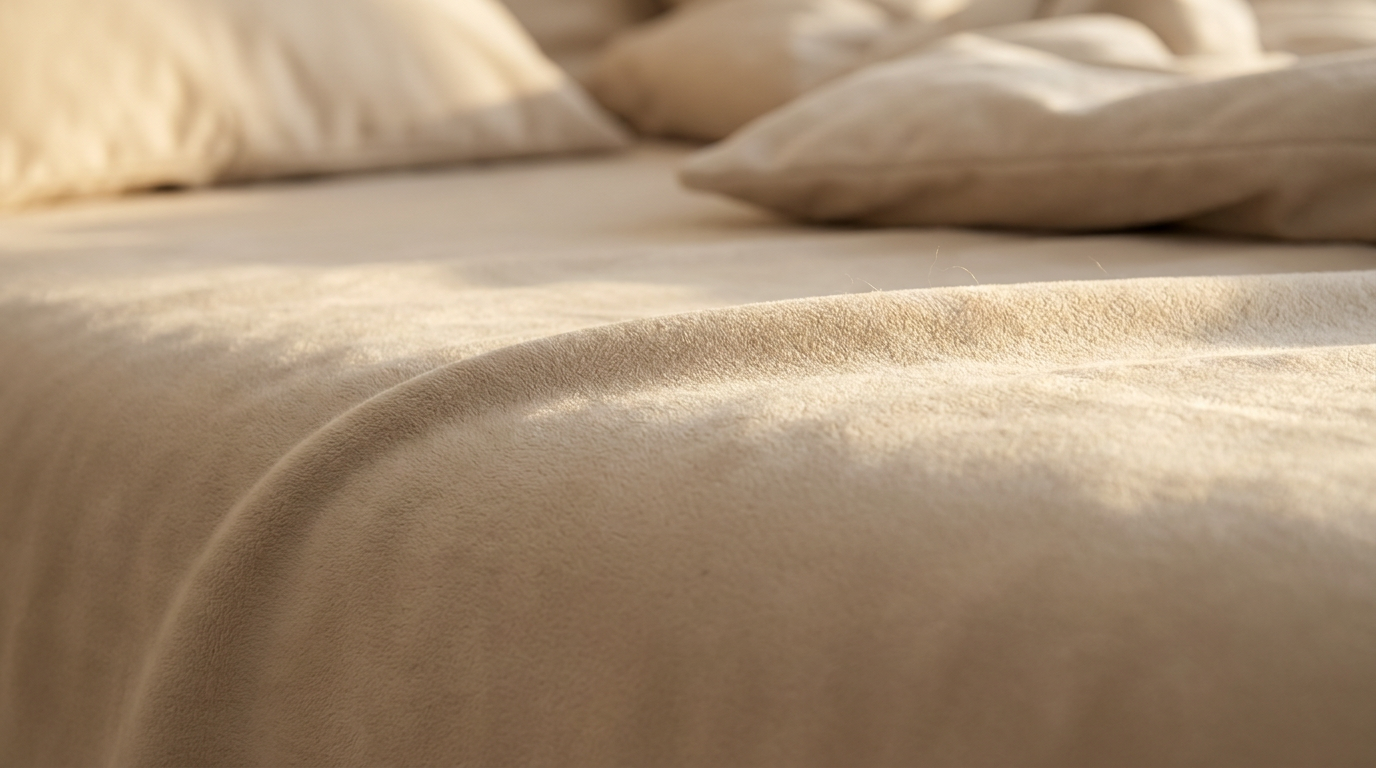
The buttery-soft double-brushed fiber nap — plush, smooth, and engineered for comfort, not just woven for it.
The Biology of a Used Bed Sheet
A single adult sheds approximately 1.5 grams of dead skin cells per hour during sleep. Over eight hours, that’s 12 grams of epidermal material deposited onto your sheet surface — every single night. Over one week, your bedding has accumulated roughly 84 grams of dead skin, plus an average of 200ml of perspiration, residual sebum, body oils, and environmental particulates.
This is not alarmist. This is standard dermatological science. The meaningful question is not whether your sheets accumulate biological material — they absolutely do — but how quickly that accumulation creates conditions for dust mite colonization, bacterial proliferation, and allergen exposure during your most vulnerable hours.
Dust mites are microscopic arachnids measuring 0.25–0.3mm. They feed exclusively on dead skin cells and thrive in warm, slightly humid environments. Their fecal proteins are classified as a Class 1 allergen by the World Allergy Organization, triggering histamine responses in approximately 20 million Americans. At typical bedroom temperature and humidity, a colony established in untreated cotton bedding can double in size every 14 days.

The kind of bedroom your washing frequency is protecting — warm, lived-in, and genuinely restful.
The Evidence-Based Washing Frequency: Broken Down by Sleeper Profile
The ‘wash every seven days’ guidance originates from the American Academy of Dermatology. It is a reasonable population-level baseline — but it was established for standard cotton bedding under typical household conditions, not calibrated for individual sleep biology. Optimal washing frequency is determined by five variables your sheet-care label never mentions.
Hot Sleepers and Night Sweaters
If you sweat heavily during sleep — clinically defined as producing more than 200ml of perspiration per night — your sheets accumulate moisture-activated bacteria significantly faster than the weekly baseline assumes. Research published in the Journal of Allergy and Clinical Immunology found that damp fabric conditions accelerate bacterial colonization by 40–60% compared to dry fabric of identical composition.
For hot sleepers, the AAD’s seven-day window should be treated as an absolute maximum, not a target. Washing every four to five days is the clinically appropriate interval.
This is precisely where material engineering matters most. LuxClub’s Premium Double-Brushed Microfiber sheets wick moisture laterally away from the sleep surface through the raised fiber nap, keeping the sleeping surface 2–4°F cooler than cotton equivalents — which means slower biological accumulation and a longer window between effective washes.
Pet Owners and Co-Sleepers
Every additional warm-bodied occupant in your bed adds their own skin cell shedding, dander output, and fur to the accumulation load. For households where pets sleep on the bed, washing every five days is the minimum defensible interval. For parents whose young children migrate to the parental bed overnight, the same logic applies.
Allergy and Asthma Sufferers
For individuals with documented dust mite sensitivity, allergic rhinitis, or atopic dermatitis, the AAD’s weekly recommendation is clinically insufficient. A 2021 meta-analysis in Allergy found that increasing wash frequency from weekly to every three to four days reduced dust mite allergen load by 62% and correlated with measurable improvement in self-reported symptom severity scores.
Standard Sleepers in Normal Conditions
For a single adult sleeper without allergies, night sweats, or pets, the weekly baseline holds. The evidence supports this as genuinely adequate — provided the wash is done at the correct temperature.
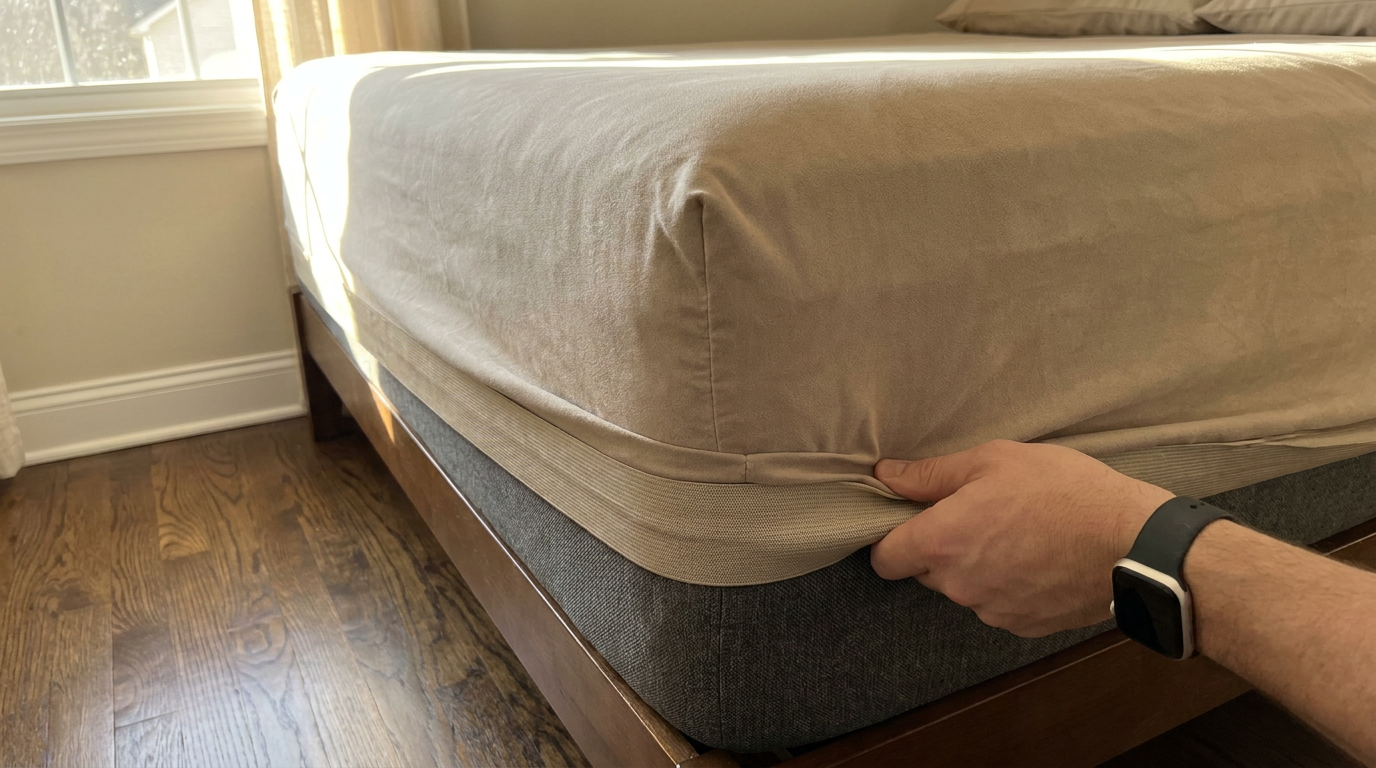
18–21 inch extra-deep pockets with full-perimeter heavy-duty elastic — engineered to grip every mattress, every night.
Why Your Sheet Material Changes Everything About Washing Frequency
Identical washing frequency produces dramatically different hygiene outcomes depending on the material being washed. This is what almost no bedding hygiene guide addresses.
Cotton’s Fundamental Hygiene Conflict
Standard cotton — including high thread count Egyptian cotton — has a structural problem as a hygiene surface. The cellulose fiber weave creates microscopic pockets that trap moisture and organic material even after the sheet feels dry to the touch. Cotton sheets can retain up to three times their weight in absorbed fluid before feeling noticeably damp.
This matters because cotton requires lower-heat drying cycles to preserve thread structure integrity. Research published in Environmental Microbiology Reports in 2022 found that bacterial counts on cotton sheets washed at 40°C were 15 times higher post-wash than sheets laundered at 60°C. Cotton structurally cannot tolerate the temperature most effective for hygiene without accelerating fabric degradation — a fundamental conflict built into the material itself.
How Premium Double-Brushed Microfiber Changes the Equation
Microfiber’s polymer fiber structure does not absorb moisture into the fiber itself. It wicks it away from the sleep surface through the raised double-brushed nap, creating measurably lower biological accumulation rates than cotton in equivalent sleeping conditions.
More consequentially: Premium Double-Brushed Microfiber tolerates warm machine washing at 40–60°C with zero structural penalty. No shrinkage. No pilling. No degradation of the buttery-soft fiber nap. It’s why LuxClub sheets maintain their texture, color vibrancy, and cooling architecture across 40+ high-temperature wash cycles — without ever compromising between hygiene and fabric longevity.
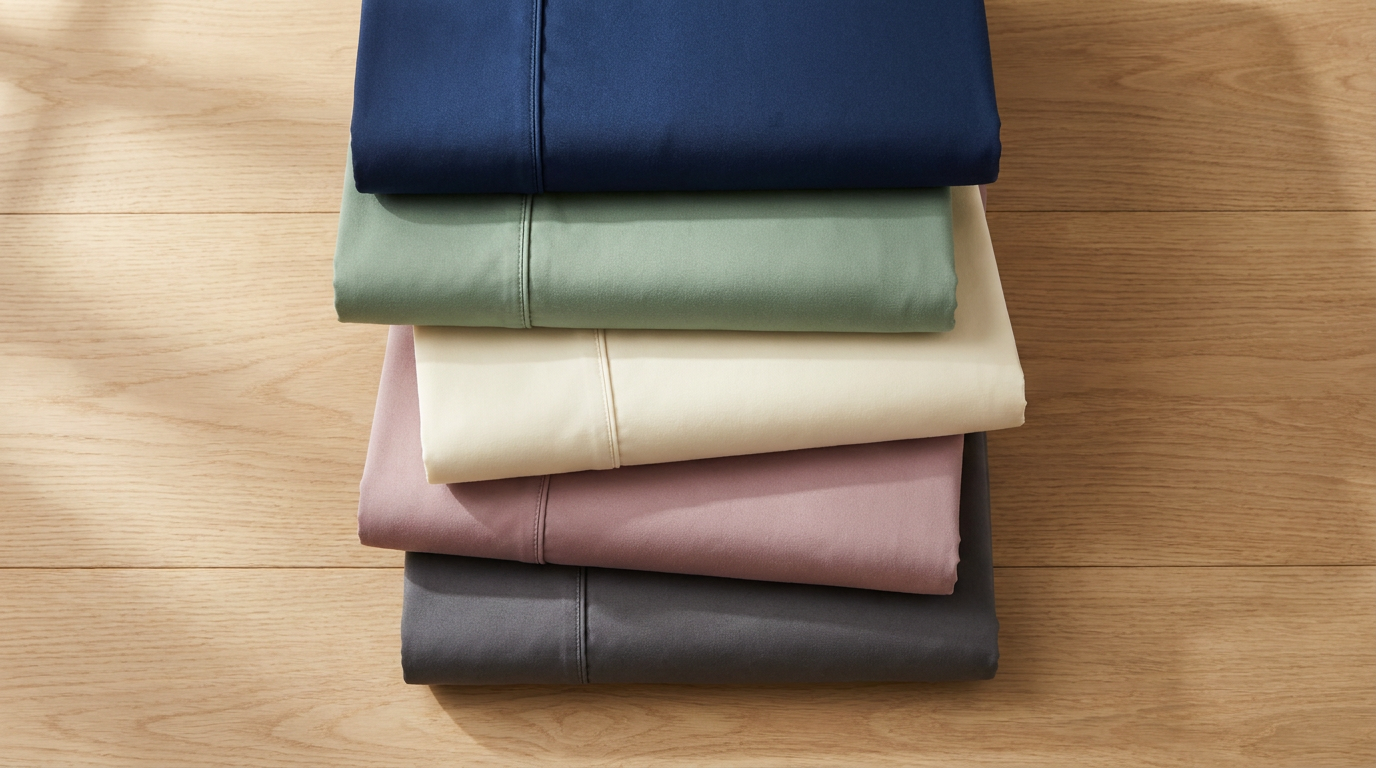
40+ colors that stay exactly this vivid after 40+ high-temperature wash cycles — no compromises on hygiene, no compromises on color.
How to Wash Sheets Correctly
Frequency without proper technique is incomplete hygiene. These four variables determine whether your wash is actually achieving what it needs to achieve.
Water Temperature
60°C (140°F) is the temperature at which dust mites and their allergen proteins are reliably destroyed, according to AAFA guidelines. Cotton typically cannot withstand this repeatedly without progressive shrinkage. Premium Double-Brushed Microfiber handles 40–60°C without structural consequence. For allergy sufferers, always wash at the higher end of this range.
Detergent Selection
Use a standard liquid detergent in moderate quantity. Avoid fabric softener entirely on microfiber — softener coats the fiber surface and reduces the moisture-wicking architecture that defines the fabric’s sleep performance. A half-dose of liquid detergent is adequate for a full sheet set.
Drying
Tumble dry on low to medium heat. A full Premium Double-Brushed Microfiber sheet set reaches dryness in 20–30 minutes compared to 45–60 minutes for comparable cotton. Pull from the dryer while slightly warm and fold immediately. The polymer structure maintains smooth, wrinkle-free geometry — zero ironing, every single time.
Pre-Schedule Wash Triggers
If you are waking with nasal congestion that clears within 30 minutes of leaving the bedroom, if your pillow has an unfamiliar scent when you first lie down, or if your skin shows increased irritation around contact points overnight — these are early signals. Wash on these cues regardless of where you are in your regular cycle.
FAQ
Q1: Is it really that harmful to go two or more weeks between washes?
Yes — specifically for dust mite allergen accumulation. A two-week-old unwashed cotton sheet can host populations exceeding 100,000 dust mites. Even for sleepers without diagnosed allergies, the fecal protein output from that population is measurably detected in airway samples during sleep. Premium Double-Brushed Microfiber’s lower moisture retention slows this accumulation, but no fabric eliminates the need for regular washing.
Q2: Can I wash microfiber sheets at high temperature without damaging them?
Yes. Premium Double-Brushed Microfiber tolerates 40–60°C machine washing without shrinkage, pilling, or fiber nap degradation. This allows you to use the temperatures clinically indicated for effective dust mite elimination, rather than compromising between hygiene and fabric preservation the way cotton forces you to.
Q3: Does washing sheets frequently wear them out faster?
With cotton and bamboo viscose, yes. With Premium Double-Brushed Microfiber, no. The polymer fiber architecture is engineered for wash durability. Washing at the frequency your hygiene situation requires will not accelerate wear on quality microfiber sheets.
Q4: Should I wash new sheets before sleeping on them for the first time?
Always. New sheets carry manufacturing finishing agents, warehouse storage particulates, and shipping residue. A single warm-water wash removes these and, for Premium Double-Brushed Microfiber, opens the fiber nap for optimal softness performance from night one.
Q5: What is the fastest way to wash and dry sheets on a tight schedule?
Premium Double-Brushed Microfiber dries in 20–30 minutes on medium heat versus 45–60 minutes for cotton. Total turnaround from bed to bed is under 90 minutes — with zero ironing required at the end. Cotton’s equivalent averages 2.5–3 hours including pressing.