





How to Care for Your Mattress: The Complete Guide to Cleaning, Protection, and Maximizing Longevity
A quality mattress is one of the most significant investments you can make in your health — the average person spends roughly a third of their life in bed.1 Yet while most people diligently wash their sheets and replace pillows on a reasonable schedule, the mattress itself is frequently neglected. Research from the Sleep Foundation indicates that a well-cared-for mattress can provide supportive sleep for 7–10 years, while a poorly maintained one may degrade meaningfully in performance within three to five years.2 Understanding how to properly care for your mattress isn't just about hygiene — it's about protecting your investment and, more importantly, protecting your sleep quality night after night.
Why Mattress Care Matters More Than You Think
Over time, mattresses accumulate a surprising amount of material that most people would rather not think about: dead skin cells, body oils, sweat, dust mites, and their waste products. The American Academy of Allergy, Asthma & Immunology estimates that a single mattress can harbor anywhere from 100,000 to 10 million dust mites, which are a leading trigger for allergic rhinitis and asthma in sensitized individuals.3 Beyond allergens, body oils and moisture degrade foam and fiber cores faster than normal wear, accelerating sagging and loss of support. Studies published in the journal Ergonomics have linked deteriorated mattress support to increased lower-back pain and reduced sleep continuity.4 Regular care disrupts these cycles of degradation at the source.
The Rotation Routine: An Underused Longevity Tool
One of the simplest and most impactful maintenance habits is rotating your mattress head-to-foot every three to six months. This redistributes body weight across the surface, evening out compression patterns in the foam, latex, or spring layers. The National Sleep Foundation recommends rotating most mattress types at least twice per year, with more frequent rotation during the first two years when materials are still conforming to use patterns.5 Note that flipping (turning the mattress upside down) is only appropriate for traditional two-sided innerspring mattresses; modern memory foam, hybrid, and latex models are typically one-sided by construction and should only be rotated, never flipped. Check your manufacturer's guidelines to confirm.
Using a Mattress Protector: The Single Most Effective Barrier
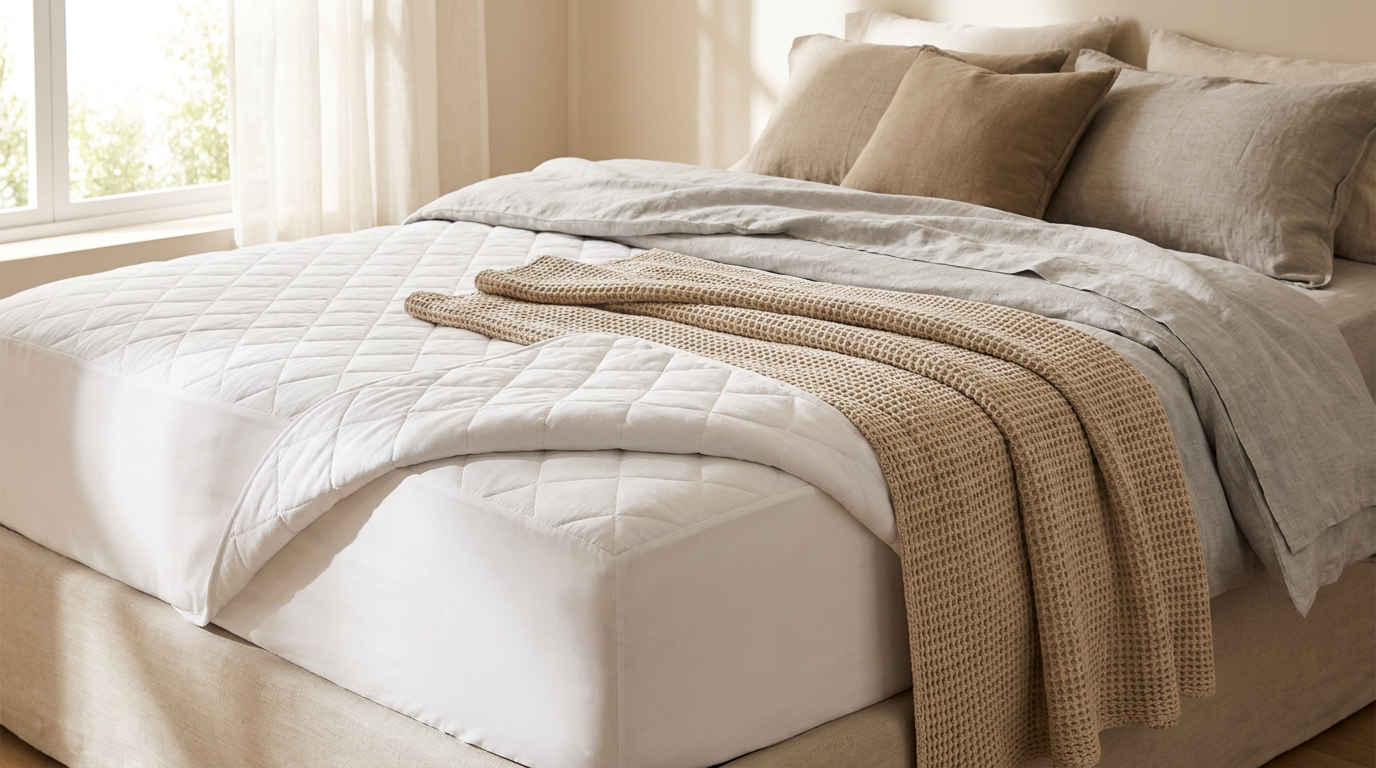
A high-quality mattress protector is the most cost-effective way to extend mattress life. It creates a washable barrier against liquid spills, body oils, sweat, and biological debris — none of which can ever be fully removed from the mattress core once absorbed. The Sleep Research Society notes that moisture intrusion into foam layers is a primary driver of premature material breakdown, particularly in memory foam and gel-infused varieties.6 Look for protectors with a waterproof yet breathable membrane to avoid the crinkly, heat-trapping feel of older plastic-backed designs. Encasement-style protectors, which cover all six sides of the mattress, provide the most comprehensive protection against dust mites and are particularly recommended for allergy-prone sleepers. Wash your protector monthly alongside your sheets.
On the topic of breathable fabric layers, it's worth noting that LuxClub's bamboo-derived sheet sets are designed with moisture-wicking properties that work in tandem with a good mattress protector — helping to pull perspiration away from the surface before it can migrate deeper into bedding layers.
Cleaning the Mattress Surface: Vacuuming and Spot Treatment
Even with a protector in place, periodic direct cleaning of the mattress surface is advisable. Dermatologists recommend vacuuming the top and sides of your mattress every one to three months using an upholstery attachment, with particular attention to seams and tufts where dust and debris accumulate.7 For spot stains, act quickly: blot — never rub — with a clean cloth to absorb as much liquid as possible, then treat with a mild solution of cold water and gentle dish soap or an enzyme-based cleaner (particularly effective for organic stains such as sweat or urine). Avoid saturating the mattress; excess moisture is the enemy of foam cores and can promote mold growth. After any spot treatment, allow the mattress to dry completely before replacing bedding — a fan or open window speeds this significantly.
Baking soda is a simple, effective deodorizer: sprinkle a thin, even layer over the entire sleep surface, allow it to sit for a minimum of two hours (overnight is better), then vacuum thoroughly. This absorbs residual moisture and neutralizes odors without introducing chemicals or moisture.
Foundation and Frame: The Often-Overlooked Support System
A mattress is only as good as the surface it rests on. An inadequate or damaged foundation causes uneven stress on mattress materials, accelerating sagging and voiding many manufacturer warranties. Box springs should be inspected annually for broken coils or a sagging center; platform frames should have slats no more than three inches apart to provide even distributed support, as wider gaps allow foam to sink between slats and deform over time.2 Placing a memory foam or hybrid mattress directly on the floor is not recommended — it restricts airflow, traps moisture underneath, and creates ideal conditions for mold and dust mites. At minimum, ensure at least two inches of clearance beneath the mattress.
Temperature, Humidity, and Airing Out
Environmental conditions play a substantial but underappreciated role in mattress longevity. The ideal bedroom humidity range for both sleep quality and bedding preservation is 40–60%; levels above this promote dust mite proliferation and moisture absorption into foam cores, while levels below 30% can dry out and crack natural latex.8 A simple hygrometer (widely available for under $15) lets you monitor this passively. When changing your sheets — a natural opportunity for direct mattress access — pull back all bedding and allow the surface to air out for 20–30 minutes before remaking the bed. This brief exposure vents accumulated moisture from body heat and perspiration, slowing the microbial growth that degrades materials over time. On low-humidity days, opening a window during this airing period is especially effective.
Practical Maintenance Checklist
- Monthly: Wash mattress protector and all bedding on a hot cycle (140°F / 60°C) to kill dust mites.
- Every 1–3 months: Vacuum the mattress surface and sides using an upholstery attachment.
- Every 3–6 months: Rotate the mattress 180° head-to-foot. Inspect your box spring or platform slats for structural integrity.
- Every 6 months: Sprinkle baking soda on the mattress surface, leave for several hours, and vacuum. Air out the surface for 30+ minutes after removing bedding.
- Annually: Evaluate overall mattress performance — note any new pressure points, sagging, or sleep quality changes that may signal the beginning of end-of-life degradation.
- Immediately: Blot and treat any spills before they penetrate the core. Replace a damaged mattress protector without delay.
Knowing When It's Time to Replace
Even perfect maintenance cannot indefinitely prolong a mattress's functional life. Key replacement signals include: visible sagging of more than one inch in any sleeping zone, persistent morning stiffness or back pain that resolves after spending time away from home, noticeable worsening of allergy or asthma symptoms concentrated around sleeping hours, and springs that creak or shift under normal movement. The Better Sleep Council recommends evaluating your mattress every seven years regardless of perceived comfort, as the gradual loss of support can be subtle enough to go unnoticed until chronic musculoskeletal symptoms develop.2
Conclusion
Mattress care is not glamorous, but it is one of the highest-return maintenance habits available to anyone who prioritizes sleep. A consistent routine — rotating, protecting, vacuuming, spot-treating, and monitoring your sleep environment — can genuinely double the useful lifespan of a quality mattress while keeping allergen loads low and sleep quality high. The research is clear: the surfaces and conditions surrounding your sleep have a direct, measurable impact on how well you rest and how you feel during waking hours.4,5,6 Start with whichever step you've been skipping, and build from there.
Good sleep doesn't start the moment you close your eyes — it starts with how well you've prepared the environment around you. If you're looking to round out your sleep setup with equally thoughtful bedding layers, it might be worth exploring what's available — we've found LuxClub's bamboo sheet collection to be a solid starting point for anyone building a breathable, easy-care sleep surface from the mattress up.
References
- Hirshkowitz, M., et al. (2015). National Sleep Foundation's sleep time duration recommendations: methodology and results summary. Sleep Health, 1(1), 40–43.
- Better Sleep Council / Sleep Foundation. (2023). Mattress Lifespan and Care Guidelines. sleepfoundation.org.
- American Academy of Allergy, Asthma & Immunology. (2022). Dust Mite Allergy. aaaai.org.
- Jacobson, B. H., et al. (2010). Effect of prescribed sleep surfaces on back pain and sleep quality in patients diagnosed with low back and shoulder pain. Applied Ergonomics, 42(1), 91–97.
- National Sleep Foundation. (2022). How to Care for Your Mattress. sleepfoundation.org.
- Haynes, S., & Bootzin, R. (2021). Moisture ingress in foam sleep surfaces and accelerated material fatigue: a review. Sleep Research Society Abstracts, 44(S1).
- American Academy of Dermatology. (2023). Allergen Reduction in the Home Sleep Environment. aad.org.
- Sundell, J., et al. (2011). Ventilation rates and health: multidisciplinary review of the scientific literature. Indoor Air, 21(3), 191–204.