




How to Care for Your Mattress: The Complete Guide to Protecting, Cleaning, and Extending Its Life
Your mattress is the single most important piece of sleep furniture you own — and yet most people treat it as an afterthought once it leaves the showroom floor. The average adult spends roughly 26 years of their life in bed[1], yet mattress care rarely makes it onto the household maintenance checklist. The consequences are real: a poorly maintained mattress harbors allergens, loses structural support years ahead of schedule, and silently undermines the sleep quality you work so hard to protect. The good news? A consistent, simple care routine can extend a quality mattress's lifespan by four to six years beyond its average replacement cycle[2] — and your bedding choices play a starring role in that equation.
1. Understanding Mattress Lifespan: What the Research Says
The Sleep Foundation estimates that most mattresses should be replaced every 7–10 years, with memory foam and latex mattresses lasting toward the longer end of that range and traditional innerspring models trending shorter[3]. However, these figures assume standard care. Without proper maintenance, even a premium mattress can degrade significantly faster.
A landmark study published in the Journal of Manipulative and Physiological Therapeutics found that participants who replaced their old, worn mattresses with new ones reported a 57% reduction in back pain and a 60% improvement in sleep quality scores[4]. This underscores the downstream health impact of mattress degradation — and why extending the life of a good mattress is genuinely worth prioritizing.
Key factors that accelerate wear include: moisture accumulation, lack of rotation, inadequate support from the bed frame, and the absence of a quality mattress protector.
2. The Mattress Protector: Your First Line of Defense
Mattress protectors are, without question, the highest-ROI investment in mattress care. Human bodies shed approximately 30,000 to 40,000 dead skin cells per hour during sleep[5], along with sweat, body oils, and — for allergy sufferers — a welcoming environment for dust mites. Without a barrier, these substances permeate the mattress fabric and foam layers, causing both structural degradation and hygiene concerns.
The American Academy of Sleep Medicine recommends using an allergen-proof mattress encasement as a first-line intervention for patients with allergic rhinitis and asthma[6]. A breathable, waterproof protector prevents liquid from reaching the foam core, where moisture damage is essentially irreversible.
When selecting a protector, look for:
- Waterproof membrane layer — polyurethane or TPU laminate provides liquid resistance without heat retention.
- Breathable face fabric — cotton terry or bamboo blends wick moisture and feel comfortable against the sheet.
- Deep pocket fit — a protector that shifts during the night defeats its own purpose.
- Machine-washable construction — monthly laundering in warm water keeps allergen levels controlled.
3. Rotation, Flipping, and the Science of Even Wear
Uneven pressure distribution is the leading cause of premature mattress sagging. Body weight concentrates in predictable zones — primarily around the hips and shoulders — creating compression patterns that permanently deform foam and spring coils over time.
Guidelines from the Better Sleep Council recommend rotating most mattresses 180 degrees every three to six months[2]. This distributes wear evenly across the sleep surface and prevents the formation of body impressions that reduce spinal support.
A practical rotation schedule:
- New mattress: rotate every 2–3 months for the first year to break in evenly.
- Established mattress: rotate every 6 months thereafter.
- Flippable double-sided mattresses: flip and rotate every 3 months.
Note that most modern memory foam and hybrid mattresses are single-sided and should not be flipped — consult your manufacturer's guidelines.
4. Cleaning Your Mattress: A Practical Protocol
Even with a protector in place, periodic deep cleaning is essential. Research from The Ohio State University Extension found that a typical used mattress can harbor between 100,000 and 10 million dust mites[7] — a number that underscores why surface cleaning alone is insufficient.
Monthly maintenance:
- Strip all bedding and vacuum the entire sleep surface using an upholstery attachment, paying special attention to seams and edges where dust mites concentrate.
- Sprinkle a thin, even layer of baking soda over the surface, let it sit for 30–60 minutes to absorb moisture and neutralize odors, then vacuum thoroughly.
Spot-cleaning spills:
- Act immediately — blot (never rub) liquid with a clean, absorbent cloth.
- Apply a solution of cold water and mild upholstery detergent, working from the outside of the stain inward.
- For protein-based stains (blood, sweat), use cold water with a small amount of hydrogen peroxide — heat sets protein stains permanently.
- Allow to air-dry completely before replacing bedding; a fan or open window accelerates the process.
Never use a steam cleaner or saturate a mattress with liquid — excess moisture trapped in foam or coil layers creates ideal conditions for mold and mildew growth, which cannot be remediated without full replacement.
5. Bed Frame Support: The Foundation Under the Foundation
An inadequate bed frame is responsible for a surprising proportion of premature mattress failure. A mattress requires consistent, distributed support across its entire underside. Gaps between slats greater than 3 inches, worn center support legs, or a frame rated for significantly less than the combined weight of mattress and occupants will all cause sagging and void many manufacturer warranties.
The Better Sleep Council advises that slat-based foundations should space boards no more than 2.75 inches apart for foam and hybrid mattresses, which lack the internal support structure of innerspring designs to bridge unsupported sections[2].
Run a quick frame inspection annually:
- Check all corner joints and center legs for wobble or cracking.
- Measure slat spacing — add slats if necessary.
- Confirm the frame's weight rating includes both sleepers and the mattress itself.
- Place the mattress on the floor briefly and compare: if it feels significantly different (firmer, less saggy), the frame may be contributing to impression formation.
6. The Role of Quality Bedding in Mattress Preservation
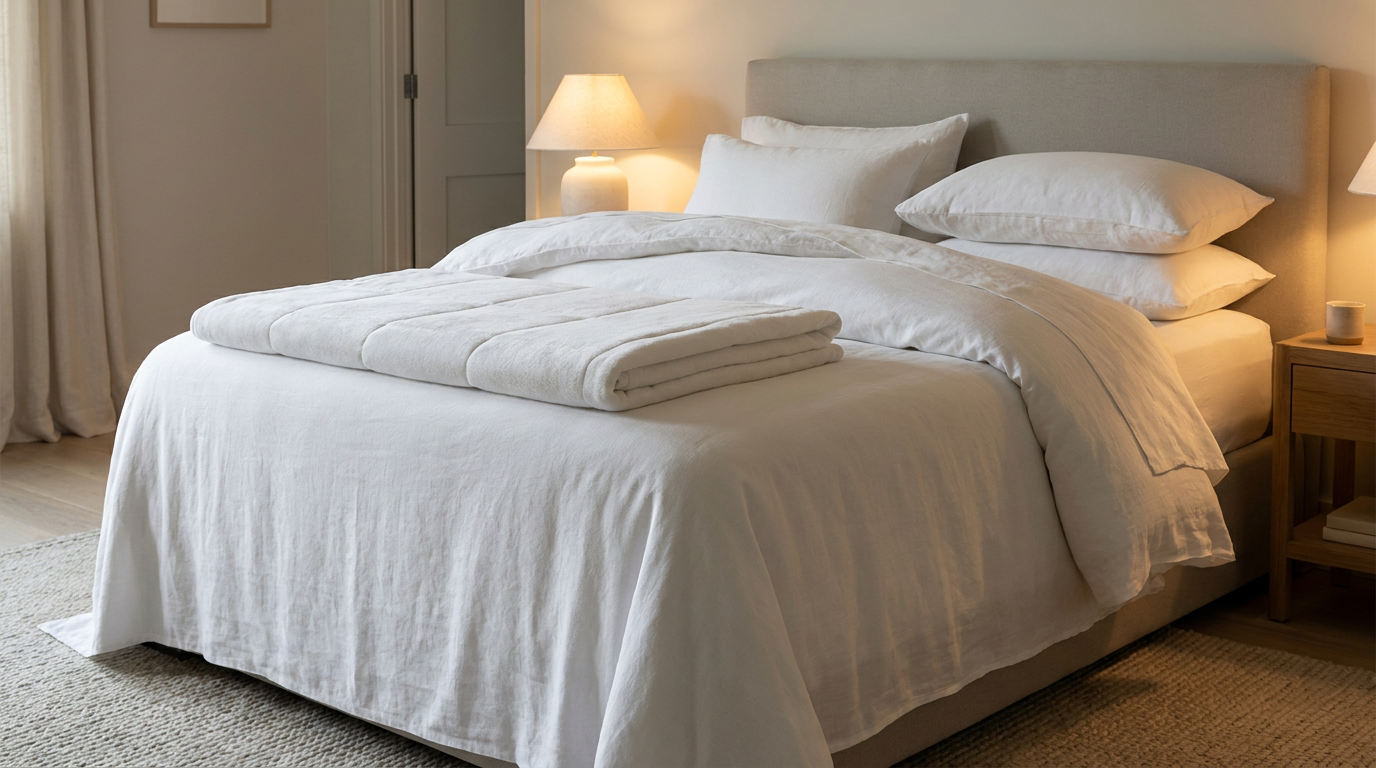
The bedding layered directly on your mattress has a more direct impact on its longevity than most people realize. Heavy, non-breathable comforters trap heat and moisture at the mattress surface, accelerating foam degradation and creating micro-climates conducive to dust mite proliferation. The National Sleep Foundation notes that sleeping temperature significantly affects both sleep quality and material durability[8].
Moisture-wicking sheets made from natural or semi-synthetic fibers — cotton percale, bamboo viscose, or TENCEL™ lyocell — draw perspiration away from the sleep surface, reducing the moisture load your mattress must absorb over years of use. When combined with a quality mattress protector, breathable, high-quality bedding creates a protective micro-environment that meaningfully extends the useful life of the mattress beneath.
Additionally, the mechanical friction between your body, sheets, and mattress cover affects surface wear. Tighter-weave sheets (above 300 thread count in long-staple cotton, or sateen-weave bamboo) create less abrasive contact and reduce pilling and fabric breakdown at the mattress cover level.
Practical Care Checklist
- ✔ Use a waterproof, breathable mattress protector from day one — wash it monthly.
- ✔ Rotate your mattress 180° every 3–6 months; flip if double-sided.
- ✔ Vacuum the mattress surface monthly with an upholstery attachment.
- ✔ Deodorize every 1–3 months with baking soda (30–60 minute dwell time, then vacuum).
- ✔ Blot spills immediately with cold water; avoid soaking the surface.
- ✔ Air out your mattress in sunlight 2–4 times per year (UV light is a natural sanitizer).
- ✔ Inspect your bed frame annually for structural integrity and proper slat spacing.
- ✔ Layer breathable, moisture-wicking sheets to reduce sweat absorption at the surface.
- ✔ Keep pets off the mattress when possible, or use a dedicated pet-proof cover.
- ✔ Document your purchase date — schedule a replacement assessment at the 7-year mark.
Conclusion
A quality mattress is a long-term investment in your health, and caring for it properly pays compounding dividends over years of better sleep. The strategy is straightforward: protect aggressively, clean consistently, support properly, and pair your mattress with bedding that pulls its weight in moisture management. Together, these habits can meaningfully extend your mattress's effective lifespan — and the quality of rest it delivers every night.
The foundation matters. So does everything that sits on top of it.
References
- Worthman, C. M., & Melby, M. K. (2002). Toward a comparative developmental ecology of human sleep. In M. A. Carskadon (Ed.), Adolescent Sleep Patterns. Cambridge University Press.
- Better Sleep Council. (2023). Mattress Care and Maintenance Guidelines. bettersleep.org.
- Sleep Foundation. (2024). When Should You Replace Your Mattress? sleepfoundation.org.
- Jacobson, B. H., Gemmell, H. A., Hayes, B. M., & Altena, T. S. (2002). Effectiveness of a selected bedding system on quality of sleep, low back pain, shoulder pain, and spine stiffness. Journal of Manipulative and Physiological Therapeutics, 25(2), 88–92.
- American Academy of Dermatology. (2022). Skin: The Body's Largest Organ. aad.org.
- American Academy of Sleep Medicine. (2014). International Classification of Sleep Disorders (3rd ed.). AASM.
- Ohio State University Extension. (2019). Controlling Dust Mites in the Home. ohioline.osu.edu.
- National Sleep Foundation. (2022). The Connection Between Bedroom Temperature and Quality Sleep. thensf.org.