



Microfiber Sheets vs Cotton
Every shopper hits the same wall: the product page says “ultra-soft cotton” and the next tab says “premium microfiber.” Both claim luxury. Both show the same staged bedroom photos. So which one actually delivers — and which one is quietly setting you up for frustration six months from now?
This guide cuts through the marketing noise with material science, real-world performance data, and a clear verdict by sleeper profile. By the end, you will know exactly which fabric wins for your body, your budget, and your laundry routine.
What the Labels Don’t Tell You: How Each Fabric Is Actually Made
Cotton sheets begin as a natural cellulose fiber harvested from the cotton plant boll. The staple length — how long each individual fiber strand is — determines the final quality. Standard cotton uses shorter staples that create a hairier, less uniform weave. Higher-grade options use longer staple cotton, which produces a tighter surface. The critical issue is what happens after repeated washing: those individual fibers swell when wet, break down at the fiber tips, and create the classic “pills” and rough texture that cotton bedding is known for over time. Even so-called wrinkle-resistant cotton requires chemical treatments to hold its shape.
Premium Double-Brushed Microfiber takes a completely different engineering path. The fabric starts as ultra-fine polyester filaments — each strand measuring well below 1.0 denier in thickness, thinner than a single strand of silk. These filaments are woven into a dense base fabric and then mechanically brushed on both sides using precision cylindrical rollers that raise and align the fiber tips into a uniform, velvety pile. That bilateral brushing process — on both the sleeping surface AND the underside — is what creates the buttery-soft, cashmere-like texture. Unlike cotton’s natural-but-variable surface, double-brushed microfiber produces a consistent, controlled pile depth every single time.
The fiber diameter difference alone explains why double-brushed microfiber feels so remarkably plush from the very first touch. Cotton fibers at their finest are still many times thicker than sub-denier microfiber filaments. More contact points per square inch means a smoother, more enveloping sensation against the skin. This is not a marketing claim — it is basic textile physics.

The bilateral double-brushing process creates a uniform cashmere-like pile — engineered for consistent softness from the first night to the hundredth wash.
The Cooling Test: Which Fabric Actually Keeps Hot Sleepers Comfortable?
This is where cotton’s most persistent myth collapses under scrutiny. The conventional wisdom says “cotton breathes” — and it does, but in a way that works against hot sleepers rather than for them. Cotton is a hydrophilic fiber, meaning it absorbs moisture directly into the fiber structure. When you sweat, cotton pulls that perspiration in and holds it against your skin. The fabric stays damp and warm, creating a wet-blanket effect that most hot sleepers recognize immediately: you wake up, the sheets are clammy, and the discomfort woke you before your alarm did.
Premium Double-Brushed Microfiber works on an entirely different thermal principle. The sub-denier filaments are hydrophobic — they do not absorb moisture into the fiber core. Instead, sweat is wicked away from the skin surface and moved laterally through the fabric structure where it can evaporate rapidly from the outer face. This active moisture transport, combined with the engineered air gap created by the raised microfiber pile, produces measurable cooling: hot sleepers report a 2–4°F reduction in perceived sleep surface temperature compared to standard cotton. That temperature differential is clinically meaningful — sleep research consistently shows that even a 1°F drop in skin temperature accelerates sleep onset and reduces nighttime arousals.
Cotton’s cooling reputation also degrades over time. Wash shrinkage tightens the weave, reducing air circulation. The fiber breakdown that causes pilling also causes the fabric surface to become more compact and less breathable with each cycle. Double-brushed microfiber maintains its fiber architecture through 40+ high-temperature machine washes because the synthetic filaments do not absorb water, swell, or break down the way natural cellulose fibers do. The cooling performance you get on night one is the cooling performance you get on night 200.
Fit, Durability, and the Deep-Pocket Problem
Here is a complaint that fills every bedding forum: “The fitted sheet fits perfectly at first, but by 3 a.m. the corners have popped off.” This problem has two causes, and cotton sheets are structurally prone to both of them.
First, shrinkage. Standard cotton shrinks 3–7% after the first wash, and cumulative shrinkage continues with each subsequent wash cycle. A sheet that fits your 14-inch mattress today may be pulling uncomfortably tight by month three, creating tension that works against the elastic and causes the sheet to pop off mid-sleep. Double-brushed microfiber is preshrunk at the manufacturing stage. The synthetic polyester structure does not absorb water or undergo fiber swelling, which means there is no meaningful dimensional change after washing. The fit you measure in the store is the fit you sleep on indefinitely.
Second, elastic architecture. Many cotton fitted sheets use corner-only elastic — four small patches at each mattress corner. Under the repeated stretching of a restless sleeper, corner-only elastic fatigues and loses its recovery tension within 12–18 months. LuxClub sheets feature a full-perimeter heavy-duty elastic band running continuously around the entire bottom edge of the fitted sheet. Combined with the 18–21 inch deep-pocket depth designed to accommodate today’s thicker mattresses, pillow-tops, and mattress toppers, this engineering means the sheet wraps the entire mattress profile — not just the corners — and stays anchored through any sleep position.

Real-world softness and fit that holds through an actual night’s sleep — not just a styled photoshoot.
Washing, Wrinkling, and the True Cost of Cotton Maintenance
Cotton’s care requirements are one of the category’s most underreported costs — not in dollars, but in time and frustration. Standard cotton sheets wrinkle aggressively in the dryer and require either ironing or an extended tumble session to look presentable. Egyptian cotton and other premium natural-fiber options can require gentle-cycle washing, air drying, or specific detergent formulations to prevent damage. For households that wash bedding weekly (as most sleep hygienists recommend), this maintenance burden compounds quickly.
Double-brushed microfiber sheets are naturally wrinkle-resistant because the synthetic fiber structure has built-in elastic recovery. When the fabric exits the dryer, the fibers spring back to their aligned position without mechanical pressing. No ironing required — ever. The sheets come out of the wash ready to put directly on the bed. This sounds like a small convenience, but for anyone who has stood at an ironing board on a Sunday evening before a work week, it is a genuinely meaningful quality-of-life upgrade.
Color stability is another area where the comparison is stark. Cotton uses reactive dyes that bond to the cellulose fiber chemistry. The problem is that cellulose swells and contracts with every wet-dry cycle, gradually releasing the dye molecules and causing the visible fading most cotton bedding owners observe within a year of regular washing. Microfiber’s polyester filaments are dyed through a disperse dye process that drives color molecules into the fiber core during manufacturing under heat and pressure. The color is locked inside the fiber rather than bonded to the surface. LuxClub’s double-brushed microfiber sheet sets maintain their original color intensity through 40+ machine wash cycles at full temperature — a fade-resistance standard that cotton simply cannot match.
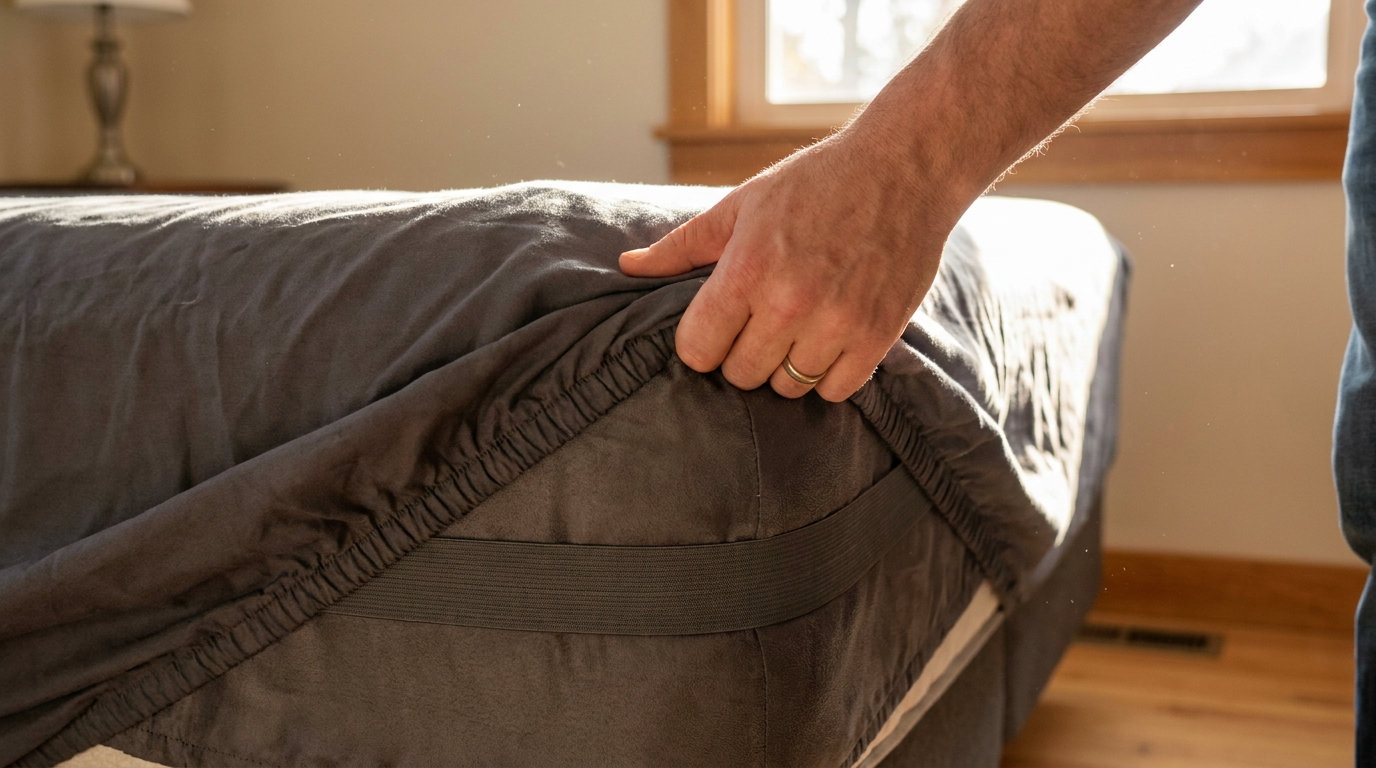
18–21 inch deep pockets and full-perimeter heavy-duty elastic: the engineering that keeps the sheet on the mattress through the entire night.
The Verdict by Sleeper Profile
Not every shopper has the same priorities. Here is where each fabric wins — and loses — by specific use case.
Hot sleepers: Double-brushed microfiber wins decisively. The hydrophobic moisture wicking, engineered pile air gap, and consistent thermal performance across hundreds of washes make it the clear technical choice. Cotton’s hydrophilic absorption creates exactly the damp, warm sleeping surface hot sleepers are trying to escape.
Allergy sufferers: Double-brushed microfiber has a meaningful structural advantage. The tightly woven sub-denier filament structure creates fewer surface irregularities where dust mite allergens, pet dander, and pollen particles can embed. Cotton’s natural fiber surface — especially as it ages and pills — creates more surface area for allergen accumulation. Additionally, the ability to wash microfiber sheets at high temperatures without shrinkage concern means allergen load can be reduced more aggressively and more frequently.
Side sleepers: The bilateral double-brushing creates equally soft texture on both the top and bottom surface, which matters significantly for side sleepers whose shoulder and hip pressure points are in sustained contact with the fabric for hours. Cotton’s surface softness is directional — the weave structure means the top-facing and underside textures differ.
Budget-conscious shoppers: Cotton’s initial price point is often lower for entry-level options, but the durability math reverses quickly. Cotton sheets that shrink, pill, fade, and lose elastic recovery typically require replacement every 12–18 months with regular washing. Quality double-brushed microfiber sheets maintain their performance characteristics through years of regular use. The cost-per-night calculation almost always favors microfiber when measured over a 24–36 month ownership window. For a detailed comparison of the top-rated microfiber options, see our best microfiber sheets buying guide.
Environmental-priority shoppers: This category requires honest nuance. Conventional cotton farming is extremely water-intensive and relies heavily on pesticides. Microfiber is derived from petroleum-based polyester and sheds microplastic particles with washing. Neither fabric has a clean environmental story. If this is your primary decision driver, research the specific brand’s sourcing, water stewardship, and manufacturing practices rather than defaulting to the “natural = better” assumption.
Why 40+ Colors Matter More Than You Think
One of the most overlooked purchase criteria in the bedding category is color longevity — and it connects directly to the material science already described. A color range is only valuable if the colors stay true.
Cotton’s dye chemistry means that a set purchased in a rich navy or deep sage will look noticeably different after 12 months of regular washing. The color shift is gradual enough that many shoppers don’t realize the magnitude until they place a new set next to an older one. Microfiber’s disperse dye process locks color into the fiber core, which is why it is commercially feasible to offer 40+ colorways with confidence — the brand stands behind the same color consistency at wash 40 as at wash one.
For anyone building a coordinated bedroom aesthetic — matching sheets to existing décor, maintaining a specific visual palette over time — this dye stability is not a secondary consideration. It is what makes a coordinated bedroom look intentional rather than faded and mismatched.
LuxClub’s complete sheet set collection spans over 40 colorways in every standard size, designed for decorators and practical buyers alike — with the fade-resistance engineering to back up every color choice.
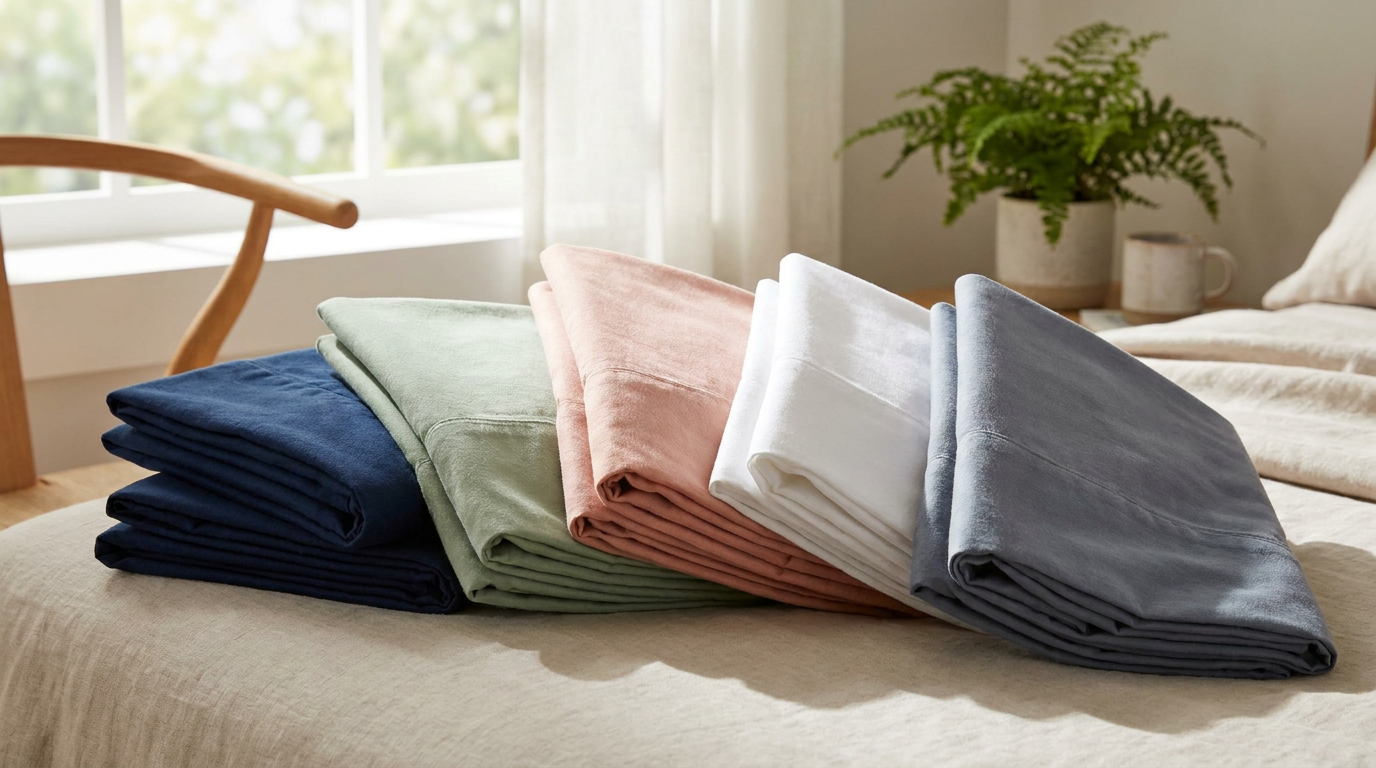
40+ colorways, fade-resistant through 40+ washes — because a color palette only works if it stays true over time.
Frequently Asked Questions
Q1: Are microfiber sheets actually softer than cotton?
Premium Double-Brushed Microfiber is engineered to be softer than most cotton options at any price point. The bilateral mechanical brushing process creates a velvety, cashmere-like pile on both sleeping and non-sleeping surfaces. Sub-denier filaments — each thinner than a silk strand — produce more contact points per square inch against the skin than cotton fibers can achieve. Cotton can match or exceed this softness only in very high-end long-staple variants that cost significantly more, require delicate washing, and still degrade with pilling over time. For softness that holds up through 40+ washes, double-brushed microfiber outperforms cotton across the full ownership lifespan.
Q2: Do microfiber sheets sleep cooler than cotton sheets?
Yes — and the reason is counterintuitive to most shoppers. Cotton is hydrophilic: it absorbs sweat into the fiber and holds moisture against the skin, creating a damp, warm surface. Microfiber is hydrophobic: it moves sweat away from the skin surface via lateral wicking and rapid evaporation through the fabric face. Hot sleepers consistently report a 2–4°F reduction in perceived sleep surface temperature with quality double-brushed microfiber compared to standard cotton. The cooling performance is also durable — microfiber does not shrink, which means the weave structure and thermal airflow remain consistent through years of regular washing. Cotton’s cooling properties diminish as the weave tightens with shrinkage.
Q3: How do I wash microfiber sheets to keep them at their best?
Machine wash warm or cold — microfiber is compatible with either. Use a standard liquid detergent and avoid fabric softeners, which coat the hydrophobic fiber surface and reduce moisture-wicking performance. Tumble dry on low to medium heat. No ironing needed: the fiber’s built-in elastic recovery eliminates wrinkles automatically as the fabric cools. LuxClub’s double-brushed microfiber sheets are rated for 40+ high-temperature machine wash cycles without color fade, pilling, or dimensional shrinkage — so aggressive care won’t shorten the set’s lifespan.
Q4: Do microfiber sheets work with deep mattresses and toppers?
Standard fitted sheets are sized for mattresses up to 12–14 inches deep — which excludes most modern hybrid mattresses, memory foam mattresses with pillow-tops, and any mattress paired with a topper. LuxClub fitted sheets feature an 18–21 inch deep-pocket depth plus a full-perimeter heavy-duty elastic band (not corner-only clips) that wraps the entire mattress bottom edge. This combination accommodates virtually all contemporary mattress profiles, including 16-inch thick hybrids and mattress-plus-3-inch-topper combinations, and stays anchored through all sleep positions throughout the night.
Q5: Is cotton better for people with sensitive skin or allergies?
Not necessarily — this is one of the most persistent bedding myths. Cotton’s natural fiber surface, especially as it ages and develops micro-pills, creates more surface irregularities where dust mite allergens, pet dander, and skin cell debris can accumulate and embed. The tightly woven sub-denier filament structure of premium double-brushed microfiber offers fewer physical anchor points for common allergens. Additionally, microfiber’s shrink-resistance means it can be washed frequently at high temperatures without dimensional damage — allowing more aggressive allergen-reduction washing protocols that cotton’s shrinkage sensitivity often prevents. Always consult with a medical professional if you have diagnosed textile allergies.