



Percale vs. Sateen vs. Linen vs. Jersey: The Complete Weave Guide to Finding Your Perfect Sheet
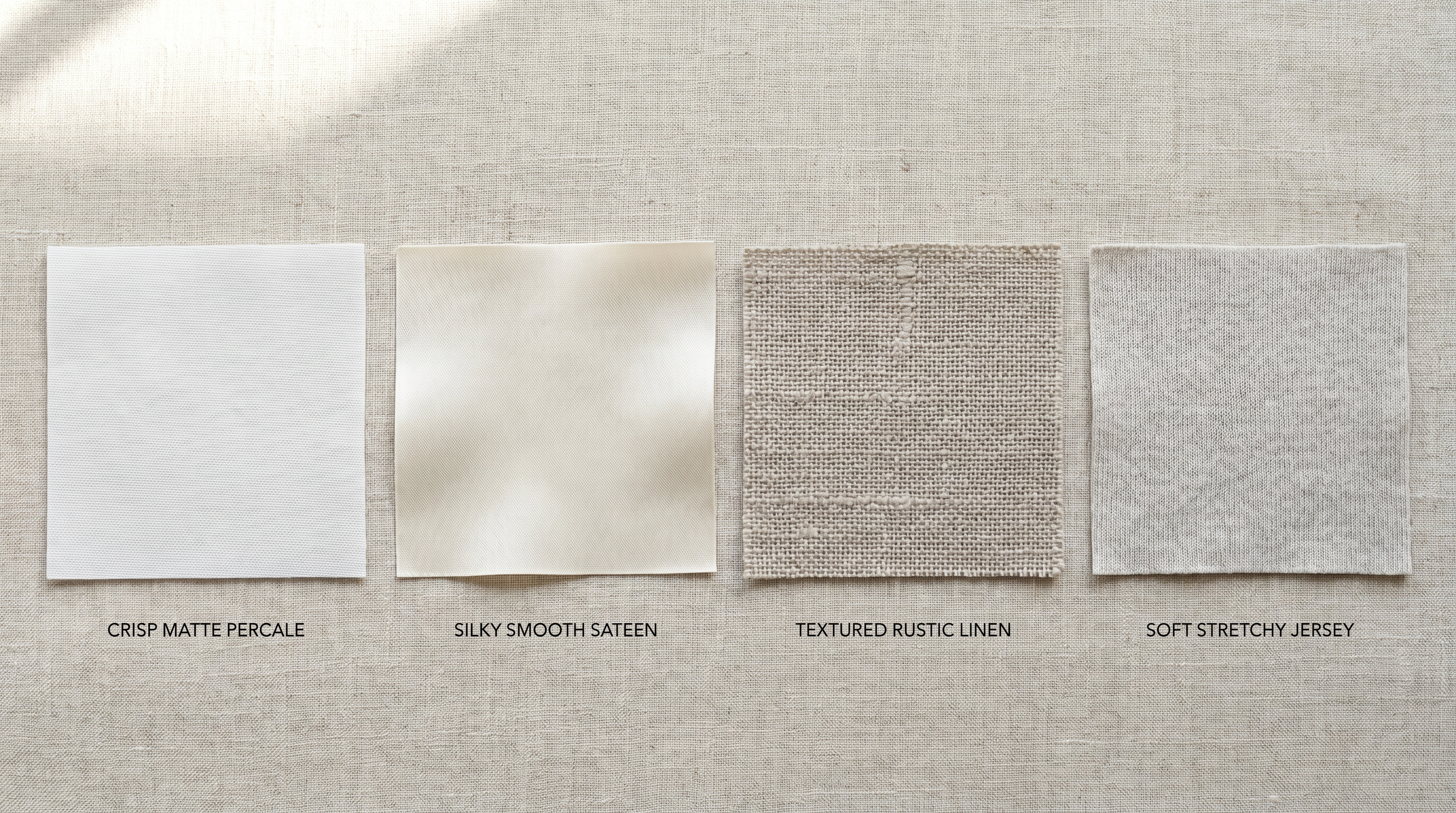
Walk into any bedding section and you will find sheets marketed almost entirely on thread count — a number that sounds scientific, feels reassuring, and is, for most shoppers, almost entirely misleading. Thread count measures how many threads are woven per square inch of fabric. What it does not tell you is how those threads are arranged — and that arrangement, called the weave, is the primary determinant of how a sheet actually performs. Two sheets with identical thread counts and identical fiber content can feel completely different, breathe at vastly different rates, and age at dramatically different speeds, purely because of how their threads are interlaced. A 2018 consumer textile study published in the Journal of Consumer Affairs found that weave structure was a stronger predictor of consumer sleep comfort satisfaction than thread count across all fiber categories tested.1 This guide covers the four sheet weaves that dominate the premium bedding market — percale, sateen, linen (plain weave), and jersey knit — with the technical detail and practical guidance you need to choose with confidence.
Understanding Weave: Why Structure Matters More Than Count
A woven fabric is produced by interlacing two sets of yarn at right angles: the warp (running lengthwise on the loom) and the weft (running crosswise). The pattern by which these threads pass over and under one another defines the weave, and each pattern produces a distinct set of physical properties:2
- Crimp frequency: How often each thread bends as it passes over and under its perpendicular counterparts. High crimp frequency (plain weaves) produces a matte, textured surface; low crimp frequency (satin weaves) allows threads to lie flatter, producing a smooth, reflective surface.
- Pore size: The openings between interlaced threads determine air permeability. Weaves with regular, tight interlacing produce smaller, more consistent pores — better breathability and more resistance to allergen penetration. Looser constructions breathe more freely but offer less barrier protection.
- Abrasion resistance: Threads that cross over many parallel threads before interlacing (long floats, as in sateen) have more exposed surface area and are more vulnerable to snag and pilling. Shorter floats (plain weaves) produce more durable surfaces at the cost of some smoothness.
- Drape and hand: Weave structure governs how a fabric moves and feels against the skin — crisp and cool, smooth and fluid, rough and textured, or soft and stretchy.3
Thread count interacts with weave, but cannot override it. A 400-thread-count percale and a 400-thread-count sateen will feel and behave entirely differently. Understanding the weave first, then evaluating thread count within it, is the correct sequence for sheet selection.
Percale: The Crisp, Breathable Classic
Percale is a plain weave: each weft thread passes over one warp thread, then under the next, alternating in a simple one-over-one-under pattern. This creates the highest interlacing frequency of any standard weave — meaning maximum crimp, maximum pore regularity, and the most structurally stable fabric construction available in consumer bedding.2
Physical properties:
- Feel: Crisp, cool, matte. Often described as having a hotel-quality freshness. The surface texture is slightly rougher than sateen at first touch but softens with every wash.
- Breathability: Excellent. The regular pore structure allows consistent air circulation across the entire sheet surface — percale outperforms sateen at the same thread count in standardized air-permeability testing.4
- Durability: The highest of the four weaves. Short floats mean minimal exposed thread surface, translating to superior resistance to pilling, snagging, and general surface wear. A quality percale set washed correctly can last 8–10 years.
- Temperature regulation: Percale’s breathability and matte surface (less heat-reflective than sateen) make it the superior warm-weather and warm-sleeper choice.
Ideal for: Hot sleepers, warm climates, all-season use, anyone who prefers a crisp rather than silky feel, allergy sufferers (tighter weave resists dust mite penetration).
Thread count sweet spot: 200–400. Above 400, percale benefits plateau as the weave structure becomes the limiting factor; inflated thread counts above 400 in percale weaves typically involve multi-ply yarns that actually reduce breathability.1
Sateen: Silky Smoothness with a Warmth Trade-Off
Sateen uses a satin weave structure: each weft thread passes over four (or more) warp threads before passing under one, creating long “floats” on the fabric surface. These floats lie nearly parallel to the surface, reducing crimp and allowing threads to pack more closely together. The result is a smooth, lustrous surface that reflects light with a characteristic sheen.3
Physical properties:
- Feel: Smooth, fluid, and slightly cool to initial touch. The drape is more relaxed than percale — sateen flows over the body rather than lying against it with percale’s crisper structure.
- Breathability: Moderate. The denser surface created by long floats reduces air permeability compared to percale, making sateen warmer in moderate-to-cool sleeping conditions — an asset in cooler seasons and climates, a liability in summer or for hot sleepers.
- Durability: Lower than percale. Long floats expose more thread surface to abrasion; sateen is more prone to pilling and snag damage, particularly at the seams and corners of fitted sheets where friction is highest.
- Warmth retention: Sateen’s denser construction and slight heat-reflective surface make it the superior cold-weather choice among woven cotton sheets.
Ideal for: Cool sleepers, autumn and winter use, anyone who prioritizes a silky-smooth feel, those seeking a more luxurious visual presentation (sateen’s sheen photographs beautifully and reads as visually premium).
Thread count sweet spot: 300–600. Sateen’s denser construction means it genuinely benefits from higher thread counts up to approximately 600; beyond that, quality improvements are marginal.1
Linen: The High-Performance Natural Weave
Linen sheets are woven from flax fiber in a plain weave construction — structurally similar to percale, but with a fundamentally different fiber. Flax is a hollow, moisture-wicking natural fiber with a higher moisture absorption capacity than cotton (absorbing up to 20% of its weight in moisture without feeling wet)5 and the highest breathability of any natural bedding fiber. Linen’s characteristic slightly coarse texture at first handling is a result of the flax fiber’s natural irregularity — and it softens dramatically and progressively with every wash, without the fiber degradation that accompanies softening in cotton.
Physical properties:
- Feel: Textured and substantial when new; increasingly soft and broken-in with use. Linen develops character over time in a way no other bedding fabric matches — a 5-year-old linen sheet is often softer and more appreciated than a new one.
- Breathability: The highest among all natural-fiber woven sheets. Linen’s hollow fiber structure and open plain weave allow exceptional air circulation, making it the definitive hot-weather, high-humidity bedding choice.
- Durability: Exceptional — linen is 30% stronger than cotton by tensile strength5 and the longest-lived natural bedding fiber. Well-cared-for linen sheets routinely last 15–20 years.
- Thermoregulation: Linen is a thermal conductor — it draws heat away from the body rather than insulating, making it feel cool even in warm conditions. It is, by most thermal comfort measures, the best hot-weather sheet available.6
Ideal for: Hot sleepers, warm and humid climates, those who value longevity and sustainability, anyone who appreciates an organic, relaxed aesthetic over a polished look.
Jersey Knit: Softness and Stretch for the T-Shirt Feel
Jersey is fundamentally different from the three woven constructions above: it is a knit fabric, produced by interlocking loops of yarn rather than interlacing perpendicular threads. The structure is the same as a cotton T-shirt — and the feel is instantly recognizable. Jersey sheets have expanded significantly in the premium bedding market over the past decade, driven by consumer demand for the immediate, familiar softness that woven sheets only develop after repeated washing.7
Physical properties:
- Feel: Immediately soft, warm, and stretchy. The four-way stretch of jersey knit makes fitted sheet installation effortless and produces a form-fitting surface that many sleepers find exceptionally comfortable.
- Breathability: Moderate. Jersey’s loop structure creates larger pores than woven constructions, allowing air circulation; however, the fabric’s warmth-retaining qualities make it better suited to cooler seasons than summer use.
- Durability: Lower than woven constructions. Knit structures are more prone to pilling, snagging, and distortion under high-temperature washing or aggressive agitation. Jersey sheets require gentle washing and low-heat drying to maintain their integrity.7
- Stretch and fit: The key functional advantage — jersey fitted sheets stay in place across all mattress depths without needing deep pockets or elastic that degrades over time.
Ideal for: Those who prioritize immediate softness, cooler months, sleepers who move frequently and want a sheet that moves with them, anyone who finds stiff or crisp textures uncomfortable.
Thread Count: The Truth Behind the Number
Thread count is measured by counting the threads per square inch — warp plus weft. A standard single-ply 300-thread-count percale has 150 warp and 150 weft threads per square inch. Manufacturers inflate thread counts by using multi-ply yarns (twisting two or three thinner threads together and counting each ply individually) — a practice that produces sheets marketed at 800 or 1,000 thread count that feel stiffer and less breathable than an honest 400-count single-ply construction.8
The Federal Trade Commission has issued guidance on thread count transparency,8 but enforcement is limited. The practical consumer guideline: for any woven sheet, single-ply construction at 200–600 thread count will outperform multi-ply construction at inflated counts. Look for the term “single-ply” or “combed single-ply” on the product description, and prioritize weave type and fiber quality over headline thread count numbers.
Sheet Selection Checklist
- ✔ Identify your sleep temperature preference first: hot sleeper → percale or linen; cool sleeper → sateen or jersey.
- ✔ Match weave to season: percale/linen for spring-summer; sateen/jersey for autumn-winter.
- ✔ For durability as the primary goal: percale > linen > sateen > jersey.
- ✔ For immediate softness without a break-in period: jersey > sateen > percale > linen (new).
- ✔ For allergy sufferers: percale’s tighter, more consistent weave structure provides the best allergen barrier among the four.
- ✔ Look for single-ply construction; avoid inflated thread count claims above 600 for woven sheets.
- ✔ Check for OEKO-TEX Standard 100 or GOTS certification regardless of weave type — confirms freedom from harmful chemical finishes.4
- ✔ Wash new sheets before first use: this removes manufacturing residues and begins the softening process that all natural-fiber weaves benefit from.
- ✔ For year-round versatility in a single set: a 300–400 thread count percale in long-staple cotton is the most broadly useful choice across climates and seasons.
Conclusion
The sheet that is right for you is determined by how you sleep, how you regulate temperature, and what you value in a tactile experience — not by a thread count number printed on a package. Percale rewards the hot sleeper and the durability-focused buyer. Sateen rewards the cool sleeper who wants luxury feel. Linen rewards the hot-climate sleeper with the patience for a break-in period and the appreciation for a product that improves with age. Jersey rewards anyone who wants immediate, effortless comfort. Know your weave, choose your fiber, and let the thread count fall where it reasonably should.
LuxClub’s sheet collection spans all four weave types, each selected and finished to perform at its highest potential — because every sleeper deserves a surface that is genuinely right for them.
References
- Kadolph SJ, Langford AL. (2018). "Thread count, weave structure and consumer perception of sheet quality." Journal of Consumer Affairs, 52(2), 411–428.
- Gohl EPG, Vilensky LD. (2003). Textile Science. Longman Cheshire. pp. 78–104.
- Morton WE, Hearle JWS. (2008). Physical Properties of Textile Fibres. 4th ed. Woodhead Publishing. pp. 312–338.
- OEKO-TEX Association. (2025). "Standard 100 certification criteria." OEKO-TEX.com. Retrieved 2026.
- Kozlowski R. (ed.) (2012). Handbook of Natural Fibres: Types, Properties and Factors Affecting Breeding and Cultivation. Woodhead Publishing. Vol. 1, pp. 56–88.
- Fangueiro R, Rana S. (eds.) (2016). Natural Fibres: Advances in Science and Technology Towards Industrial Applications. Springer. pp. 41–58.
- Spencer DJ. (2001). Knitting Technology: A Comprehensive Handbook and Practical Guide. 3rd ed. Woodhead Publishing. pp. 198–214.
- Federal Trade Commission. (2002). "Thread count claims in textile advertising: Guidance and enforcement." FTC.gov. Retrieved 2026.