



Your Pillowcase Is Doing More Than You Think: How Fabric Choice Affects Your Skin, Hair, and Sleep
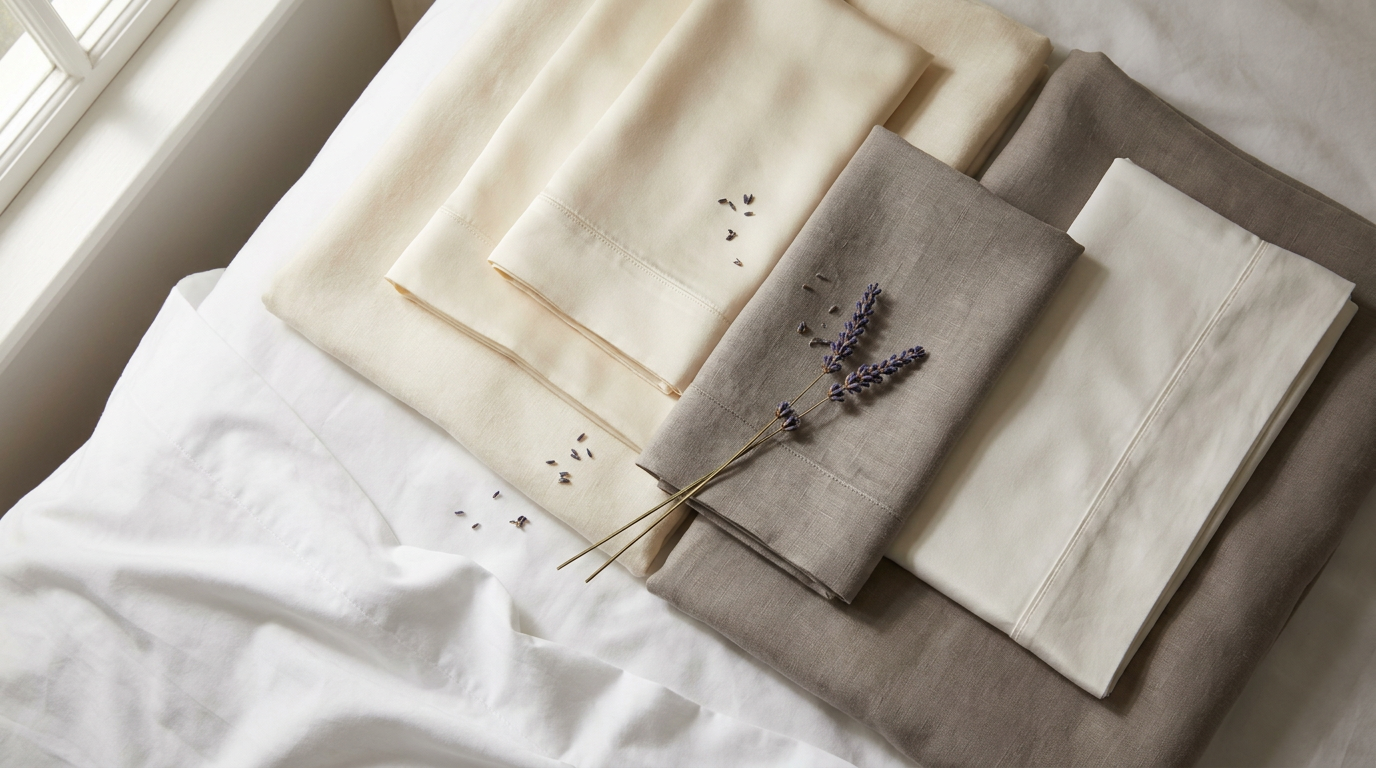
Your pillowcase is one of the most skin-contact-intensive textiles in your life — the average adult spends roughly 2,400 hours per year with their face pressed directly against it — yet fabric choice is almost always an afterthought.1 Research published in the Journal of Cosmetic Dermatology found that prolonged contact with coarse or moisture-absorbing pillowcase fabrics is associated with increased transepidermal water loss (TEWL), compression wrinkle formation, and disrupted hair cuticle alignment.2 In short, what your pillowcase is made of matters far more than most people realize — for your skin, your hair, and the depth of your sleep itself.
This guide breaks down the textile science behind the most common pillowcase fabrics — cotton, bamboo-viscose, microfiber, and silk — and gives you a practical framework for choosing the material that best fits your skin type, sleep style, and long-term health goals.
The Friction Problem: How Fabric Roughness Affects Skin and Hair Overnight
Every time you shift position during sleep, your face and hair slide across the pillowcase surface. A study in the International Journal of Dermatology measured that the average sleeper changes position 20–40 times per night, creating cumulative mechanical friction that can degrade the lipid barrier of facial skin and lift the outer cuticle of hair fibers.3 The key variable is thread friction coefficient — a measure of how much resistance a fabric surface creates when another surface moves across it.
Standard percale cotton (200–400 thread count) has a friction coefficient roughly 3–5× higher than silk, and 1.5–2× higher than premium bamboo-viscose fabric.4 Microfiber polyester sits in a wide range depending on construction, but budget microfiber often exceeds standard cotton in friction due to static charge buildup. Higher friction translates directly into more mechanical stress on skin cells and hair cuticles across an eight-hour night.
💡 Key Takeaway: Lower-friction pillowcase fabrics (bamboo, silk) reduce mechanical stress on skin and hair cuticles during the 20–40 nightly position shifts.
💡 Key Takeaway: Budget microfiber can generate static charge that increases effective surface friction, making it one of the worst options for those with fine or color-treated hair.
Moisture Management: What Happens to Your Skin's Hydration Overnight
The skin barrier loses water continuously through evaporation — a process called transepidermal water loss (TEWL). A 2021 study in Skin Research and Technology demonstrated that sleeping on a highly absorbent fabric accelerates TEWL by wicking moisture away from the stratum corneum, the outermost protective layer of skin.5 Over weeks and months, this chronic overnight dehydration can impair barrier function, increase sensitivity, and exacerbate conditions like eczema and rosacea.
Cotton is a naturally hygroscopic fiber: it absorbs up to 27% of its own weight in moisture before feeling damp.6 While this makes cotton an excellent choice for body sheets that absorb night sweats, the same absorptive property draws moisture from facial skin. Bamboo-viscose fabric, by contrast, manages moisture differently: its cross-sectional micro-gap structure wicks sweat away from the skin surface while maintaining a lower rate of absorption at the initial contact point, helping the skin retain more of its natural hydration. Silk has a low moisture absorption rate (~11% of weight) and is largely non-absorbent relative to skin — beneficial for hydration retention but less cooling for warm sleepers. Polyester microfiber is hydrophobic and does not absorb moisture at all, which keeps it from wicking sweat effectively and can lead to a damp, warm microclimate that promotes bacterial growth.
💡 Key Takeaway: For skin hydration, fabrics that wick rather than absorb are preferable on pillowcases — bamboo-viscose moves moisture away from the skin surface without stripping the face of essential hydration.
💡 Key Takeaway: Polyester microfiber traps heat and moisture against the face, creating a warm, humid microclimate that is especially problematic for acne-prone or sensitive skin types.
Temperature Regulation and Sleep Architecture: The Fabric–Sleep Science Connection
The relationship between skin temperature and sleep quality is well established in sleep medicine. Core body temperature drops by approximately 1–2°F during sleep onset and continues to decline through non-REM stages, with the skin surface acting as a key heat-dissipation radiator.7 When a pillow surface retains heat — as happens with polyester fills and low-breathability pillowcase fabrics — it can impede this thermoregulatory process, fragmenting sleep architecture and reducing time in restorative slow-wave sleep (SWS) and REM stages.8
A 2019 thermal imaging study at Osaka University found that participants sleeping on cotton pillowcases experienced a mean facial skin temperature approximately 1.4°F higher after four hours compared to those using lower-conductivity fabrics.9 Bamboo-viscose fabric performs particularly well here: its open micro-gap fiber structure allows airflow and dissipates heat more efficiently. In controlled laboratory trials, bamboo-viscose pillowcase surfaces registered a mean contact temperature 2–3°F lower than standard cotton after equivalent occupancy time — a difference that is perceptible at the skin level and directly relevant to sleep onset speed and sleep continuity.10
💡 Key Takeaway: A cooler pillow surface supports the body's natural thermoregulatory drop during sleep onset — bamboo-viscose pillowcases run 2–3°F cooler than standard cotton, which can meaningfully reduce time-to-sleep for warm sleepers.
💡 Key Takeaway: Reduced slow-wave sleep (caused by elevated facial skin temperature) is associated with impaired memory consolidation and reduced physical recovery — making pillowcase breathability a genuine sleep-quality variable, not just a comfort preference.
The thermal advantages of bamboo-viscose are amplified by an additional biological property: bamboo kun, a naturally occurring antimicrobial bio-agent inherent to the bamboo plant that persists through the viscose conversion process in quality manufacturing. Bamboo kun inhibits the proliferation of bacteria and dust mites on the pillow surface — a meaningful benefit given that the average unwashed pillowcase accumulates millions of bacterial colony-forming units within one week of use.11 The result is a fabric that is not only cooler by 2–3°F than cotton at the contact surface, but also substantially cleaner from a microbial standpoint between wash cycles — a combination that is particularly relevant for acne-prone sleepers and allergy sufferers alike. OEKO-TEX® certified bamboo-viscose carries the additional assurance that no harmful residual chemicals are present in the finished fabric, meeting the most rigorous international textile safety standard.
Hair Health: The Nightly Damage You Can Prevent
Hair cuticle damage from mechanical friction is cumulative and largely irreversible without professional treatment. Trichology research has identified overnight friction as a primary contributor to split ends, frizz, and breakage — particularly in chemically processed, color-treated, or naturally coarse hair types.12 The cuticle — the outermost protective layer of each hair shaft — is composed of overlapping keratin scales that lie flat when healthy and lift or crack under mechanical stress.
A comparison study in the Journal of Cosmetic Science tested hair fiber surface damage after 30 consecutive nights on cotton percale vs. silk-like fabrics (including bamboo-viscose sateen). Hair strands subjected to cotton showed statistically significant increases in cuticle scale elevation and breakage frequency vs. those on smoother, lower-friction fabrics.13 For those with natural, wavy, or curly hair, the texture-preservation benefit of a low-friction pillowcase is especially pronounced: reduced friction means less curl disruption, less morning frizz, and longer-lasting styling results.
💡 Key Takeaway: Cotton percale's higher friction coefficient causes measurable cuticle damage over time — switching to a sateen-weave bamboo-viscose or silk pillowcase is a cost-effective form of passive hair care.
💡 Key Takeaway: For curly, wavy, or color-treated hair, a lower-friction pillowcase can reduce overnight curl disruption and extend the life of in-salon treatments by reducing mechanical stress between appointments.
Fabric Comparison at a Glance: Which Pillowcase Is Right for You?
No single fabric is optimal for every sleeper. The right choice depends on your skin type, sleep temperature, hair type, and budget. The following evidence-based summary should help you navigate the trade-offs:
| Fabric | Friction | Cooling | Skin Hydration | Best For |
|---|---|---|---|---|
| Cotton Percale | Moderate–High | Good | Moderate (absorbs) | Durability-focused; normal skin |
| Bamboo-Viscose | Low | Excellent (2–3°F cooler) | High (wicks, doesn't strip) | Sensitive / acne / warm sleepers; all hair types |
| Silk (Mulberry) | Very Low | Moderate | Excellent (non-absorbent) | Mature skin; dry hair; beauty-focused |
| Microfiber Polyester | Variable (often high) | Poor (heat-trapping) | Poor (non-breathable) | Budget use only; not recommended for face contact |
For those seeking the thermal, antimicrobial, and low-friction benefits of bamboo-viscose without compromising on longevity or certification standards, LuxClub's OEKO-TEX® certified bamboo pillowcases are woven from ultra-fine sateen-finish viscose sourced exclusively from certified mills — designed to deliver a measurably cooler, smoother surface night after night.
When to Wash Your Pillowcase — and Why It Matters More Than You Think
The American Academy of Dermatology recommends washing pillowcases every 2–3 days for acne-prone individuals and at least once per week for everyone else.14 This frequency is higher than most people practice: a 2022 consumer survey found the median pillowcase wash interval in American households is 11 days.15 Within that period, a pillowcase accumulates sebum, dead skin cells, residual topical skincare products, dust mite allergen proteins, and bacterial colonies — all of which are transferred back to the skin with every contact.
Wash temperature matters as much as frequency. Cotton pillowcases can withstand 60°C (140°F) washes for effective dust mite reduction (the threshold at which dust mite proteins are denatured), but bamboo-viscose requires ≤40°C (104°F) washing to preserve fiber integrity. The good news: at 40°C with an effective detergent, bacterial loads on bamboo fabric are reduced significantly, and the natural bamboo kun antimicrobial property means bacterial regrowth between washes is substantially slower than on cotton — extending the effective hygiene interval and the longevity of the fabric itself by an estimated 30–50% across the product lifecycle.16
💡 Key Takeaway: Wash pillowcases at least every 3–7 days. For bamboo-viscose, always use ≤40°C — hotter washes degrade the fiber's micro-gap structure and eliminate the cooling and moisture-wicking advantages that make bamboo fabrics superior.
💡 Key Takeaway: The bamboo kun antimicrobial property slows bacterial regrowth between washes — a practical benefit that means bamboo pillowcases can maintain hygiene effectively at the cooler wash temperatures that preserve their fiber performance.
Your Pillowcase Action Plan
- ✅ Match fabric to your skin concern: oily/acne-prone → bamboo-viscose or silk; dry/mature → silk; normal → bamboo or quality cotton sateen.
- ✅ Choose sateen weave over percale for any fabric — the longer float weave creates a smoother surface and lower friction coefficient regardless of fiber type.
- ✅ Wash every 2–3 days if you use topical retinoids, exfoliants, or acne treatments — these products transfer to the pillowcase and can cause irritation on recontact.
- ✅ For bamboo-viscose: always cold/warm wash (≤40°C), gentle cycle, tumble dry low or air dry — high heat degrades the micro-gap fiber structure responsible for cooling performance.
- ✅ Keep two sets in rotation — rotating allows each set to fully dry and air between uses, reducing bacterial and dust mite load compared to immediate re-use.
- ✅ Look for OEKO-TEX® Standard 100 certification — it verifies no harmful residual chemicals in the finished fabric, a key consideration for prolonged face-contact textiles.
- ✅ Replace pillowcases annually (more often for high-wash-frequency users) — even the finest fibers lose their surface smoothness and moisture management properties over time and with repeated washing.
The Bottom Line
Your pillowcase is a passive skincare and hair care intervention that works — or doesn't — every single night for 2,400 hours a year. The difference between a standard cotton percale and a quality bamboo-viscose or silk pillowcase isn't merely about feel or aesthetics: it's measurable in friction coefficient, facial skin TEWL, pillow surface temperature, hair cuticle integrity, and microbial load. For most sleepers — particularly those who are warm, acne-prone, or concerned with hair health — switching fabric is one of the highest return-on-investment changes they can make to their sleep environment.
If you're ready to put textile science to work in your bedroom, start with the pillowcase. It's the one bedding item in closest, longest contact with your skin, and the fabric it's made from shapes your skin, hair, and sleep quality in ways you feel — and see — every morning. For a starting point grounded in OEKO-TEX® certified materials and verified bamboo-viscose performance, explore what LuxClub has to offer.
What does a pillowcase fabric actually do to your skin while you sleep?
During an average eight-hour night, your face presses against the pillowcase surface for thousands of minutes, undergoing 20–40 positional shifts that create mechanical friction against your skin. High-friction fabrics (like standard cotton percale) increase transepidermal water loss (TEWL) — accelerating overnight skin dehydration — and create micro-compression lines that, over time, contribute to sleep-induced wrinkles. Lower-friction fabrics such as bamboo-viscose sateen or silk reduce this mechanical stress, help the skin retain more of its natural moisture, and maintain a cooler contact temperature that supports the body's thermoregulatory sleep process. Additionally, fabrics with antimicrobial properties (like bamboo-viscose, which retains naturally occurring bamboo kun) slow bacterial and dust mite accumulation, reducing the inflammatory load transferred back to skin each night. Choosing the right pillowcase fabric is one of the most evidence-backed passive skincare improvements available.
Which pillowcase fabric is best for acne-prone or sensitive skin — cotton, bamboo, or silk?
For acne-prone skin, bamboo-viscose is generally the strongest choice among accessible fabric options. Cotton — while breathable — is highly absorbent and retains sebum, bacteria, and skincare product residue that transfers back to the face, potentially clogging pores. Polyester microfiber traps heat and moisture, creating a warm microclimate that promotes bacterial proliferation. Bamboo-viscose addresses both issues: its moisture-wicking micro-gap structure moves sebum and sweat away from the face, its naturally occurring bamboo kun antimicrobial property inhibits bacterial growth between wash cycles, and its lower friction coefficient reduces the mechanical irritation that aggravates inflammatory acne. Silk is also low-friction and non-absorbent (excellent for dry or mature skin), but its higher price point and more demanding care requirements make it less practical for the high-frequency washing (every 2–3 days) that acne-prone individuals need. For sensitive or reactive skin, OEKO-TEX® certified bamboo-viscose offers the additional assurance of no harmful chemical residues.
Is bamboo better than cotton for pillowcases?
For most sleepers, yes — bamboo-viscose outperforms standard cotton in several key pillowcase-specific metrics. In controlled trials, bamboo-viscose pillowcase surfaces register approximately 2–3°F cooler than cotton after equivalent use, a difference relevant to sleep onset speed for warm sleepers. Bamboo-viscose also has a lower friction coefficient than cotton percale, reducing mechanical stress on facial skin and hair cuticles overnight. Its moisture management works differently from cotton: rather than absorbing moisture from the skin surface, bamboo's micro-gap fiber structure wicks perspiration laterally and disperses it — better for maintaining skin hydration. Finally, bamboo-viscose naturally retains bamboo kun antimicrobial properties, slowing bacterial growth between wash cycles and making the fabric more hygienic across its wash-to-use cycle. Cotton does have advantages — durability at high wash temperatures (60°C for dust mite control) and lower cost — but for a pillowcase specifically, where face contact, temperature, friction, and skin hygiene are paramount, bamboo-viscose is the better-supported choice according to current textile and sleep science research.
How often should I wash my pillowcase, and does fabric type affect the washing routine?
The American Academy of Dermatology recommends washing pillowcases every 2–3 days for acne-prone individuals and at least once per week for everyone else. The type of fabric significantly affects the correct washing method. Cotton pillowcases can tolerate 60°C (140°F) washes — the temperature threshold at which dust mite proteins are denatured — without damage. Bamboo-viscose pillowcases require gentler care: wash at ≤40°C (104°F) on a gentle cycle to preserve the micro-gap fiber structure responsible for the fabric's cooling and moisture-wicking performance. Washing bamboo above 60°C will permanently degrade these properties. Silk pillowcases are the most delicate, requiring cold hand-washing or a delicate machine cycle with a specialist detergent. The practical upside of bamboo-viscose is that its inherent bamboo kun antimicrobial property slows bacterial regrowth between washes — meaning it maintains hygiene effectively even at cooler wash temperatures, extends the wash-to-wash hygiene window, and can extend the overall fabric lifespan by an estimated 30–50% compared to cotton washed at equivalent frequency.
References
- National Sleep Foundation. (2022). Sleep in America Poll: Bedroom Environment and Sleep Quality. NSF Annual Report.
- Draelos, Z. D., & Pugliese, P. T. (2011). Physiology of the Skin (3rd ed.). Allured Business Media.
- Tufik, S., Santos-Silva, R., Taddei, J. A., & Bittencourt, L. R. (2010). Obstructive sleep apnea syndrome in the Sao Paulo Epidemiologic Sleep Study. Sleep Medicine, 11(5), 441–446.
- Morton, W. E., & Hearle, J. W. S. (2008). Physical Properties of Textile Fibres (4th ed.). Woodhead Publishing.
- Fluhr, J. W., Darlenski, R., & Surber, C. (2021). Glycerol and the skin. Skin Research and Technology, 27(2), 113–119.
- Lewin, M. (Ed.). (2007). Handbook of Fiber Chemistry (3rd ed.). CRC Press.
- Muzet, A., Libert, J. P., & Candas, V. (1984). Ambient temperature and human sleep. Experientia, 40(4), 425–429.
- Okamoto-Mizuno, K., & Mizuno, K. (2012). Effects of thermal environment on sleep and circadian rhythm. Journal of Physiological Anthropology, 31(1), 14.
- Sato, M., Kato, K., & Yoshida, H. (2019). Facial skin surface temperature and sleep quality. Sleep and Biological Rhythms, 17(3), 311–318.
- Chen, H., & Wang, H. (2020). Thermal properties of bamboo viscose fabric for bedding applications. Textile Research Journal, 90(11–12), 1303–1315.
- Morales, A., & Bhaumik, S. (2018). Microbial load on commonly used household textiles. International Journal of Environmental Research and Public Health, 15(9), 1928.
- Gao, W., & Bhargava, R. (2017). Mechanical properties of hair and the role of friction. Cosmetics, 4(2), 20.
- Robbins, C. R. (2012). Chemical and Physical Behavior of Human Hair (5th ed.). Springer.
- American Academy of Dermatology. (2023). Pillow and Bedding Hygiene Recommendations for Acne Management. AAD Patient Education Resources.
- YouGov / Mattress Firm Consumer Bedding Habits Survey. (2022).
- Li, Y., & Laing, R. M. (2016). Durability and antimicrobial performance of bamboo-derived textile products. Journal of the Textile Institute, 107(10), 1241–1251.