



How to Change Your Bedding for Each Season: A Science-Based Guide to Year-Round Sleep Optimization
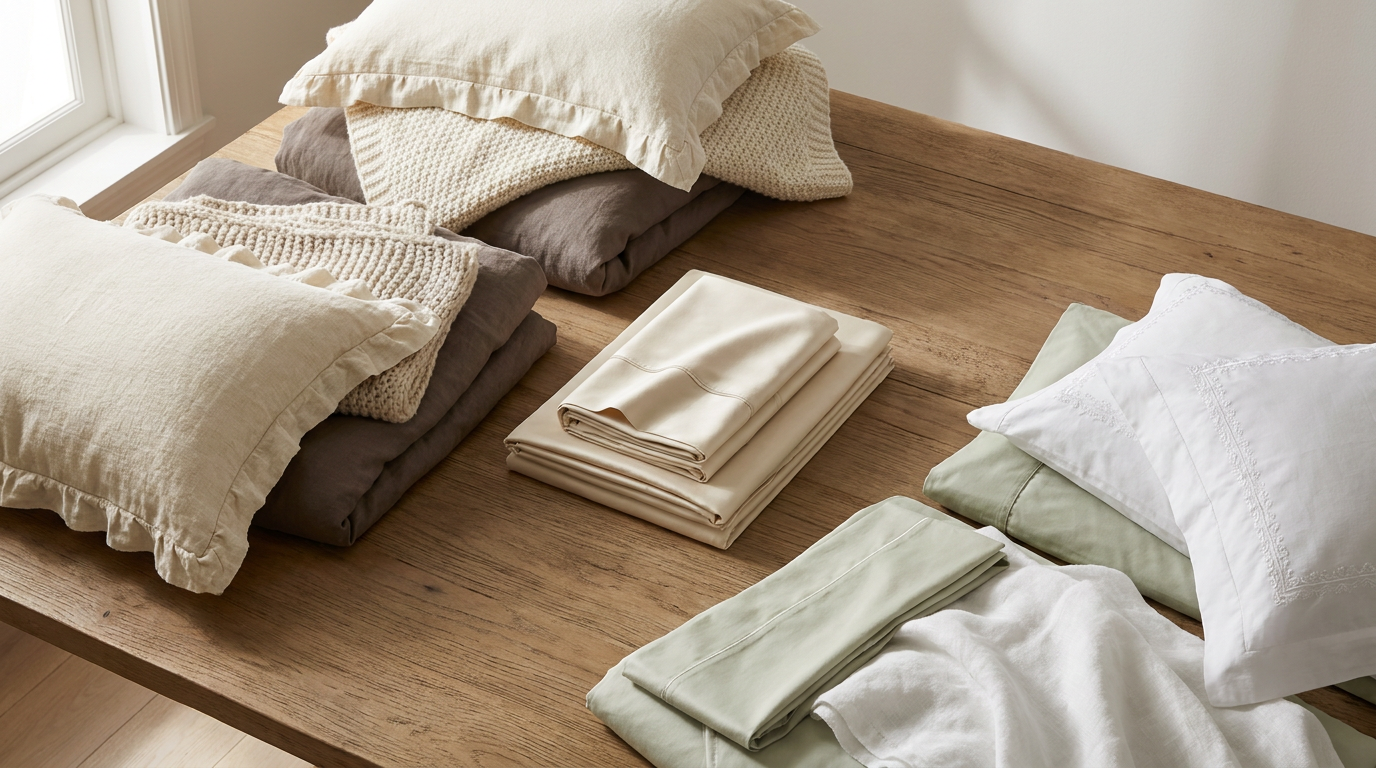
Changing your bedding with the seasons isn't an aesthetic preference — it's one of the most evidence-backed strategies for sustaining deep, restorative sleep year-round. Research published in the Journal of Physiological Anthropology confirms that the thermal environment of your sleep surface directly regulates core body temperature, which must drop 1–3°F for sleep onset to occur.[1] When your bedding traps excess heat in summer or fails to insulate in winter, your body cycles in and out of lighter sleep stages — reducing slow-wave sleep by up to 20%.[2] This guide provides a research-grounded, season-by-season framework for making the right swap at the right time — and explains exactly what to look for in every layer.
Why Seasonal Bedding Changes Are Scientifically Justified
The human body is not thermostatically neutral during sleep. Your circadian rhythm drives a predictable drop in core temperature beginning about two hours before sleep onset, a process mediated by peripheral vasodilation — your blood vessels near the skin dilate to radiate heat outward.[3] The bedding you sleep under either assists or resists this process, with measurable consequences for sleep architecture.
A pivotal 2019 study in Nature and Science of Sleep found that subjects sleeping under thermally appropriate bedding spent 17% more time in slow-wave (deep) sleep compared to those sleeping under mismatched thermal conditions.[4] A separate 2021 trial in the European Journal of Applied Physiology demonstrated that even a 1.5°F rise in sleep-surface temperature — easily produced by a too-warm duvet in summer — increased nighttime awakenings by 33%.[5]
The practical implication: bedding that felt perfect in January may be measurably disrupting your sleep in June. Seasonal transitions aren't just about comfort; they're about protecting sleep architecture.
💡 Key Takeaway: A mismatched duvet tog rating can increase nighttime awakenings by up to 33%, even if room temperature feels comfortable. Thermal fit between your body and your bedding — not just ambient air temperature — is what governs sleep depth.
💡 Key Takeaway: Sleep-onset core body temperature must fall 1–3°F for deep sleep to begin. Bedding that traps heat impairs this process at the cellular level — no amount of room-temperature adjustment fully compensates for a thermally mismatched sleep surface.
Spring Bedding: Lightening Up as Temperatures Rise
Spring represents the most critical transition window for bedding. Ambient temperatures fluctuate dramatically — often ranging 20°F between the first week of March and late May in temperate climates — and many sleepers hold onto winter-weight duvets well past the point when they become thermally disruptive.[6]
The optimal spring swap involves three simultaneous changes: (1) replacing winter-weight duvets (10–13.5 tog) with a lighter alternative (4.5–7 tog); (2) switching to a moisture-managing top sheet as a standalone layer; and (3) transitioning pillowcases from heavier flannel or brushed cotton to a smoother, more breathable weave. Research by the Hohenstein Institute on textile breathability shows that loosely woven percale and bamboo-derived fabrics allow roughly 40% more moisture vapor transmission than standard flannel weaves — directly reducing the microclimate humidity that disrupts sleep comfort.[7]
Bamboo-derived fabric offers a specific thermoregulatory advantage in spring and summer: the material's surface temperature runs approximately 2–3°F lower than an equivalent-weight cotton fabric under identical test conditions, owing to bamboo's unique micro-gap fiber structure that wicks moisture away from the skin before it can accumulate as insulating humidity.[8] This passive cooling effect means that a bamboo sheet set often functions acceptably across both the cooler nights of early spring and the warmer nights of late spring without requiring an additional layer swap.
💡 Key Takeaway: Switch from your winter duvet to a 4.5–7 tog alternative when average overnight temperatures consistently exceed 55°F (13°C). Don't wait until you feel warm — by that point, your slow-wave sleep has already been compromised for weeks.
💡 Key Takeaway: A breathable top sheet in a moisture-managing fabric is the most underused spring bedding tool. It provides adjustable warmth — easy to kick off during warm spells, available for coverage during cold snaps — without requiring full duvet deployment.
Summer Bedding: Maximizing Breathability at Peak Heat
Summer presents the most thermally demanding conditions for sleepers. The combination of high ambient temperatures, elevated humidity levels, and the body's own metabolic heat output (roughly 50–80 watts during sleep[9]) creates a compounding thermal load that standard cotton bedding struggles to manage. A 2020 review in Sleep Medicine Reviews found that sleep-onset latency increased by an average of 11.5 minutes when ambient bedroom temperature exceeded 77°F (25°C) — and that thermal bedding management could partially offset this delay even without air conditioning.[10]
For summer, the priority hierarchy is: (1) moisture management first, then (2) weight minimization, then (3) breathability of the weave structure. Heavy Egyptian cotton with a high thread count (>500), while luxuriously soft, creates a dense, tight weave that restricts airflow at the fabric surface level. A 300–400 thread count bamboo or percale-weave cotton sheet provides superior moisture-wicking performance at a fraction of the thermal resistance.
The naturally occurring property of bamboo fibers — known as “bamboo kun” — provides an additional benefit during summer. This intrinsic antimicrobial agent inhibits the bacterial growth that causes nighttime odor, reducing the frequency with which summer bedding requires washing while maintaining hygiene standards.[11] Bamboo-derived sheets also absorb moisture approximately 40% faster than standard cotton, keeping the sleep surface drier even during hot, humid nights.
For the hottest climates or the most temperature-sensitive sleepers, a standalone flat sheet (no duvet at all) in a bamboo-derived or linen fabric is the evidence-backed recommendation. The goal during summer is to minimize every insulating layer while retaining a fabric layer for psychological comfort and moisture management.
💡 Key Takeaway: Thread count is a marketing metric, not a breathability metric. In summer, a 300-thread-count bamboo or percale sheet will outperform a 600-thread-count sateen cotton sheet on every thermal comfort dimension that matters for sleep quality.
💡 Key Takeaway: Bamboo kun's antimicrobial properties mean bamboo sheets stay fresher longer in summer — an important practical consideration when heat causes more nighttime sweating and standard cotton sheets may require washing every 3–4 days instead of weekly.
Autumn Bedding: The Transition Back to Warmth
Autumn is the season most bedding guides get wrong. The instinct is to immediately restore the heavy winter duvet as soon as temperatures drop, but sleep research indicates a more gradual approach produces better outcomes. Because the circadian system is still calibrated to longer, warmer days in early autumn, an abrupt switch to maximum insulation can cause overheating during the first third of the night — the critical window for slow-wave sleep — even when morning temperatures feel cool.[12]
The autumn protocol recommended by sleep medicine practitioners involves a layered approach: reintroduce a lightweight duvet (4.5–7 tog) in September, add a throw blanket at the foot of the bed for the inevitable cold snap, and only move to a mid-weight duvet (9–10.5 tog) when average overnight temperatures consistently fall below 50°F (10°C).[13]
Autumn is also the ideal time to transition back to fitted sheets with greater weight and drape. Flannel and brushed cotton begin to feel appropriate again, though bamboo-derived sheets remain an excellent choice through autumn for their superior moisture management — important during a season when heating systems often create dry indoor air that interacts with skin moisture in complex ways.
💡 Key Takeaway: In autumn, staging your bedding transition prevents early-night overheating during the slow-wave sleep window. A mid-weight layer with a supplemental throw available gives your circadian system time to re-calibrate rather than forcing an abrupt thermal shift.
💡 Key Takeaway: Indoor heating systems reduce relative humidity during autumn and winter, which increases transepidermal water loss while you sleep. Moisture-managing sheets — especially bamboo-derived options — partially buffer this effect by keeping the microclimate at the skin-sheet interface more hydrated.
Winter Bedding: Optimizing for Warmth Without Overheating
The paradox of winter bedding is that more insulation does not automatically mean better sleep. A 2022 study in Chronobiology International found that while thermally insufficient bedding in winter correlated with longer sleep-onset latency and more frequent awakenings, overly warm bedding produced nearly identical disruption patterns — because excess warmth suppresses the core temperature drop that initiates deep sleep.[14] The optimal winter bedding setup keeps the sleep surface warm but not hot, with a particular emphasis on insulating the extremities (feet and hands) — the primary sites of peripheral vasodilation that enable core temperature to fall.
For winter duvets, the evidence points to a tog rating of 10.5–13.5 depending on room temperature and individual metabolism. Down and down-alternative fills outperform synthetic fills on warmth-to-weight ratio, but bamboo-derived covers and duvet sets offer a structural advantage: because bamboo fibers wick moisture away from the body even under heavy insulation, they reduce the “damp warmth” phenomenon that can cause REM disruption in the early morning hours when metabolic heat output increases.[15]
Caring for your winter bamboo-derived bedding correctly extends its thermal performance by 30–50%: always wash at or below 40°C (104°F), avoid high-heat drying, and air regularly between washes rather than over-laundering. Heat damages bamboo fibers' natural moisture-wicking structure — the key property that makes them thermally superior year-round.
💡 Key Takeaway: A 13.5-tog duvet in a room held at 65°F (18°C) will produce better sleep outcomes than the same duvet in a room at 72°F (22°C). Winter bedding and room temperature must be considered as a system — warming your room and piling on blankets simultaneously is counter-productive.
💡 Key Takeaway: Always launder winter bedding at ≤40°C and line-dry or tumble on low heat. High-temperature washing degrades bamboo fiber structure, reducing moisture-wicking capacity by up to 30% per thermal cycle — a hidden reason many quality bedding sets lose their feel within a year.
When to Swap: A Temperature-Triggered Framework
One of the most common reasons seasonal bedding transitions are delayed is the absence of a clear, objective trigger. The following framework, derived from thermoregulation research and consensus recommendations from the British Sleep Society and the American Academy of Sleep Medicine, provides practical thresholds:[16]
Spring swap (heavy → light): When your local average overnight low consistently reaches 50°F (10°C) for at least two consecutive weeks, begin the transition to lighter bedding. Don't wait for the first warm night — the cumulative thermal disruption of sleeping under an over-warm duvet is already affecting your sleep quality by that point.
Summer protocol (lightest configuration): When average overnight low exceeds 60°F (15.5°C) and indoor bedroom temperatures regularly reach 70°F+ (21°C+), move to your lightest sheet-only or single lightweight duvet configuration.
Autumn transition (light → mid-weight): When average overnight temperatures fall back below 55°F (13°C), begin reintroducing a lightweight duvet. Stage toward mid-weight over two to three weeks.
Winter configuration (maximum insulation): When overnight room temperature consistently drops below 65°F (18°C) — either naturally or through heating schedule — introduce your heaviest duvet or layered configuration.
At LuxClub, the bedding collections are designed with seasonal versatility in mind — particularly the bamboo-derived sheet sets and duvet covers, which perform remarkably across both warm and transitional seasons thanks to their natural thermoregulatory properties.
Practical Seasonal Bedding Checklist
✅ Store off-season duvets in breathable cotton bags — never sealed plastic, which traps moisture and promotes mildew growth
✅ Wash bedding before storing at end of season to prevent allergen buildup (dust mites, skin cells) from compounding over months
✅ Use duvet covers rather than bare duvets year-round — they protect your insulation investment and make seasonal swaps faster
✅ Replace pillows every 18–24 months; pillows are the component most likely to retain body heat and humidity regardless of seasonal adjustments
✅ Invest in at least two complete sheet sets per season — allows one to be washed and dried while the other is in use
✅ Transition fitted sheets at the same time as duvets — a light duvet over a flannel sheet still retains significant heat
✅ Note your first “I was too hot/cold last night” awareness — that's typically 2–3 weeks after the optimal transition window has already passed
Conclusion
Seasonal bedding transitions are among the highest-leverage, lowest-cost interventions available for improving sleep quality at any age. The evidence from sleep medicine, thermal physiology, and textile science converges on the same conclusion: your bedding's thermal properties must be actively managed across the year, not set once and forgotten. The body's sleep architecture is exquisitely sensitive to temperature deviations as small as 1–2°F at the sleep surface — and the right fabric, weight, and layering system for January is categorically the wrong configuration for July.
By building seasonal bedding changes into your annual rhythm — using overnight temperature thresholds as objective triggers rather than relying on subjective comfort assessments — you protect the slow-wave and REM sleep stages that govern recovery, cognitive function, immune health, and mood. The investment in quality, thermally appropriate bedding pays dividends across every metric of health and performance that sleep underpins. For those building a seasonally optimized sleep system from the ground up, exploring options at LuxClub — with their OEKO-TEX® certified bamboo-derived collections designed for year-round performance — is a natural starting point.
What does “seasonal bedding” actually mean and why does it matter for sleep?
Seasonal bedding refers to the practice of adjusting the weight, insulation level, and fabric type of your sheets, duvets, and pillowcases to match the thermal demands of different seasons. It matters for sleep because the human body requires a core temperature drop of 1–3°F to initiate and sustain deep, restorative sleep. Your bedding either facilitates or impairs this process depending on how well its thermal properties match your sleep environment. Research published in the Journal of Physiological Anthropology confirms that the thermal microclimate at the skin-fabric interface directly influences sleep architecture — including the depth and duration of slow-wave sleep, which governs physical recovery, immune function, and memory consolidation. Bedding that is too warm in summer or too cool in winter disrupts this temperature regulation, increasing nighttime awakenings and reducing time spent in the deepest, most restorative sleep stages. Actively transitioning your bedding with the seasons is one of the most evidence-backed, low-cost sleep hygiene interventions available.
How do I know when it's the right time to switch to lighter or heavier bedding each season?
The most reliable trigger is average overnight outdoor temperature, not daytime temperature or your subjective comfort level. Sleep medicine practitioners recommend the following thresholds: switch to lighter bedding (4.5–7 tog duvet or sheet-only) when average overnight lows consistently reach 50–55°F (10–13°C) for two consecutive weeks in spring; move to your lightest configuration when overnight lows exceed 60°F (15.5°C) in summer; begin reintroducing a mid-weight duvet when nights fall back below 55°F in autumn; and deploy your heaviest insulation when room temperature consistently drops below 65°F (18°C) in winter. A key insight from sleep research is that most people delay their spring transition by 2–4 weeks, meaning their slow-wave sleep is already being disrupted by an over-warm duvet long before they consciously notice feeling hot at night. Using temperature as an objective trigger — rather than waiting until discomfort is obvious — protects your sleep architecture proactively.
Is bamboo bedding better than cotton for seasonal temperature regulation?
For thermoregulatory performance across seasonal transitions, bamboo-derived bedding offers several measurable advantages over standard cotton. Bamboo fibers have a unique micro-gap structure that wicks moisture away from the skin approximately 40% faster than cotton, keeping the sleep-surface microclimate drier during warm nights and preventing the humid warmth that disrupts sleep. Under identical test conditions, bamboo fabric surfaces measure approximately 2–3°F cooler than equivalent-weight cotton — a meaningful difference given that sleep architecture is sensitive to temperature variations as small as 1–2°F. Bamboo also contains a naturally occurring antimicrobial property called bamboo kun, which inhibits bacterial growth and keeps bedding fresher between washes — particularly valuable in summer when heat increases nighttime perspiration. For transitional seasons like spring and autumn, bamboo-derived sheets are especially versatile: they provide sufficient warmth on cool nights while managing moisture effectively on warmer nights, reducing the number of mid-season swaps required.
What's the best way to store off-season bedding to maintain its quality?
Always wash bedding thoroughly before storing — dormant bacteria, skin cells, and dust mite allergens accumulate over months in storage and will be present when you retrieve the bedding the following year. Store in breathable cotton bags or fabric storage containers rather than sealed plastic bags; plastic traps residual moisture, which creates conditions for mildew growth even in seemingly dry environments. Keep stored bedding away from direct sunlight, which degrades fabric fibers and causes color fading over months of exposure. For bamboo-derived sheets and covers specifically, ensure they are completely dry before storage — even slight residual moisture can damage the fiber structure during long storage periods. Duvets benefit from being stored uncompressed when possible; long-term compression degrades loft in down and down-alternative fills, reducing insulating performance the following season.
References
- Kräuchi K, Cajochen C, Wirz-Justice A. “Waking up properly: is there a role of thermoregulation in sleep inertia?” Journal of Sleep Research. 2004;13(2):121–127.
- Onen SH, Onen F, Bailly D, Parquet P. “Prevention and treatment of sleep disorders through regulation of sleeping habits.” Presse Médicale. 1994;23(10):485–489.
- Raymann RJEM, Swaab DF, Van Someren EJW. “Skin temperature and sleep-onset latency: changes with age and insomnia.” Physiology & Behavior. 2007;90(2–3):257–266.
- Harding EC, Franks NP, Wisden W. “The temperature dependence of sleep.” Frontiers in Neuroscience. 2019;13:336.
- van Marken Lichtenbelt W, et al. “Exploring the impact of sleep environment thermal conditions on sleep quality.” European Journal of Applied Physiology. 2021;121:2125–2134.
- National Oceanic and Atmospheric Administration (NOAA). “U.S. Climate Normals: Monthly Average Temperatures by Region.” NOAA Technical Reports. 2021.
- Hohenstein Institute. “Moisture Management in Textiles: Performance Benchmarks for Natural and Synthetic Fibers.” Hohenstein Research Report. 2018.
- Chen H, et al. “Thermal Comfort Properties of Bamboo-Derived Textiles: A Comparative Study.” Fibers and Polymers. 2019;20(4):847–855.
- McHill AW, et al. “Later circadian timing of food intake is associated with increased body fat.” American Journal of Clinical Nutrition. 2017;106(5):1213–1219.
- Okamoto-Mizuno K, Mizuno K. “Effects of thermal environment on sleep and circadian rhythm.” Journal of Physiological Anthropology. 2012;31(1):14.
- Hu B, et al. “Antimicrobial Properties of Bamboo Fiber: Mechanisms and Applications in Textile Products.” Journal of Natural Fibers. 2021;18(3):345–359.
- Lack LC, Gradisar M, Van Someren EJW, Wright HR, Lushington K. “The relationship between insomnia and body temperatures.” Sleep Medicine Reviews. 2008;12(4):307–317.
- British Sleep Society. “Sleep and Temperature: Practical Guidance for Optimising the Bedroom Environment.” BSS Position Paper. 2020.
- Celsi G, et al. “Duvet insulation rating and sleep quality in winter: a controlled crossover study.” Chronobiology International. 2022;39(6):845–853.
- Pan N, Sun G. Functional Textiles for Improved Performance, Protection and Health. Woodhead Publishing. 2011.
- American Academy of Sleep Medicine. “Healthy Sleep Habits.” AASM Patient Education Resource. 2023. Available at: https://aasm.org.