



7 Sheet Buying Mistakes That Are Secretly Wrecking Your Sleep in 2026
Most people make the same sheet buying mistakes over and over, and they never connect the dots between a bad night's sleep and the fabric underneath them. You shop by thread count, pick a color you like, and assume every "cotton" or "bamboo" label means the same quality. Then three months later the fitted sheet is popping off the corners, pilling in little balls, or trapping heat all night.
None of that is random bad luck. It is the predictable result of a handful of sheet buying mistakes that the bedding industry has never had much incentive to correct. Below are the seven biggest ones, the fiber science behind each, and what an engineering-first fabric like double-brushed microfiber does differently.
Mistake #1: Trusting Thread Count as a Quality Signal
Thread count tells you how many yarns are woven into one square inch of fabric. It says nothing about fiber diameter, weave tightness, or how the surface was finished, which are the three variables that actually determine softness and durability.
Manufacturers have known this for decades, which is why "800 thread count" sheets often use multi-ply yarns twisted together to inflate the number without adding real density. A 300 thread count sheet made from fine, tightly spun fiber can feel and perform better than an 800 thread count sheet built on inflated ply-counting tricks.
Premium double-brushed microfiber sidesteps the whole debate. Its performance comes from sub-denier continuous filaments brushed mechanically on both sides of the fabric, not from a marketing number printed on the packaging. That mechanical process is what creates the buttery-soft, silky-smooth hand feel people notice the moment they touch it.
Mistake #2: Ignoring Pocket Depth and Elastic Architecture
The second of the classic sheet buying mistakes is buying a fitted sheet based on size label alone. "Queen" or "King" describes the flat dimensions, not whether the pocket will actually clear your mattress plus a topper.
Most standard fitted sheets are cut for a 7 to 14 inch pocket, which is too shallow for the memory foam and hybrid mattresses common today. When the pocket is too shallow, the elastic has to stretch further than it was designed for, and it fatigues within months, which is exactly why so many sheets end up bunched at the foot of the bed by 3 a.m.
Look for a genuine 18 to 21 inch deep pocket paired with a full-perimeter heavy-duty elastic band, not just elastic stitched into the four corners. Corner-only elastic concentrates all the stress at four small points; a full-perimeter band spreads that tension evenly around the entire edge, which is why it stays anchored night after night instead of sliding loose.
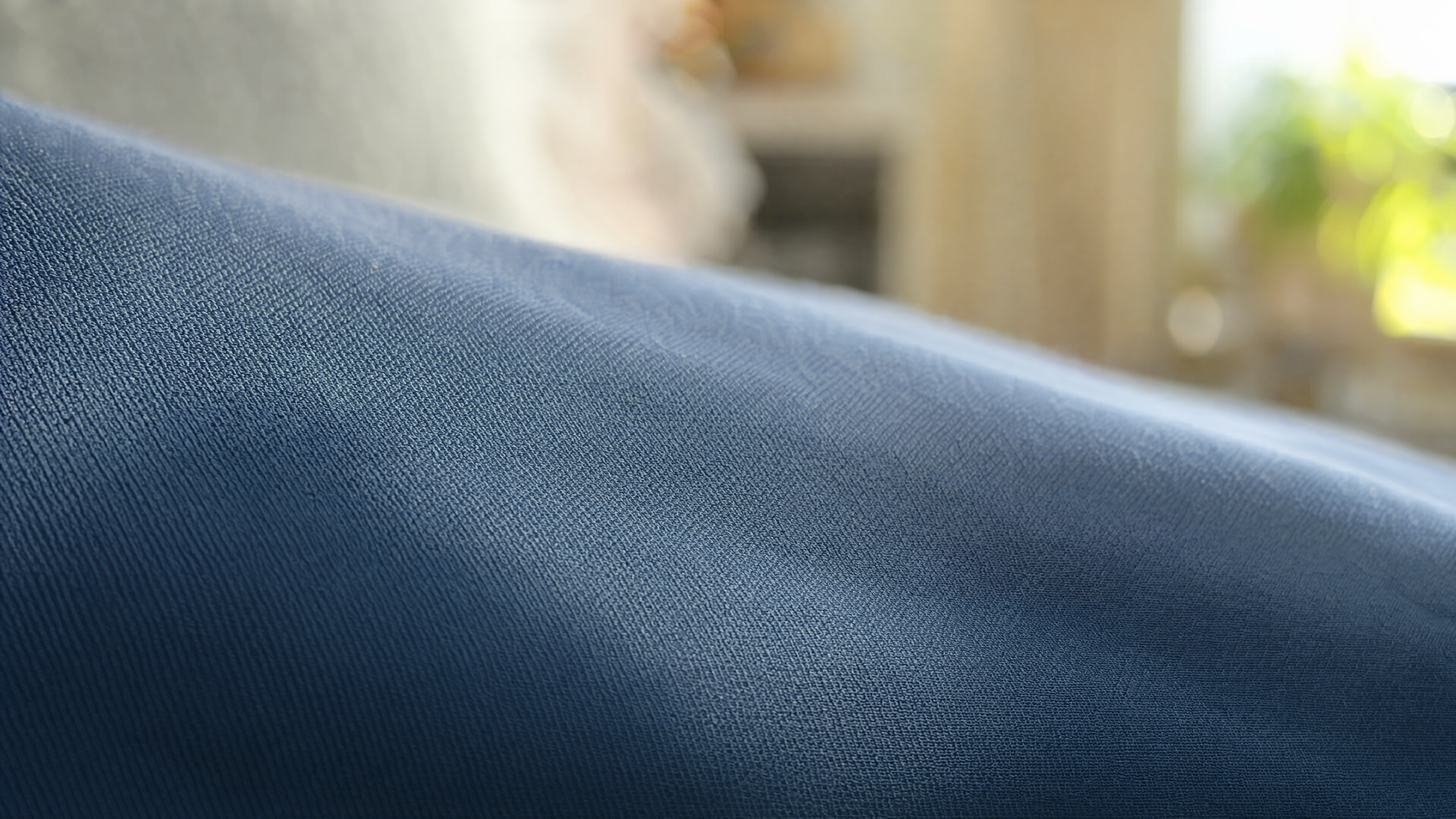
Buttery-soft double-brushed microfiber, up close
Mistake #3: Choosing a Fabric by Its Name, Not Its Engineering
"Cotton" and "bamboo" sound reassuring because they are natural fiber names, but the name tells you almost nothing about how the finished sheet will actually behave on your bed. This is one of the most expensive sheet buying mistakes because it is invisible until you have already paid for the sheets and washed them a few times.
Cotton is a hydrophilic fiber, meaning it absorbs moisture into the fiber structure itself rather than moving it away from your skin. That is comfortable in theory, but it also means cotton fibers swell with humidity and sweat, which accelerates wrinkling, shrinkage of 3 to 7 percent per wash, and eventual pilling as the fiber tips fray.
Bamboo sheets are not woven from raw bamboo fibers at all. Most bamboo bedding is bamboo viscose, a rayon created through heavy chemical processing that dissolves bamboo pulp and re-spins it into fiber, and it still shares cotton's hydrophilic swelling problem along with a steeper 15 to 20 percent shrinkage rate. Premium double-brushed microfiber is engineered specifically to solve this: hydrophobic sub-denier polyester filaments wick moisture along the fiber surface instead of absorbing it, and mechanical brushing on both faces creates the soft hand without any chemical dissolving process.
Mistake #4: Overlooking Thermal Regulation for Hot Sleepers
If you wake up flipping your pillow to the cool side or kicking off the covers at 2 a.m., the fabric you are sleeping on is very likely part of the problem. This sheet buying mistake is easy to miss because most people blame their mattress or the room temperature first.
Hydrophilic fibers like cotton hold moisture against the skin as they absorb it, which slows evaporative cooling exactly when your body needs it most during deep sleep stages. Hydrophobic engineered microfiber does the opposite: it moves moisture along the fiber surface toward the air side of the fabric, supporting faster evaporation and helping reduce sleep surface temperature by roughly 2 to 4 degrees Fahrenheit.
That difference sounds small until you have lived it for a full season. Hot sleepers specifically benefit from double-brushed microfiber's engineered breathability, because the fiber structure is working with your body's natural cooling process instead of trapping heat against it the way saturated natural fibers can.
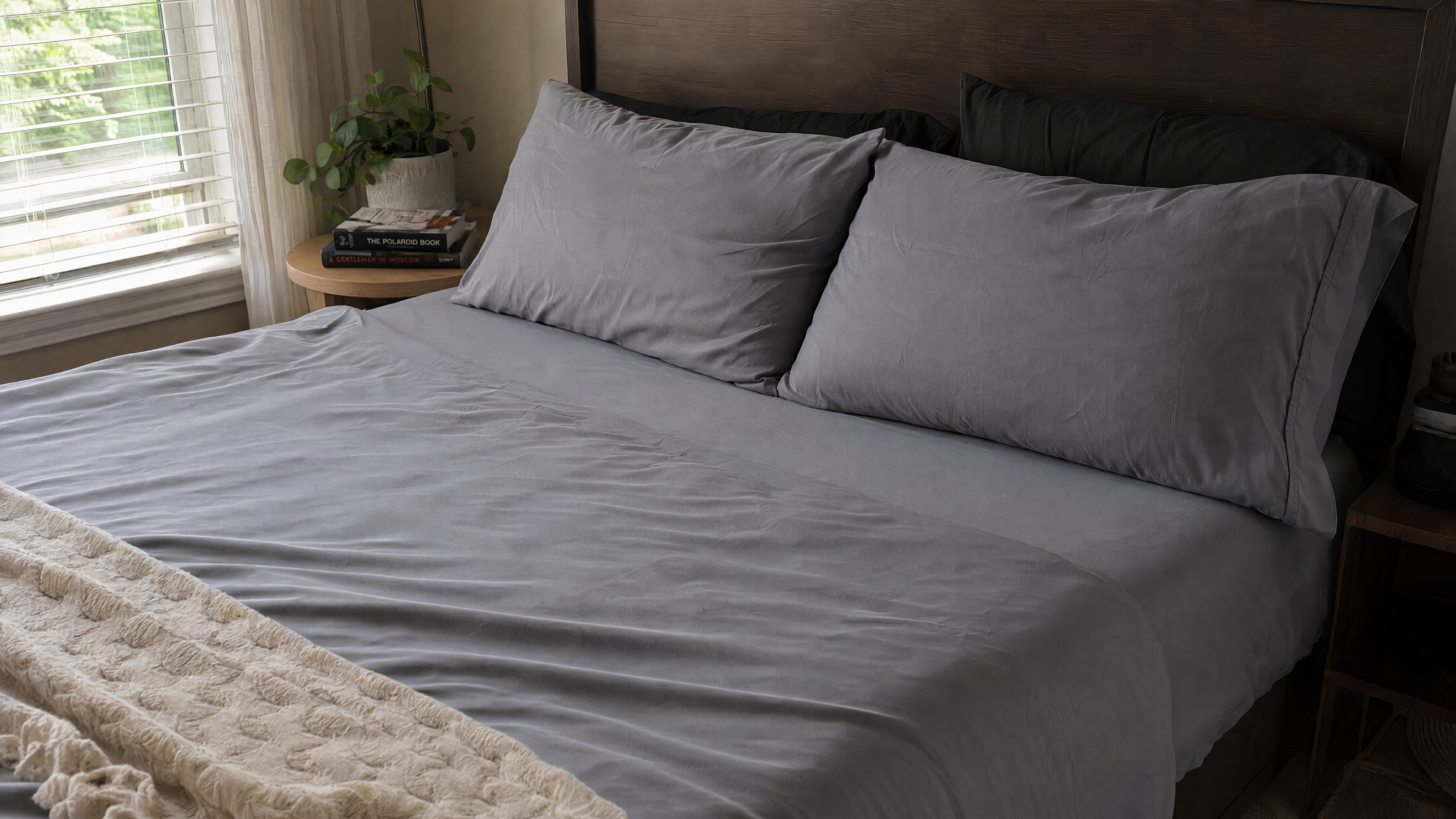
A real bedroom dressed in double-brushed microfiber sheets
Mistake #5: Underestimating Long-Term Wrinkle and Shrinkage Costs
The sticker price on a sheet set is not the real cost. The real cost includes every hour spent ironing, every wash cycle that shrinks the fitted sheet a little more, and every early replacement caused by fibers that could not survive normal laundering.
Natural cellulose fibers wrinkle because their molecular structure forms hydrogen bonds that reset every time the fabric bends, which is why cotton and bamboo sheets crease almost as soon as they come out of the dryer. Preventing that requires either constant ironing or accepting a permanently rumpled bed. Heat-set polyester microfiber behaves completely differently at a molecular level, holding its shape instead of re-forming creases, which is why properly engineered double-brushed microfiber sheets come out of the wash needing zero ironing.
Combined with a preshrunk finish that keeps the fitted sheet's dimensions stable through 40-plus wash cycles, the fabric keeps fitting the same mattress the same way for years, not just for the first few months.
Mistake #6: Picking a Color Without Checking Fade Resistance
Color choice feels like the fun part of buying sheets, right up until the sage green or navy you picked turns dull and gray after a dozen washes. That fading is not inevitable; it is a direct result of the dye technology and fiber type used, which most shoppers never think to ask about.
Reactive dyes used on cotton bond less securely to the fiber than disperse dyes engineered for polyester microfiber, where the dye is actually infused into the fiber during production rather than sitting on the surface. That structural difference is why a well-made microfiber sheet set can be offered in 40-plus colorways and still hold its saturation through 40 or more machine washes.
If a retailer cannot tell you how their sheets are dyed or how many wash cycles the color is rated for, that is a real warning sign. Sheets that fade quickly were never engineered for durability in the first place, and no amount of gentle washing will fix a dye process that was never built to last.
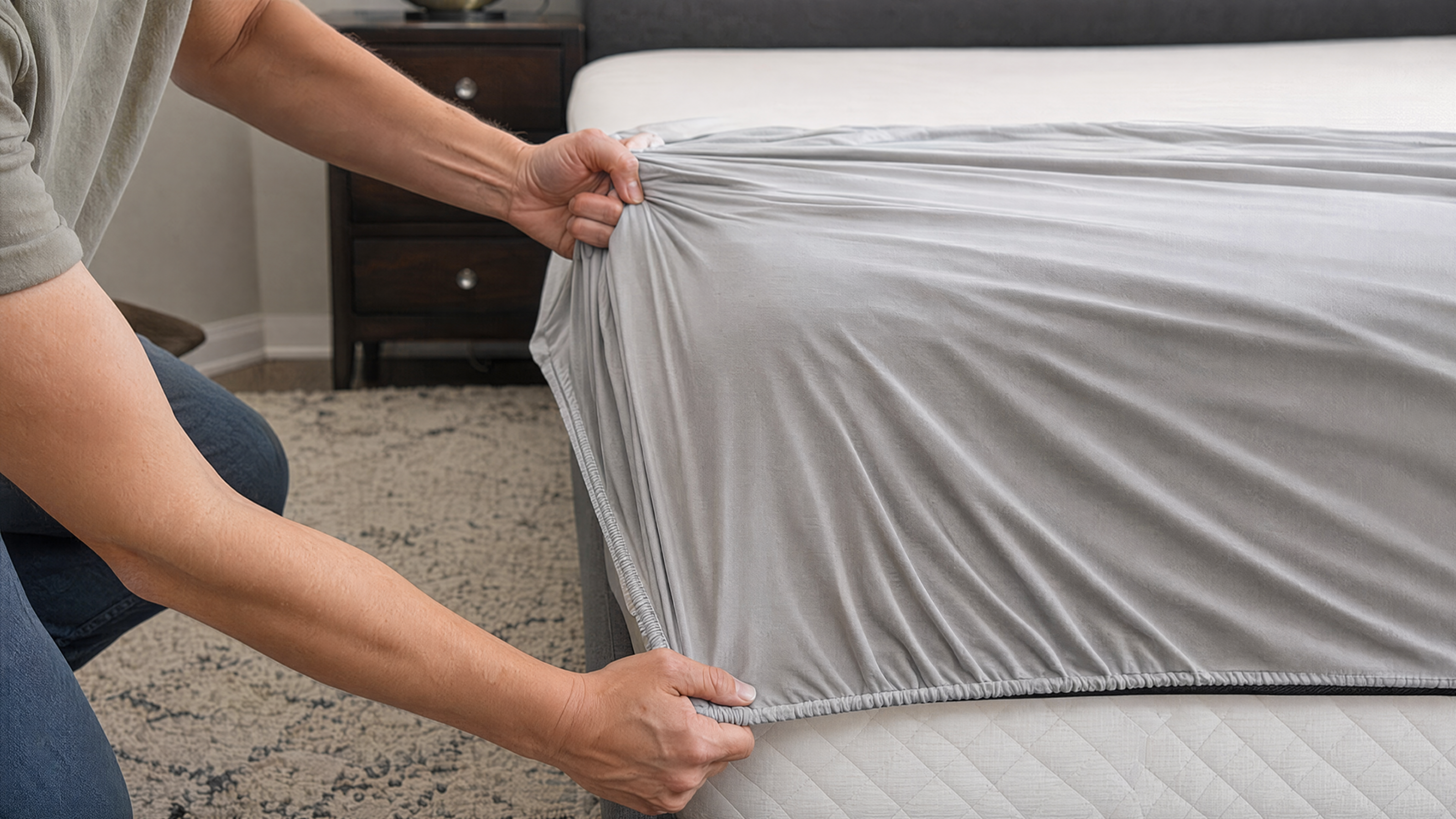
18-21 inch deep pocket with full-perimeter elastic
A Faster Way to Avoid These Sheet Buying Mistakes
Once you know what to look for, a smarter sheet purchase only takes a few minutes of checking labels instead of guessing based on marketing language. Look for a genuine 18 to 21 inch deep pocket, a full-perimeter elastic band, and a fiber description that tells you exactly how the fabric was engineered rather than just its natural-sounding name.
This is precisely the checklist behind LuxClub's Premium Double-Brushed Microfiber collection. Every set is brushed mechanically on both sides for that buttery-soft, cashmere-like hand feel, cut with an 18 to 21 inch deep pocket and full-perimeter heavy-duty elastic so it never slides loose, engineered to help cool sleep surface temperature by 2 to 4 degrees for hot sleepers, finished preshrunk so it needs zero ironing, and dyed in 40-plus fade-resistant colorways rated for 40-plus washes.
Shoppers who compare it side by side with a standard cotton or bamboo viscose set consistently notice the difference in the first week, not just on paper. Skipping these six sheet buying mistakes is really just a matter of shopping for engineering instead of shopping for a label, and LuxClub was built around exactly that standard.
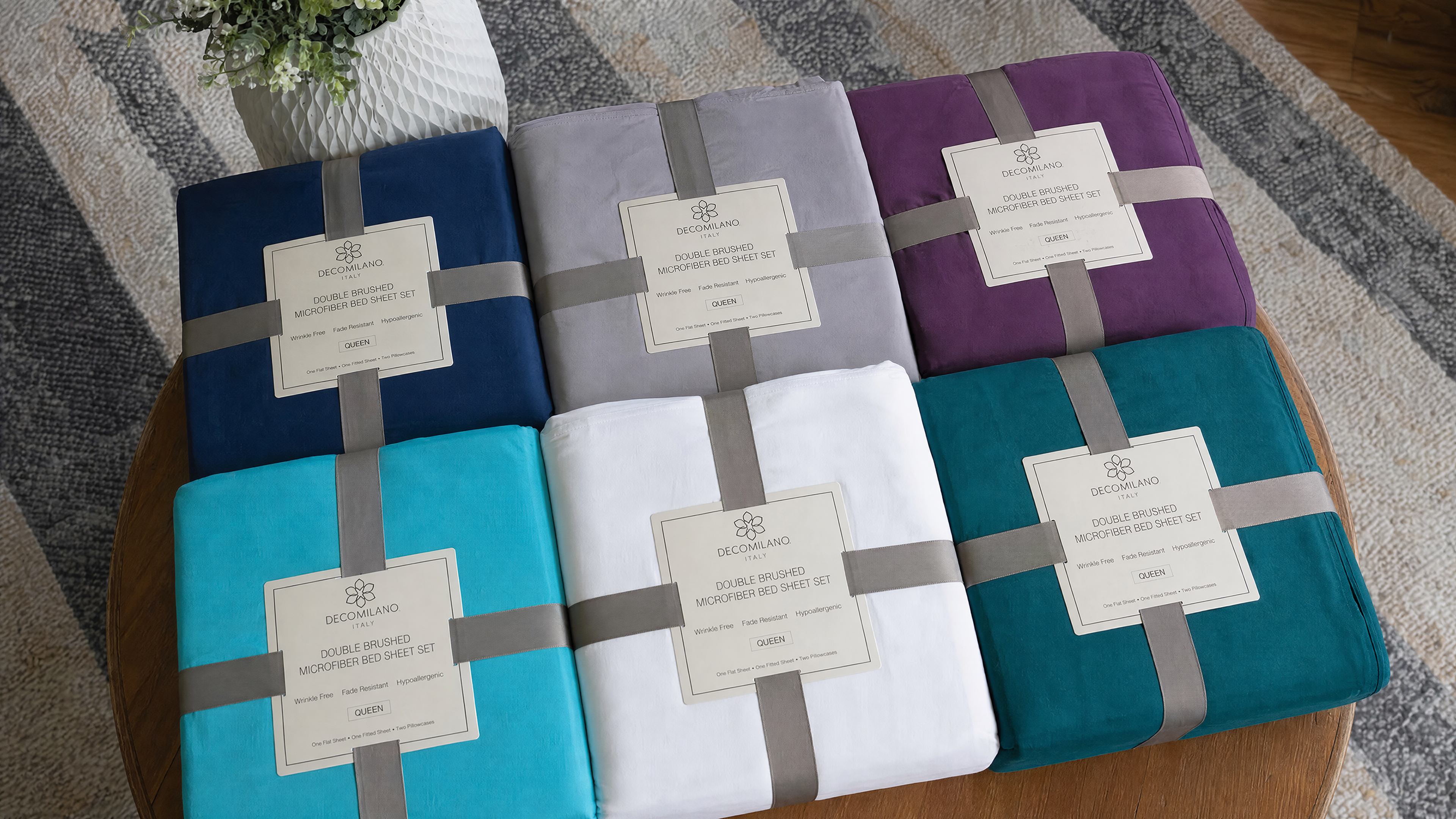
40+ fade-resistant colorways to choose from
Frequently Asked Questions
Q1: What is the single most common mistake people make when buying new sheets? The most common sheet buying mistake is relying on thread count alone as a quality signal. Thread count says nothing about fiber diameter or how the surface was brushed and finished, which is why a lower thread count double-brushed microfiber sheet often outperforms a higher-count cotton sheet in softness, cooling, and durability over time.
Q2: Is a higher thread count always better when buying sheets? No, and this assumption causes many of the sheet buying mistakes shoppers make. Manufacturers can inflate thread count using multi-ply yarns without improving real fiber quality. Engineered fabrics like double-brushed microfiber deliver their softness and cooling performance through fiber diameter and brushing technique, not through an inflated thread count number.
Q3: How deep should a fitted sheet pocket be for a thick mattress? For any mattress paired with a topper, look for a genuine 18 to 21 inch deep pocket rather than the standard 7 to 14 inch cut most sheets use. Combined with a full-perimeter heavy-duty elastic band instead of corner-only elastic, this depth keeps the fitted sheet anchored securely instead of popping loose overnight.
Q4: Are double-brushed microfiber sheets actually better than cotton or bamboo sheets? For durability, cooling, and low maintenance, yes. Cotton and bamboo viscose are both hydrophilic fibers that absorb moisture, shrink 3 to 20 percent over repeated washes, and wrinkle due to cellulose hydrogen bonding. Double-brushed microfiber is engineered to be hydrophobic, preshrunk, and wrinkle-resistant, which solves each of those problems at the fiber level.
Q5: How can I tell if new sheets will fade or pill after a few washes? Ask how the fabric is dyed and how many wash cycles the color is rated for. Disperse dyes infused into polyester microfiber fibers resist fading far longer than reactive dyes sitting on cotton's surface, and continuous-filament microfiber construction resists the pilling that staple cotton and bamboo fibers are prone to after repeated washing.