



The Allergy-Proof Bedroom: A Science-Backed System for Eliminating Dust Mites, Mold, and Airborne Triggers
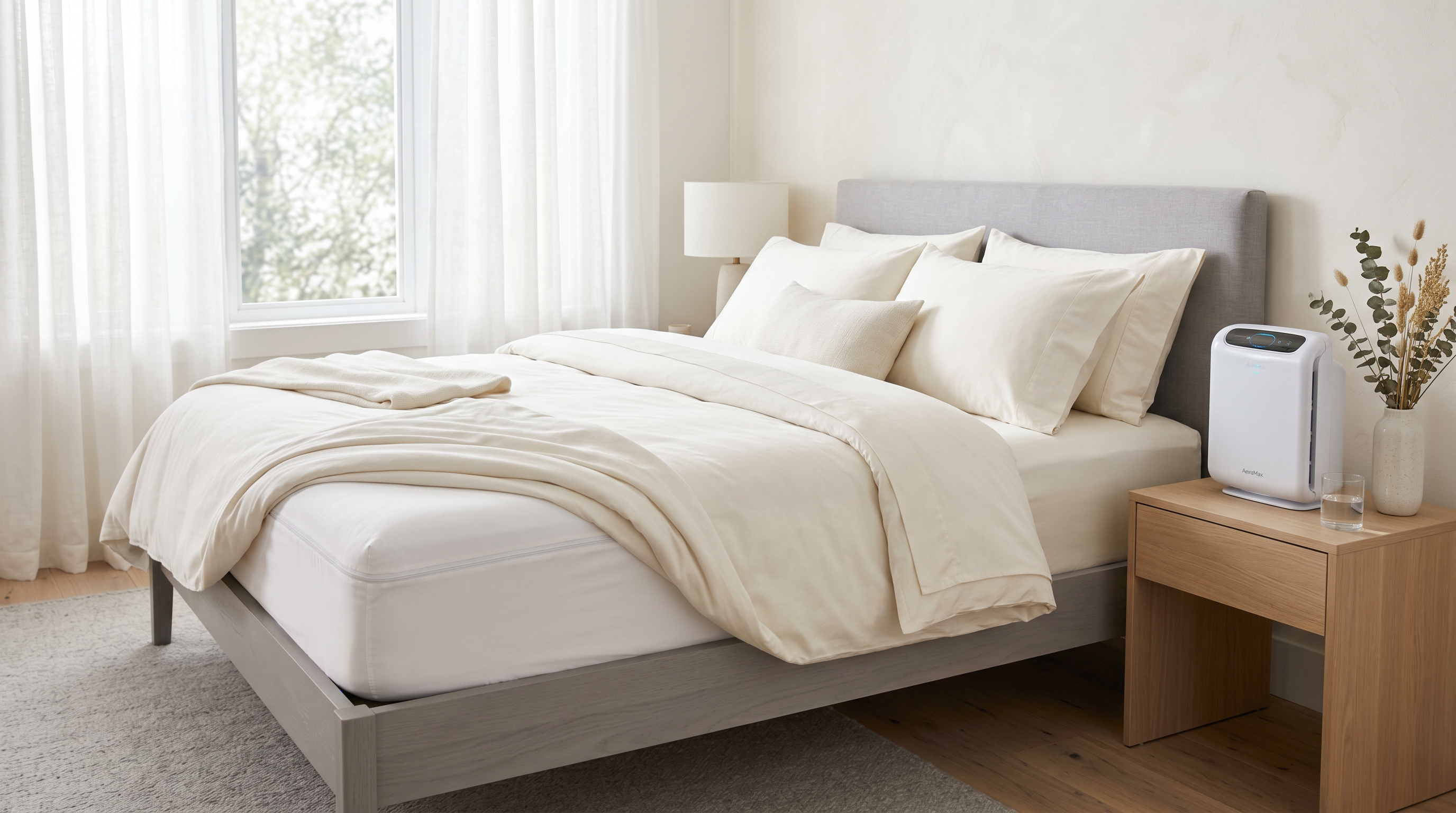
Most allergy sufferers approach their bedroom the same way: they buy a "hypoallergenic" pillow, swap their sheets, and hope for the best. When symptoms persist — the nighttime congestion, the morning sneezing, the eyes that won’t stop itching — they conclude that bedding choices simply do not matter. What they have actually discovered is that a single-point intervention in a multi-source allergen environment produces limited results. The bedroom is not one allergen problem; it is four simultaneous ones: dust mites in soft furnishings, mold spores in humid microenvironments, pet dander on surfaces, and airborne particulates recirculated by heating and cooling systems. Each requires its own targeted countermeasure, and the interventions compound: research from the Journal of Allergy and Clinical Immunology found that a combined multi-component allergen avoidance strategy reduced nocturnal allergic rhinitis symptom scores by 61% compared to 23% for single-component interventions.1 This guide builds that system layer by layer.
Layer One: Encasements — the Physical Barrier Strategy
The foundational intervention in any allergy-proof bedroom is allergen-impermeable encasements on the mattress, box spring, and all pillows. No amount of hypoallergenic fabric choice on your sheets addresses the allergen reservoir inside the mattress and pillow fill — which can contain millions of dust mites and years of accumulated fecal allergen particles that sheets alone cannot block.
The clinical standard for effective encasements requires a pore size of 6 microns or below. Dust mite fecal particles — the primary allergen, not the mites themselves — measure approximately 10–40 microns, but the relevant clinical threshold for reduction is based on the smallest effective pore size validated in allergen penetration studies.2 Key selection criteria:
- Material: Tightly woven microfibre encasements (physical barrier) consistently outperform permeable cotton covers. Non-woven polyurethane membrane encasements offer complete impermeability but can feel warm and crinkle with movement. The best balance for comfort and effectiveness is a tightly woven, high-thread-count microfibre with a certified pore size ≤6 microns.
- Coverage: Encasing only the mattress without encasing the box spring and all pillows leaves major allergen reservoirs unaddressed. A 2003 randomized trial in Clinical & Experimental Allergy found that encasing mattress only (without pillows) produced no significant symptom reduction; the full encasement protocol reduced Der p 1 allergen levels by 83% and symptom scores significantly.3
- Maintenance: Wash encasements every 2–3 months at 60°C (140°F). Inspect seams and zippers annually — damaged closures allow allergen migration and negate the encasement’s effectiveness.
Encasements function as the foundation of the allergen barrier system. Everything built on top — sheet choice, pillow selection, washing frequency — amplifies their effect rather than substituting for it.
Layer Two: Humidity Control — Eliminating the Mite Habitat
House dust mites are not just a bedding problem — they are an environmental problem with a specific thermodynamic weakness: they cannot maintain water balance in low-humidity environments. Mites obtain all their water from ambient water vapor; at relative humidity below 50%, they desiccate and die within days. At below 45% RH, population growth stops entirely and existing populations decline rapidly.4
This makes humidity control one of the most potent, evidence-backed allergen reduction strategies available — and one of the most underused. A study in the Journal of Allergy and Clinical Immunology found that maintaining bedroom RH below 50% for 17 weeks reduced viable mite populations by over 90% compared to control rooms maintained at natural humidity levels.5 Implementation:
- Measure first: Purchase a digital hygrometer (typically under $20) and monitor your bedroom RH for a week before intervening. Many bedrooms, particularly those in humid climates or with poor ventilation, run at 60–70% RH — well into the mite-optimal range.
- Dehumidification: A bedroom dehumidifier sized for the room’s square footage, set to maintain 45–50% RH, is the most direct intervention. In drier climates, improved ventilation (opening windows on low-humidity days) may be sufficient.
- Bedding as humidity regulation: Moisture-wicking bedding materials — bamboo viscose, Tencel, high-thread-count percale — draw perspiration away from the body surface and allow it to evaporate, reducing the localized humidity at the sleep surface where mite density is highest. In a typical night’s sleep, the average adult perspires approximately one liter of fluid;6 without moisture-wicking bedding, much of this remains in the mattress surface layers, creating a perpetually mite-favorable microenvironment.
- Air bedding regularly: Strip the bed and expose the mattress surface to circulating air for 2 hours monthly. This evaporates accumulated moisture from the mattress interior that encasements alone cannot address.
Layer Three: Air Filtration — Capturing What Becomes Airborne
Even with encasements in place and humidity controlled, allergen particles already present in the bedroom — on carpet fibers, soft furnishings, and airborne — continue circulating. Moving in bed, walking on carpet, and operating fans or HVAC systems all aerosolize settled particles. A bedroom HEPA air purifier sized appropriately for the room’s volume is the targeted intervention for this airborne fraction.
Clinical evidence supports HEPA air filtration as an effective component of multi-modal allergen avoidance. A 2018 Cochrane review found that HEPA air filtration in the bedroom produced statistically significant reductions in airborne cat and dog allergen levels and associated symptom scores in sensitized individuals, with effect sizes that compounded significantly when combined with encasements and low-humidity maintenance.7
Selection and placement criteria:
- CADR rating: Select a unit with a Clean Air Delivery Rate (CADR) of at least 2/3 of the room’s square footage for adequate air changes per hour. For a 200 sq ft bedroom, a CADR of at least 130 is recommended.
- True HEPA filtration: Only True HEPA filters (rated H13 or above) capture particles down to 0.3 microns at 99.97% efficiency — well below the size of all relevant allergen particles. “HEPA-type” or “HEPA-like” filters do not meet this standard.
- Placement: Position the unit in the sleeping zone, not across the room. Allergen recirculation from the bed surface is highest in the immediate vicinity of where you sleep.
- Run continuously: The allergen reduction benefit of air purifiers accumulates with continuous operation. Running a unit only while awake reduces effectiveness; the hours of sleep are precisely when continuous clean-air delivery matters most.
Layer Four: The Washing Protocol — Weekly Allergen Removal
Encasements block allergens from accumulating in the mattress and pillow fill; washing removes what accumulates on the bedding surface itself. The clinical washing standard for allergen inactivation is more specific than general laundry practice:2,8
- Temperature: 60°C (140°F) for a minimum of 10 minutes is required to kill dust mites. Washing at 40°C removes surface allergen particles mechanically but does not kill mites; they survive and repopulate within days. For delicate fabrics that cannot tolerate 60°C (bamboo viscose, fine microfibre), use a cold wash followed by tumble drying at high heat for 30 minutes — the drying heat provides the thermal kill that washing temperature cannot.
- Frequency: Wash all directly contacted bedding (fitted sheet, flat sheet, pillowcases) every 7 days. This interval is based on the rate of allergen accumulation to clinically significant levels under typical use conditions.
- Duvet covers and blankets: Every 14 days minimum; every 7 days during high pollen seasons or after illness.
- Enzyme detergents: Enzyme-based formulations (protease and amylase enzymes) break down the protein structure of dust mite fecal particles and dander at lower temperatures than conventional detergents, making them particularly effective for allergy management when washing delicate fabrics at lower temperatures.
Layer Five: The Bedroom Environment — Reducing Total Allergen Load
Even a perfectly managed bed loses ground against a high-allergen-load bedroom environment. Several environmental factors outside the bed itself compound or undermine the bedding interventions above:
- Flooring: Carpeting retains 100 times more allergen particles per square meter than hard flooring.4 Where possible, replacing bedroom carpet with hard flooring (wood, laminate, tile) produces allergen reductions that no bedding intervention can fully compensate for. Where carpet removal is not feasible, vacuum weekly with a HEPA-filtered vacuum and consider a low-pile carpet rather than cut-pile or loop constructions that trap particles more deeply.
- Curtains and window treatments: Fabric curtains are a significant allergen reservoir — particularly for dust mites and pollen. Washable roller blinds or wipeable shutters are significantly more manageable than fabric drapes. If fabric curtains are preferred, wash monthly.
- Pets: Pet dander is among the most pervasive and persistent airborne allergens — it can remain suspended in indoor air for months after a pet leaves a space. For pet-allergic individuals, the bedroom should be a strict pet-exclusion zone. Even a single night of pet access introduces dander that takes weeks to fully clear from soft furnishings despite regular cleaning.1
- Clutter reduction: Books, soft toys, decorative cushions, and stacked clothing are all secondary allergen reservoirs that contribute to the room’s total mite and particle load. Minimizing surface accumulation points reduces the total allergen reservoir that cleaning must address.
Allergy-Proof Bedroom System Checklist
- ✔ Encase mattress, box spring, and all pillows in certified allergen-barrier covers (pore size ≤6 microns).
- ✔ Maintain bedroom relative humidity at 45–50% using a dehumidifier and hygrometer; measure before assuming.
- ✔ Use moisture-wicking bedding (bamboo viscose, Tencel, percale) to reduce localized humidity at the sleep surface.
- ✔ Run a True HEPA air purifier (H13+) continuously in the bedroom; place near the sleep zone.
- ✔ Wash sheets and pillowcases weekly at 60°C; or cold wash + 30 min high-heat dry for delicate fabrics.
- ✔ Use an enzyme-based detergent to break down mite allergen proteins at lower wash temperatures.
- ✔ Vacuum the mattress surface monthly with a HEPA-filtered vacuum; air the mattress uncovered for 2 hours.
- ✔ Replace bedroom carpet with hard flooring where possible; vacuum remaining carpet weekly with HEPA filtration.
- ✔ Enforce a strict no-pets-on-the-bed (ideally no-pets-in-bedroom) rule.
- ✔ Replace curtains with washable blinds or shutters; minimize clutter and secondary soft-furnishing allergen reservoirs.
- ✔ Look for OEKO-TEX Standard 100 certification on all bedding to eliminate chemical irritant co-exposure.6
Conclusion
An allergy-proof bedroom is not a single product purchase — it is a system. Each layer addresses a distinct allergen pathway: encasements block the reservoir, humidity control eliminates the habitat, air filtration captures what becomes airborne, the washing protocol removes surface accumulation, and environmental management reduces the total load. When all five layers are operational simultaneously, the compound effect on allergen exposure is dramatically greater than any single intervention. For the tens of millions of adults whose sleep is disrupted by allergic rhinitis every night, this system is not optional comfort — it is the foundation of the rest they are not getting.
LuxClub’s bedding is designed to function as an active component of this system: moisture-wicking to reduce mite-favorable humidity, tightly woven to resist allergen penetration, and certified free of chemical residues that could add a chemical irritant layer to an already sensitized airway.
References
- Woodcock A, et al. (2003). "Control of exposure to mite allergen and allergen-impermeable bed covers for adults with asthma." Journal of Allergy and Clinical Immunology, 113(1), 37–41.
- Arlian LG, Platts-Mills TAE. (2001). "The biology of dust mites and the remediation of mite allergens in allergic disease." Journal of Allergy and Clinical Immunology, 107(3), S406–S413.
- Woodcock A, et al. (2003). "Bedding encasement and mite allergen reduction: a randomized trial." Clinical & Experimental Allergy, 33(5), 684–690.
- Platts-Mills TAE, et al. (1992). "Dust mite allergens and asthma — report of a second international workshop." Journal of Allergy and Clinical Immunology, 89(5), 1046–1060.
- Htut T, et al. (2001). "Eradication of house dust mites from bedroom by dehumidification." Journal of Allergy and Clinical Immunology, 107(1), 55–60.
- OEKO-TEX Association. (2025). "OEKO-TEX Standard 100: Certification criteria." OEKO-TEX.com. Retrieved 2026.
- Kilburn S, et al. (2018). "HEPA air filtration for the treatment of asthma and allergic rhinitis: systematic review and meta-analysis." Cochrane Database of Systematic Reviews, Issue 4.
- National Health Service UK. (2023). "Dust mite allergy: Prevention and treatment." NHS.uk. Retrieved 2026.