



The Allergy Sufferer's Guide to Bedding: How to Sleep Better and Breathe Easier
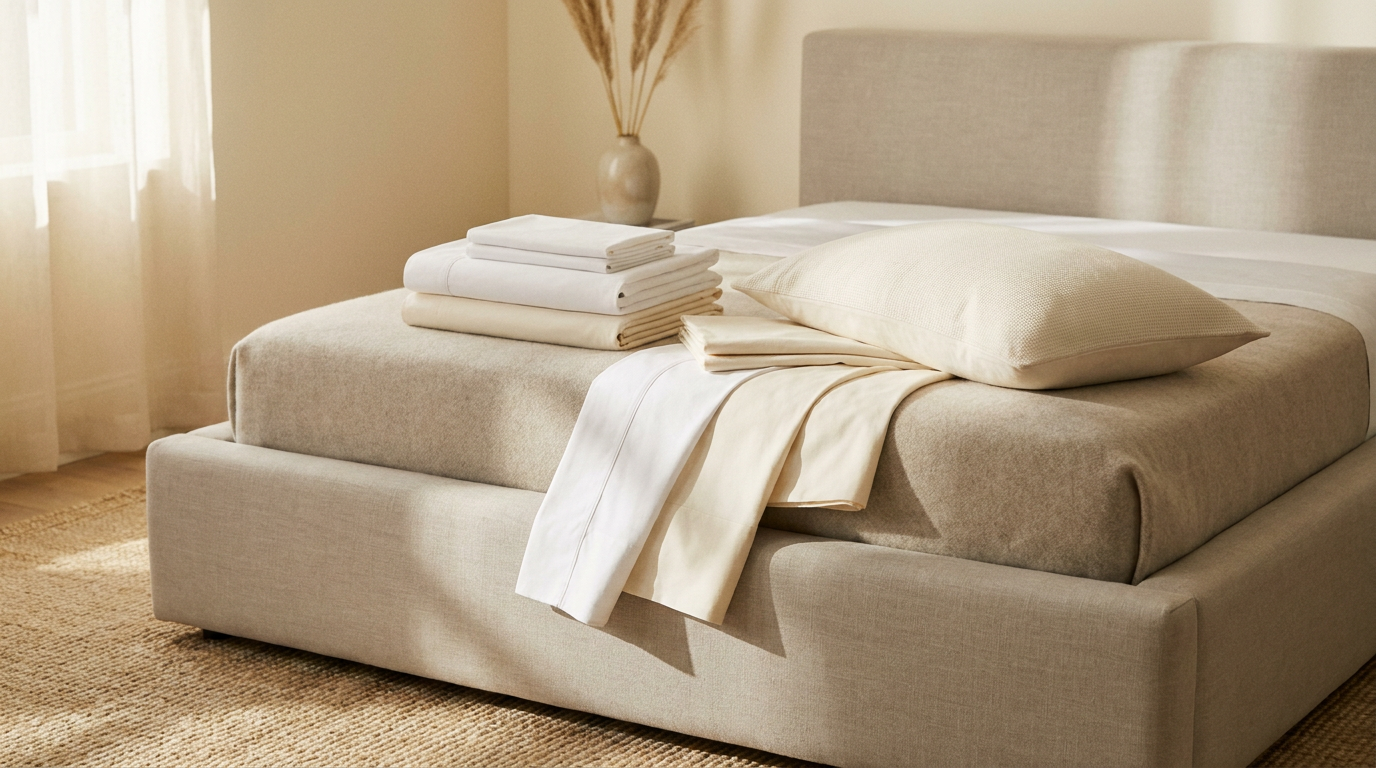
If you wake up sneezing, congested, or with itchy eyes, your bedroom — and specifically your bedding — may be the culprit. For the estimated 50 million Americans who suffer from allergic rhinitis and other allergic conditions1, the materials we sleep in direct contact with for 7–9 hours every night can dramatically worsen or relieve symptoms. The right bedding doesn't just feel luxurious; for allergy sufferers, it can be genuinely therapeutic.
This guide breaks down everything you need to know to build a truly hypoallergenic sleep environment — from fabric science to washing routines — so you can finally enjoy the restorative sleep your body deserves.
Why Bedding Triggers Allergies: The Science Behind the Sneeze
The primary culprit in bedroom allergies is not dust itself — it's the house dust mite (Dermatophagoides pteronyssinus and D. farinae). These microscopic arachnids thrive in warm, humid environments and feed on shed human skin cells. A single mattress can harbor up to 10 million dust mites2, and their waste proteins — specifically Der p 1 and Der f 1 — are the true allergens that trigger immune responses in sensitized individuals.
Beyond dust mites, bedding can also harbor:
- Mold spores — encouraged by humidity trapped in thick synthetic fills
- Pet dander — which clings readily to rough-textured fabrics
- Volatile organic compounds (VOCs) — off-gassed by certain dyes and chemical finishes applied during textile manufacturing3
- Pollen — carried in through windows and deposited on bed surfaces
The American College of Allergy, Asthma & Immunology (ACAAI) lists bedding as one of the top five indoor allergen sources and recommends active management of bedroom textiles as a frontline intervention4.
The Best Fabrics for Allergy Sufferers
Fabric choice is the single most impactful decision allergy sufferers can make when selecting bedding. Here is how the major options compare:
Bamboo-Derived Fabrics (Viscose / Lyocell from Bamboo)
Bamboo-derived fabrics have emerged as a leading choice for allergy-prone sleepers. Research published in the Journal of Natural Fibers found that bamboo lyocell exhibits inherent antimicrobial properties that inhibit bacterial growth by up to 70%5, creating a less hospitable environment for dust mites. The silky-smooth surface also has fewer microscopic fiber loops than woven cotton, meaning allergen particles are less likely to become embedded in the textile structure. Additionally, bamboo fabric's superior moisture-wicking properties — absorbing up to three times more moisture than cotton — reduce the humidity that dust mites need to survive.
Long-Staple Cotton (Egyptian & Supima)
High thread-count long-staple cotton (400–800 TC) creates a dense, tightly woven structure that physically restricts dust mite penetration. The Journal of Allergy and Clinical Immunology demonstrated that tightly woven covers with pore sizes below 6 microns are effective barriers against mite allergens6. Look for OEKO-TEX® Standard 100 certified cotton, which guarantees the fabric is free from over 100 harmful substances including formaldehyde, heavy metals, and pesticide residues. Avoid cotton flannel or jersey weaves for allergy sufferers — their looped structure traps more particulates.
Microfiber
Premium microfiber (1,500 GSM and above) offers a tightly packed fiber structure that can resist mite penetration, and it is inherently synthetic, meaning it does not provide the natural organic material that mites prefer to colonize. However, microfiber's moisture management is inferior to natural fibers; studies by the National Sleep Foundation suggest that sleeping hot — a common microfiber side effect — can increase overnight cortisol production and fragment sleep architecture7. For allergy sufferers who also run hot, microfiber is a compromise.
Fabrics to Avoid
Wool, down, and feather fills — despite their cozy reputation — present significant allergy risks. Wool proteins (keratins) are direct allergens for many individuals, and down and feather clusters provide ideal nesting environments for dust mites8. If you love the loft of down, opt for a certified hypoallergenic down alternative fill in a tightly woven shell instead.
Pillow Selection: Often Overlooked, Always Critical
The pillow is ground zero for allergen exposure — your face rests mere centimetres from its surface for hours every night. Studies have found that unprotected pillows can become colonized by up to 16 species of fungus8, making pillow hygiene as important as pillow composition.
For allergy sufferers, the ideal pillow strategy involves two layers of protection:
- Fill choice: Select a synthetic hypoallergenic fill (gel fiber, memory foam, or down alternative) that does not provide organic material for mite colonies. Gel fiber fills in particular have been shown to maintain structure without harboring microorganisms.
- Pillow protector: Always add a tightly woven, allergen-barrier pillow protector beneath your decorative pillowcase. The Asthma and Allergy Foundation of America (AAFA) certifies specific covers for allergen impermeability — look for the AAFA certification mark.
Replace pillows entirely every 18–24 months, regardless of fill type. Over time, even the best pillow accumulates dust mite biomass that no washing regimen can fully address.
Washing Frequency and Temperature: The Numbers That Matter
Even the best hypoallergenic bedding requires a disciplined care routine to maintain its protective properties. The American Academy of Allergy, Asthma & Immunology (AAAAI) recommends washing all bedding — sheets, pillowcases, and duvet covers — at a minimum of 130°F (54°C) weekly4. This temperature threshold is critical: below it, dust mites survive the wash cycle and repopulate the fabric within days.
Key care guidelines for allergy-safe bedding:
- Wash sheets and pillowcases every 7 days in hot water (≥130°F / 54°C)
- Wash duvet inserts and pillow inners every 3–4 months (or use covers washed weekly)
- Dry thoroughly — residual moisture promotes mold growth; use a high-heat dryer cycle or full air-dry in direct sunlight
- Avoid fabric softeners — they coat fibers and reduce breathability, potentially trapping more particulates
- Use fragrance-free, dye-free laundry detergent to avoid contact dermatitis triggers
For bamboo and sensitive fabrics, a warm (not hot) wash of 104°F (40°C) is generally safe and still provides meaningful allergen reduction when combined with frequent washing schedules.
Certifications to Look For When Shopping
The bedding market is saturated with vague claims like "natural" or "allergy-friendly." For genuine protection, focus on verifiable third-party certifications:
- OEKO-TEX® Standard 100 — tests for over 100 harmful substances at every processing stage; the most widely recognized textile safety certification globally
- GOTS (Global Organic Textile Standard) — certifies both organic fiber sourcing and responsible manufacturing processes
- AAFA Certified Asthma & Allergy Friendly® — specifically tests for allergen impermeability and ease of allergen removal
- bluesign® — ensures chemical safety throughout the dyeing and finishing process
- Downmark / RDS (Responsible Down Standard) — if purchasing down alternatives, ensures no live plucking and responsible sourcing
Building Your Complete Hypoallergenic Bedroom
Hypoallergenic bedding works best as part of an integrated bedroom strategy. The Environmental Protection Agency (EPA) recommends a multi-pronged approach to indoor allergen reduction3:
- Use a HEPA air purifier rated for your room's square footage, changed every 6–12 months
- Maintain indoor humidity below 50% with a dehumidifier — dust mites cannot survive below 40% relative humidity
- Choose hard flooring over carpets in the bedroom where possible; if carpet is unavoidable, vacuum with a HEPA-filtered vacuum twice weekly
- Shower before bed to remove pollen and outdoor allergens deposited on hair and skin
- Keep pets out of the bedroom entirely — pet dander can persist on surfaces for up to six months1
- Encase your mattress in a certified allergen-barrier cover and replace it every 5–7 years
Practical Recommendations at a Glance
- ✔ Choose bamboo lyocell or tightly woven long-staple cotton (400+ TC) for sheets and pillowcases
- ✔ Always use certified allergen-barrier pillow and mattress protectors
- ✔ Select a hypoallergenic synthetic fill for pillows and duvets; avoid down and wool
- ✔ Wash all bedding at ≥130°F weekly; dry completely every time
- ✔ Look for OEKO-TEX® Standard 100 or AAFA certification when purchasing
- ✔ Replace pillows every 18–24 months and mattresses every 7–10 years
- ✔ Maintain bedroom humidity below 50% and use a HEPA air purifier
- ✔ Use fragrance-free, dye-free detergents to avoid secondary skin reactions
Conclusion
For allergy sufferers, sleep quality and respiratory health are inseparably linked to the materials you choose to sleep in. The good news is that with intentional fabric selection, proper protective covers, and a consistent care routine, your bedroom can become a genuine allergen sanctuary. You don't have to choose between beautiful, luxurious bedding and bedding that helps you breathe — the two can absolutely coexist.
At LuxClub, every product in our lineup is designed with both comfort and cleanliness in mind — from our silky bamboo sheet sets to our OEKO-TEX® certified microfiber collections. We believe everyone deserves a bedroom that feels like a five-star retreat and supports their health at the same time.
References
- American College of Allergy, Asthma & Immunology (ACAAI). Allergic Rhinitis Overview. acaai.org. Accessed 2024.
- Colloff, M.J. (2009). Dust Mites. CSIRO Publishing / Springer. Chapter 3: Biology and Allergen Production.
- U.S. Environmental Protection Agency (EPA). Indoor Air Quality: Biological Pollutants in Your Home. epa.gov. Accessed 2024.
- American Academy of Allergy, Asthma & Immunology (AAAAI). Indoor Allergens: Tips to Remember. aaaai.org. Accessed 2024.
- Zhang, Y. et al. (2021). "Antimicrobial properties of bamboo lyocell fiber and its application in textile manufacturing." Journal of Natural Fibers, 18(4), 521–533.
- Vaughan, J.W. et al. (1999). "Improved indoor allergen barriers and their clinical relevance." Journal of Allergy and Clinical Immunology, 103(3), 423–429.
- National Sleep Foundation. Bedroom Environment and Sleep Quality: Temperature, Humidity and Textile Choices. sleepfoundation.org. Accessed 2024.
- Woodcock, A.A. et al. (2006). "Fungal contamination of bedding." Allergy, 61(1), 140–142. doi:10.1111/j.1398-9995.2005.00941.x