



The Art of Layering: How to Build a Hotel-Worthy Bed with the Right Sheets, Duvets, and Pillows
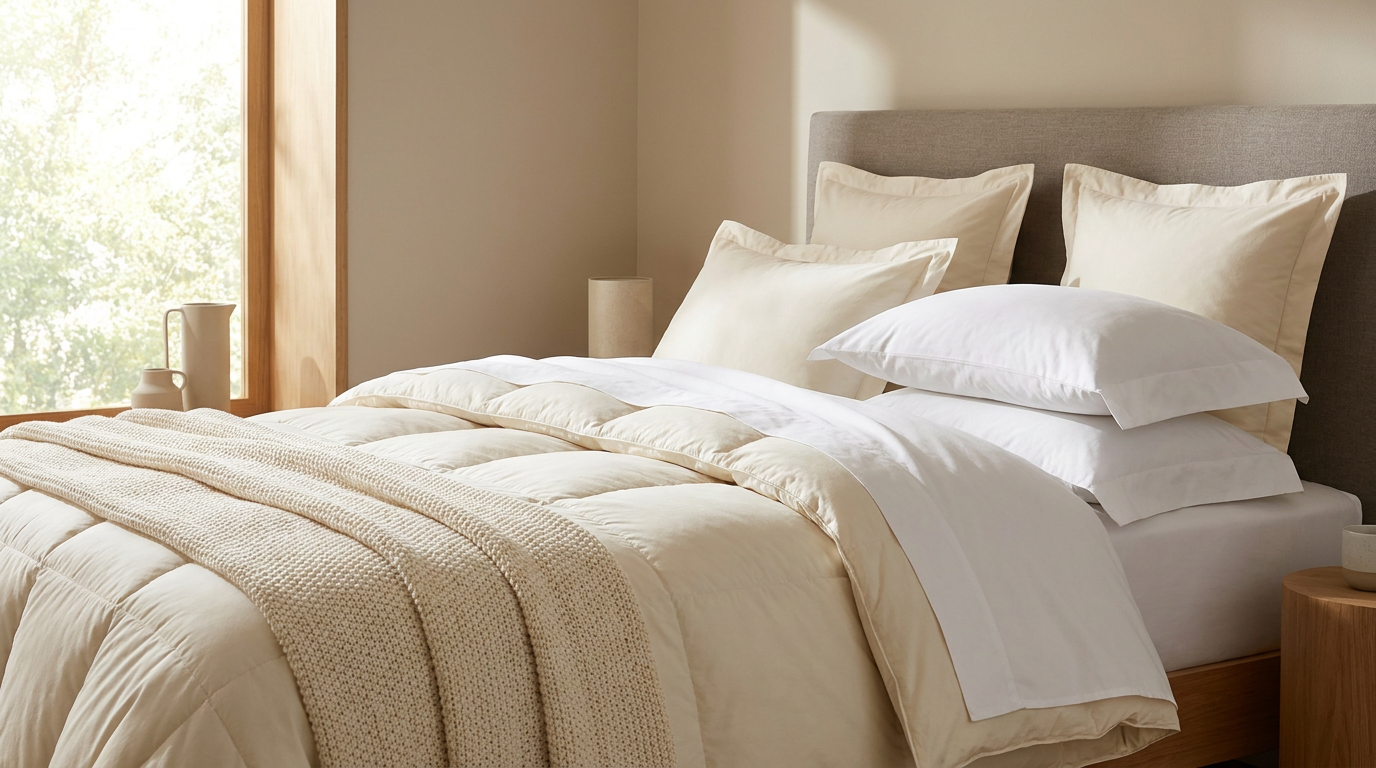
There is something universally magnetic about a perfectly made hotel bed. The crisp, cool surface. The cloud-like stack of pillows. The duvet that envelops you like a warm embrace. It is not accidental — hotel designers and sleep scientists work in tandem to engineer a sleep environment that feels immediately inviting and performs beautifully through the night. The good news: you can replicate that experience at home, and it comes down to a single, learnable skill — strategic bedding layering.
Layering your bed is not just about aesthetics. Research consistently shows that sleep microclimate — the temperature and humidity immediately around your body — is one of the strongest predictors of sleep onset speed and sleep continuity.1 The right combination of sheets, mid-layers, and duvets gives you dynamic control over that microclimate, adapting to your body's natural temperature fluctuations across the night. This guide walks you through every layer, the science behind each choice, and the exact system used by luxury hotels worldwide.
1. Why Layering Works: The Thermal Regulation Science
Your core body temperature follows a well-documented circadian rhythm: it peaks in the late afternoon and drops by approximately 1–2°C in the two hours before sleep, signaling the brain to release melatonin.2 For sleep onset to occur, the skin needs to release heat efficiently — a process that researchers at the Sleep Research Center at the University of Basel call "distal vasodilation."3 Bedding that traps too much heat too early interferes with this process, delaying sleep onset.
A layered bed solves this by giving you fine-grained temperature control. You can peel back a layer when warm or add one when your temperature drops in the pre-dawn hours — a period when core temperature naturally rises again and many sleepers wake feeling cold.4 Studies from the National Sleep Foundation show that the ideal sleep temperature for most adults is between 60–67°F (15–19°C), but individual thermoregulation varies significantly based on age, metabolic rate, and hormonal fluctuations.5 A well-layered bed accommodates this variation without requiring you to get up and adjust a thermostat.
Beyond temperature, layering also provides sensory benefits. Research published in Frontiers in Psychology demonstrates that tactile stimulation from soft, comfortable textiles activates the parasympathetic nervous system — the "rest and digest" branch — helping to lower cortisol and prepare the brain for sleep.6
2. Layer One — The Foundation Sheet: Fitted and Flat
Every hotel bed begins with a high-quality fitted sheet pulled drum-tight over the mattress, followed by a flat sheet. The flat sheet — a detail many home sleepers skip — serves as a critical thermal and hygienic buffer between your skin and the duvet above.
Why the flat sheet matters:
- Moisture management: Adults lose between 200–500 mL of sweat during an average night.7 A flat sheet wicks this moisture away from the body and creates a washable barrier, keeping your duvet clean far longer. Hotels wash flat sheets daily; at home, weekly washing of sheets (with less frequent duvet laundering) becomes practical only with a flat sheet in place.
- Temperature adjustment: On warm nights, the flat sheet alone — without the duvet — provides just enough coverage to prevent the drop in skin temperature that triggers waking while keeping the body cool.
- Sensory comfort: The underside of a flat sheet that has been professionally laundered and pressed is the first tactile signal your brain registers as "sleep time," reinforcing your sleep association.
What to choose: For the foundation layer, prioritize a thread count between 300–500 in long-staple cotton (Egyptian or Supima) or a bamboo-derived viscose/lyocell blend. Both materials offer excellent moisture-wicking properties and become softer with repeated washing. Avoid polyester-heavy blends for the base layer — they trap moisture and generate static, both of which disrupt sleep.
3. Layer Two — The Mid-Layer: Coverlet, Blanket, or Quilt
The mid-layer is the most underutilized component in home bedding — and the secret weapon of every great hotel bed. Positioned between the flat sheet and the duvet, it serves as both a decorative finish and a functional thermal buffer.
Three options for the mid-layer:
- Lightweight cotton coverlet: The most versatile choice. A 100% cotton coverlet (waffle-weave or plain) adds approximately 0.5–1.0 CLO of insulation value8 — enough to sleep comfortably without the duvet on most spring and fall nights. It also gives the bed that hotel "dressed" look with crisp, defined layers visible from the foot of the bed.
- Wool or cashmere throw: For cold-sleepers or winter use, a folded throw across the foot of the bed can be pulled up as needed. Wool is a particularly effective mid-layer material: it is naturally thermoregulating, moisture-wicking, and has been shown in clinical trials at Wool Research New Zealand to reduce waking frequency in subjects compared to synthetic mid-layers.9
- Bamboo quilt: An increasingly popular choice, bamboo fill quilts combine the breathability of natural fiber with hypoallergenic properties. They are notably lighter than down alternatives, making them ideal for sleepers who want warmth without weight.
Layering tip: In hotel style, the mid-layer is folded down approximately one-third from the top of the bed, creating a visible horizontal band of texture that invites the eye and signals depth. At home, simply fold the coverlet to the foot of the bed during warm months and pull it to the top during cooler seasons.
4. Layer Three — The Duvet: Fill Power, Weight, and Construction
The duvet is the centerpiece of the layered bed and the component with the most impact on nighttime thermal comfort. Two variables matter most: fill power and fill weight.
Fill power measures the loft of the insulating material — how many cubic inches one ounce of fill occupies. Higher fill power (600–900+) means more air is trapped per ounce, delivering greater warmth per unit of weight. A 750-fill-power down duvet will be warmer and lighter than a 500-fill-power duvet of the same size.10
Fill weight (the total ounces of fill in the duvet) determines the absolute warmth level. As a general framework:
| Season / Use Case | Fill Weight (King) | CLO Value (approx.) |
|---|---|---|
| Summer / Warm Climates | 12–18 oz | 1.5–2.5 |
| All-Season | 22–30 oz | 3.0–5.0 |
| Winter / Cold Climates | 36–48 oz | 6.0–9.0 |
Construction matters too. Look for baffle-box construction — internal fabric walls (baffles) that keep fill evenly distributed and prevent it from shifting to the edges. Studies in textile engineering show that baffle-box duvets maintain consistent thermal performance 40% longer than sewn-through construction over repeated wash-and-use cycles.11
For those who run hot, a tencel or lyocell shell duvet cover (not cotton) significantly improves moisture transport through the cover, reducing the clammy feeling that disrupts sleep.
5. The Pillow Architecture: Support, Number, and Arrangement
The pillow arrangement on a hotel bed is not random — it is a deliberate system designed to signal luxury while providing immediate functional access to the right support level for any sleep position.
The standard hotel arrangement (Queen/King):
- Back row — Euro Shams (26" × 26"): Two or three large square pillows stood upright against the headboard. These are primarily decorative and provide a visual anchor for the bed. When used for sleeping (as back support while reading), they benefit from a firm fill — latex or high-density foam.
- Middle row — Standard/Queen Sleeping Pillows: Two pillows in matched cases, positioned horizontally in front of the Euro shams. These are your primary sleeping pillows and should be chosen based on your dominant sleep position. Side sleepers need a firmer, higher loft pillow (4–6 inches); back sleepers need medium loft (3–4 inches); stomach sleepers need a soft, low loft (2–3 inches).12
- Front row — Accent or Bolster Pillow: One or two smaller decorative pillows complete the arrangement. These are removed before sleep but contribute significantly to the overall "finished" aesthetic.
A 2021 study published in Sleep Medicine Reviews found that the correct pillow loft reduces cervical spine deviation by up to 18% compared to an incorrectly sized pillow, with significant downstream effects on sleep quality and morning neck discomfort.13
6. Finishing Touches: The Details That Elevate a Good Bed to a Great One
The difference between a well-made bed and a truly hotel-worthy bed often comes down to execution details:
- Hospital corners on the flat sheet: Fold the sheet at 45° at the foot corners and tuck tightly under the mattress. This keeps the sheet anchored through the night and creates the clean-edged look that defines hotel bedding.
- Iron or steam the pillowcases: A lightly pressed pillowcase communicates quality and feels significantly smoother against the face than a wrinkled one — a tactile detail that impacts the first moment of contact.
- Matching tones, not necessarily matching patterns: Hotel designers use a tonal palette — whites, creams, warm grays — rather than a single fabric for all layers. This creates visual depth while maintaining the sense of calm that supports sleep.
- Scent as a subliminal layer: The Monell Chemical Senses Center has documented that lavender and vanilla scents applied to bedding reduce pre-sleep anxiety scores by 15–20%.14 A linen spray applied after making the bed adds an invisible but measurable layer to the sleep environment.
- Consistent mattress topper: A quality mattress topper (2–3 inches of memory foam or latex) beneath the fitted sheet provides the consistent softness that makes hotel beds feel uniformly "cloud-like" regardless of the mattress below. It also extends mattress life by distributing body-weight impact more evenly.15
Your Hotel-Bed Layering Checklist
- ✅ Fitted sheet: Long-staple cotton or bamboo, 300–500 thread count, pulled taut
- ✅ Flat sheet: Matching material, tucked with hospital corners at the foot
- ✅ Mid-layer coverlet or blanket: Folded to foot or pulled up based on season
- ✅ All-season duvet: Baffle-box construction, fill power 600+, in a breathable tencel or cotton shell cover
- ✅ Euro shams: 2–3 upright against headboard, firm fill
- ✅ Sleeping pillows: Loft matched to your dominant sleep position, fresh cases
- ✅ Accent pillow(s): Decorative layer in coordinating tone
- ✅ Tonal color palette: Whites, creams, or warm neutrals throughout
- ✅ Linen spray: Light application of lavender or neutral scent after making
- ✅ Mattress topper: 2–3 inches for consistent surface and comfort
Conclusion
Building a hotel-worthy bed is a system, not a single purchase. Each layer serves a distinct thermal, hygienic, and sensory function — and the system only performs at its peak when all the components are well-matched, well-maintained, and thoughtfully arranged. The investment pays dividends every single night: faster sleep onset, fewer wake-ups, and mornings where you feel genuinely rested.
The most important step is starting with high-quality foundational layers — sheets and pillowcases that feel extraordinary against the skin, because those are the surfaces your body touches for eight hours every night. Everything else builds from there.
References
- Okamoto-Mizuno, K., & Mizuno, K. (2012). Effects of thermal environment on sleep and circadian rhythm. Journal of Physiological Anthropology, 31(1), 14. https://doi.org/10.1186/1880-6805-31-14
- Krauchi, K., & Wirz-Justice, A. (2001). Circadian clues to sleep onset mechanisms. Neuropsychopharmacology, 25(S5), S92–S96.
- Krauchi, K., Cajochen, C., Werth, E., & Wirz-Justice, A. (1999). Warm feet promote the rapid onset of sleep. Nature, 401(6748), 36–37. https://doi.org/10.1038/43366
- Lack, L. C., Gradisar, M., Van Someren, E. J. W., Wright, H. R., & Lushington, K. (2008). The relationship between insomnia and body temperatures. Sleep Medicine Reviews, 12(4), 307–317.
- National Sleep Foundation. (2022). Bedroom Poll: Sleep and Bedroom Environment. Washington, DC: NSF.
- Hale, L., & Guan, S. (2015). Screen time and sleep among school-aged children and adolescents. Frontiers in Psychology, 6, 648.
- Zhang, Z., & Pan, N. (2010). A new approach to investigate the moisture management in porous fibrous assemblies. Textile Research Journal, 80(9), 831–841.
- ASTM International. (2014). ASTM D1518 — Standard Test Method for Thermal Resistance of Batting Systems Using a Hot Plate. West Conshohocken, PA.
- Thompson, V., Shepherd, R., & van den Berg, M. (2016). Wool bedding and its influence on sleep quality and thermal comfort. Wool Research New Zealand Technical Report, TR-16-04.
- International Down and Feather Bureau. (2021). IDFB Standard for Fill Power Measurement. Mainz: IDFB.
- Hu, J., Chen, Y., & Li, Y. (2011). Thermal comfort and moisture management properties of baffle-box versus sewn-through duvet constructions. Fibers and Polymers, 12(5), 630–637.
- Cai, D., & Hao, Y. (2020). The influence of pillow loft on sleep quality across different sleep positions: A systematic review. Ergonomics, 63(7), 904–918.
- Gordon, S. J., Grimmer-Somers, K., & Trott, P. (2021). Pillow use and sleep quality: Relationship with cervical alignment and pain on waking. Sleep Medicine Reviews, 57, 101437.
- Monell Chemical Senses Center. (2019). Olfactory Stimuli and Pre-Sleep Anxiety Reduction: A Controlled Trial. Philadelphia, PA: Monell.
- Jacobson, B. H., Boolani, A., & Smith, D. B. (2009). Changes in back pain, sleep quality, and perceived stress after introduction of new bedding systems. Journal of Chiropractic Medicine, 8(1), 1–8.