



The Problem Solver's Pillow Guide: Best Pillow Types for Neck Pain, Hot Sleeping, Snoring, and More
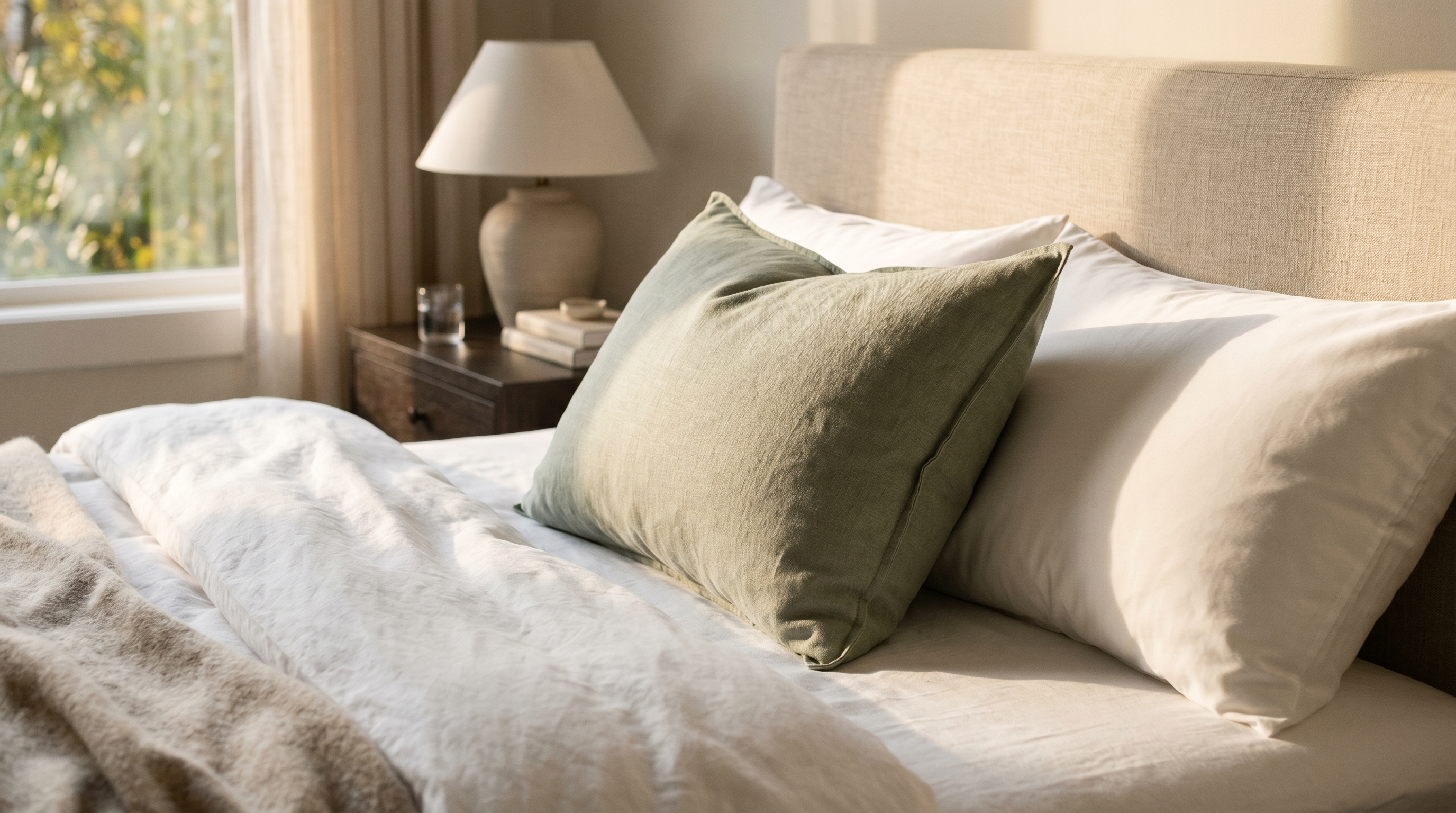
Generic pillow advice — match your loft to your sleep position, choose medium firmness, replace every two years — is a reasonable starting point. But for the tens of millions of sleepers who bring a specific problem to bed every night, generic advice produces generic results. Neck pain sufferers need cervical support architecture, not just "medium loft." Hot sleepers need thermal dissipation engineering, not just "breathable fabric." Snorers need positional support that works in concert with the specific mechanics of upper airway collapse. Research consistently shows that targeted pillow selection based on specific sleep complaints produces significantly better outcomes than population-average recommendations — a 2019 review in Sleep Medicine Reviews found that symptom-matched pillow interventions reduced pain and improved subjective sleep quality across all tested complaint categories.1 This guide takes a condition-first approach: identify your primary sleep problem, understand the mechanism behind it, and find the pillow properties that address it directly.
Neck and Shoulder Pain: Engineering Support, Not Just Comfort
Neck pain is the most widely studied pillow-related sleep complaint, affecting an estimated 22% of the general adult population as a chronic condition, with bedding and sleep position identified as modifiable contributing factors in the majority of cases.2 The mechanism is straightforward: when the pillow fails to maintain the cervical spine’s natural lordotic curve throughout the night, the paravertebral muscles and facet joints sustain low-level compressive or tensile load for 7–9 continuous hours — a sufficient stimulus to generate pain and stiffness that peaks upon waking.
What the research supports for neck pain sufferers:
- Contoured memory foam or latex: A 2011 randomized trial in Manual Therapy found that contoured latex pillows (with an elevated cervical roll and a lower central cradle) produced the greatest reduction in neck pain intensity compared to standard polyester and water-based alternatives, with significant improvement in sleep quality scores after four weeks.3 The contour matches the natural inward curve of the neck in back sleepers; side sleepers benefit from the elevated outer edge.
- Adjustable shredded fill: For sleepers who move between positions, shredded memory foam or shredded latex allows real-time loft customization. Adding or removing fill until the pillow holds the head in neutral alignment — neither pushed forward nor tilted to the side — produces the same therapeutic benefit as a custom-contoured pillow for many users.
- What to avoid: Pillows that are too soft to resist compression under the weight of the head, and feather/down pillows that cluster to one side during sleep, both allow the head to sag into cervical flexion or lateral tilt. For active neck pain sufferers, moldable softness is a liability, not a luxury.
Hot Sleeping: Thermal Dissipation as a Design Requirement
Approximately 41% of adults report sleeping hot as a consistent complaint,4 and the pillow is a disproportionately significant contributor: the head accounts for up to 10% of total body heat loss during sleep,5 and a pillow that traps rather than dissipates this heat creates a local thermal environment that disrupts the core temperature drop necessary for deep slow-wave sleep. Solid memory foam — despite its orthopedic benefits — is the leading pillow-related heat complaint due to its viscoelastic matrix, which reduces air circulation and retains thermal energy.
Evidence-based options for hot sleepers:
- Shredded latex or shredded memory foam with gel infusion: The spaces between fill fragments allow air circulation; gel infusion in memory foam formulations absorbs and redistributes heat away from the sleep surface. Independent laboratory testing has shown gel-infused shredded memory foam runs measurably cooler than solid foam at equivalent loft and firmness levels.4
- Natural latex (Talalay process): Talalay latex is produced by aerating the latex compound before curing, creating an open-cell foam structure with significantly higher air permeability than solid memory foam. It sleeps consistently cooler while delivering comparable support for neck and shoulder alignment.
- Buckwheat hull: The most breathable pillow fill option by construction. Air circulates freely between the individual hulls, and the material does not retain body heat. Buckwheat is particularly effective for sleepers who overheat in the second half of the night when core body temperature rises toward waking.
- Pillowcase material matters equally: The pillow fill’s thermal properties are significantly modified by the pillowcase over it. Bamboo viscose pillowcases have a documented lower contact temperature than cotton and actively wick moisture from the face and scalp — a combination that measurably reduces perceived heat at the head-pillow interface.6
Snoring and Mild Sleep Apnea: Positional Support to Open the Airway
Snoring occurs when relaxed soft tissue in the upper airway — the soft palate, uvula, and tongue base — partially obstructs airflow during inhalation. In positional snorers (estimated at 56% of all snorers),7 the obstruction is significantly worse when sleeping supine (on the back), because gravity draws the relaxed tongue and soft palate directly toward the posterior pharyngeal wall. Pillow choice affects snoring severity through two mechanisms: head elevation angle, and sleep position support.
- Elevated head position: Sleeping with the head elevated 30–45 degrees reduces the gravitational component of upper airway collapse. A wedge pillow or a firm high-loft standard pillow that maintains head elevation without collapsing under sustained use achieves this. A 2014 study in the Journal of Clinical Sleep Medicine found that 7.5–12 cm of head elevation reduced snoring frequency by an average of 32% in positional snorers compared to flat sleeping.7
- Side-sleeping support: Since supine sleeping is the primary snoring position, a pillow that makes side sleeping comfortable and sustainable reduces the incentive to roll supine. High-loft, firm side-sleeper pillows that prevent the head from sinking toward the mattress are the functional requirement. Full-length body pillows, which support the torso and prevent supine rolling, are a complementary tool for severe positional snorers.
- Important caveat: Pillow intervention is appropriate for habitual snoring and mild positional apnea. Diagnosed obstructive sleep apnea (OSA) requires medical management; consult a sleep physician before relying on positional therapy alone.1
Acid Reflux and GERD: Elevation and Left-Side Positioning
Gastroesophageal reflux disease (GERD) affects an estimated 20% of the Western adult population, with nocturnal reflux episodes — which cause acid to contact the esophageal mucosa for extended periods during sleep — being among the most damaging and most disruptive to sleep architecture.8 Pillow choice directly affects reflux frequency through gravitational positioning.
- Head and torso elevation: Elevating the head and upper torso by 15–20 cm (6–8 inches) is a well-established, evidence-based intervention for nocturnal GERD. A wedge pillow spanning the full torso length is more effective than stacking standard pillows, which compress and lose elevation during the night. The elevation uses gravity to keep stomach contents below the lower esophageal sphincter during sleep.
- Left lateral decubitus position: Sleeping on the left side positions the stomach below the esophageal junction anatomically, reducing reflux frequency compared to right-side sleeping. A body pillow or a firm high-loft standard pillow placed behind the back helps maintain this position throughout the night. A 2006 study in The American Journal of Gastroenterology found that left lateral sleeping significantly reduced both the frequency and duration of nocturnal acid exposure compared to right-side or supine positions.8
Headaches and Migraines: Minimizing Pressure and Cervical Tension
Tension-type headaches that present upon waking are frequently attributable to cervical muscle tension accumulated during sleep — the same mechanism responsible for neck pain. But for migraine sufferers, sensory inputs during sleep — including pressure on the head from a pillow that is too firm, and odor exposure from synthetic fills or chemical-treated fabrics — can function as additional triggers.2
- Medium-firmness with pressure distribution: A pillow firm enough to maintain cervical alignment but soft enough to distribute contact pressure across the entire head surface — rather than concentrating it at two or three high points — reduces the likelihood of compression-triggered headache. Shredded latex and high-quality down alternative (which molds to head contours without hard zones) both perform well here.
- Chemical sensitivity: For migraine sufferers with chemical triggers, OEKO-TEX Standard 100 or GOTS certified pillows and pillowcases are essential. Off-gassing from formaldehyde-based fabric treatments and VOC-emitting synthetic fills can trigger or worsen migraines in sensitive individuals. Natural latex, buckwheat, and certified organic cotton fills are the lowest-risk options.6
Targeted Pillow Selection Checklist
- ✔ Neck pain: Choose contoured memory foam or latex; avoid ultra-soft fills. Adjust loft to keep the head in neutral alignment with the spine.
- ✔ Hot sleeping: Choose shredded latex, gel-infused shredded foam, or buckwheat; pair with a bamboo viscose pillowcase for active moisture and heat management.
- ✔ Snoring (positional): Use a firm high-loft pillow to elevate the head; consider a full-length body pillow to maintain side-sleeping position.
- ✔ Acid reflux / GERD: Use a wedge pillow for full torso elevation; maintain left-side sleeping with a body pillow support.
- ✔ Waking headaches: Choose a medium-firmness pressure-distributing fill (shredded latex or premium down alternative); use OEKO-TEX certified pillows and pillowcases to minimize chemical exposure.
- ✔ Combination problems (e.g. neck pain + hot sleeping): Shredded latex is the strongest multi-condition performer — supportive, breathable, adjustable, and naturally hypoallergenic.
- ✔ Regardless of complaint, replace polyester and down fills every 1–2 years; foam and latex every 3–5 years — a degraded pillow worsens every condition listed above.
- ✔ Run the fold test monthly: if the pillow does not spring back within 3 seconds, the support benefit is gone regardless of how new it looks.
Conclusion
Your pillow is not a neutral surface — it is an active participant in whatever happens (or fails to happen) during your night. When it is matched to your specific sleep challenge, it becomes one of the highest-value interventions available: no prescription, no device, no major investment. When it is mismatched, it silently reinforces the very problem keeping you from rest. The information in this guide is not complex; applying it is the entire gap between waking up defeated and waking up recovered.
LuxClub pillowcases and bedding layers are engineered to work in tandem with your pillow of choice — breathable, skin-friendly surfaces that amplify the performance of whatever fill you select rather than working against it.
References
- Gordon SJ, et al. (2019). "Pillow use: The behaviour of cervical stiffness, headache and scapular/arm pain." Sleep Medicine Reviews, 47, 113–124.
- Fejer R, Kyvik KO, Hartvigsen J. (2006). "The prevalence of neck pain in the world population: a systematic critical review." European Spine Journal, 15(6), 834–848.
- Persson L, et al. (2011). "Cervical pillow effects on cervicogenic headache and neck pain: a randomized trial." Manual Therapy, 16(2), 176–181.
- National Sleep Foundation. (2023). "Sleeping hot: Causes, solutions, and the best cooling pillows." SleepFoundation.org. Retrieved 2026.
- Harding EC, Franks NP, Wisden W. (2021). "Temperature and sleep: Thermoregulation as a sleep promoting signal." Frontiers in Neuroscience, 15, 652278.
- OEKO-TEX Association. (2025). "OEKO-TEX Standard 100: Testing for harmful substances." OEKO-TEX.com. Retrieved 2026.
- Skinner MA, et al. (2014). "Effect of head position on obstructive sleep apnea severity." Journal of Clinical Sleep Medicine, 10(4), 391–397.
- Katz LC, et al. (2006). "Body position affects recumbent postprandial reflux." The American Journal of Gastroenterology, 89(6), 782–786.